Tuesday, July 26, 2022

Observation: Seeing, Un-seeing, Re-seeing

MUSEUM NOTES
Jeanne Vergeront
Vergeront Museum Planning


Photo credit: Aaron Senitt, Guelph, Ontario Canada
Seeing, Un-seeing, Re-seeing


These shifts of seeing again are precisely what the word ‘respect’ means. To look again is to ‘respect.’ Each time we look again at the same thing, we gain respect for it and add respect to it.
James Hillman, City and Soul
                                       

Over the past few years, I have been thinking about observation and its value as a tool for learning, stretching our thinking, seeing new possibilities, and being better museums.

Daily, we walk through our museums and what do we notice? We watch a family move through the lobby and pause before the door to a gallery. What is this moment about for them? We see someone step in front of a painting and lean in, peer closely at the lower right hand corner, and step back again. What new insight has that closer look added?  We watch someone slowly brush away gravel to reveal the form of an enormous bone. What happens next? What does it mean for them? What might we do differently knowing this?

These, among so many questions, reveal our on-going search for a deeper understanding of visitors and a greater familiarity with the conditions that encourage and support exploration and meaning making in museums. So much is going on in a single exhibit, program, gallery, or classroom in any one moment. Without thoughtful observation, what can we know and understand about what is happening around us in our museums, in the experiences we create, and the connections we hope to foster?

Yet, as powerful and valuable as observation is in advancing our understanding, thinking, and imaginations, we rarely engage in it extensively in museums–at least, from my experience and in my own work.

Photo credit: Vergeront
Of course, we do observe in museums. We engage in both formal and informal observation in research and evaluation, during prototyping, and sharing visitor comments. We follow visitors’ movements through an exhibit and sometimes sit in observation booths and videotape. This kind of observation, however, is typically short term and narrowly focused. It is intended to answer a single question, assess and fix a problem, or confirm what we already believe. Often it is to check whether exhibits are being used as intended.

Brief observation episodes that are ends in themselves or serve other agendas have a limited capacity to build new knowledge with long-term value that changes perspectives and reveals new possibilities about how people interact with objects and learn in museums.

With this view of observation, we are unlikely to take time to study how families explore together in our museums; how visitors negotiate turn-taking with one another; how children of different ages approach open-ended materials; what traces of use and engagement visitors leave to offer glimpses into their thinking; what having an idea looks like; and what building on someone’s idea looks like.

What We Don’t Already See
How do we go beyond the obvious behaviors we are able to identify and code and the minutes we can count to glimpse the extraordinary moments in museums and other settings?

There is no quick, easy, or single way to engage in deeper observation. More and longer observation episodes are likely involved. Opportunities to think together, to frame shiny questions are important. Time to give our careful and steady attention to what is around us without deciding too soon what is before us is critical. In opening ourselves to being present to what is happening we can create room to notice what we don’t already see.

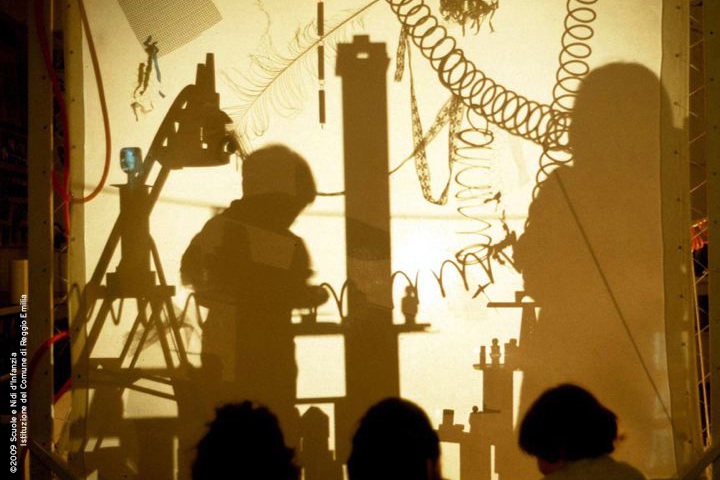
Photo credit: Reggio-inspired Network of MN
Observation is a process of attending, noticing, capturing, and revisiting. Keeping notes, taking photos and videos, and charting and mapping give value but not certainty to what we notice. What we have captured even temporarily allows us to return to the traces of those moments and ask, what am I noticing? How can I account for it? What does it mean to me? To others? What might others bring to the process to probe what matters here?

As good observers, we must also be observers of ourselves, studying our attention, checking our assumptions, and registering our focus. Questioning ourselves as we observe reminds us that we arrive at subjective interpretations, partial findings, provisional insights, and, hopefully, new questions.

Seeing Differently
As I was working through these thoughts, the subject of observation surfaced in my Thursday study group with Lani and Tom, two retired early years educators in the Twin Cities. As these weekly conversations so often do, this one pushed my imagination not just further, but into a different realm: from seeing more to seeing differently.

Lani had marked a passage to read from Art and Creativity in Reggio Emilia: Exploring the Role and Potential of Ateliers in Early Childhood Education by Reggio atelierista, Vea Vecchi. This brief, but extraordinary account of when Vea started in the Reggio schools in the 1960’s describes her year of observation. Yes! A year of observation.

At the direction of Loris Malaguzzi, founder of the Reggio Emilia educational philosophy, Vea was asked to observe children in the school. She invited 4 children at a time into a studio space to work with paints in a nonfigurative way. Her observations of 90 children of different ages in the school continued over the year with Vea taking notes on her observations of children and their paintings. She also referred to books by more knowledgeable guides like Jean Piaget, Herbert Read, and Viktor Lowenfeld that Malaguzzi had given her. Malaguzzi then poured over her notes and the children’s paintings. He commented on her observations and shared his interpretations with her. At the end of the year, using his notes and comments, Vea wrote a report for the school on the children’s work; it later became a book.

Vea has described Malaguzzi’s strategy that changed her mental framework and identity from a secondary art educator to a professional in a new role as an atelierista. Malaguzzi helped create the conditions for change with a process of observation, formative reading, notes, discussion and shared interpretation, and documentation through which Vea unlearned her certainties and opened her eyes to the potentials of the children.

See, Un-see, Re-see
Tom called this process: see, un-see, and re-see. In observation, as in many activities we engage in, we think we are being neutral and seeing the truth. Actually we are often affirming what we already think, reinforcing beliefs we have arrived at by other means. This happens for a number of reasons. Learning, memory, expectation, and attention shape what we perceive, see, and believe. Pressures of accountability in schools and other institutions subtly insist we see what we are asked to see around standards and benchmarks. In museums we are susceptible to a dominant view of learning imported from schools that is content focused and teacher directed. We are also eager to demonstrate our value and our impact to supporters with evidence. These factors influence what we see when we observe in galleries, study exhibits, and describe museum visitors.     

Even when we do see something new, we are likely to name it something else, something we have seen before. Twentieth century philosopher and public intellectual, Marshall McLuhan, expressed this as, “I wouldn’t have seen it if I hadn’t believed it.”

Realistically, un-seeing is difficult, if not literally impossible. But we can work to undo old learning, find ways to displace certainty, and see fresh versions of what we are viewing. The conditions of Vea’s extraordinary journey are not easily replicated, but her effort and goal can encourage us to observe from a new stance. We can shift our observation from looking for what we expect, to looking for what we haven’t seen before. We can be open to what surprises us.

Tom, Lani, and I thought together about what might create movement from seeing to re-seeing to create a crack in our thinking through observation by:
• Being curious, open, and eager to be surprised
• Wholeheartedly pursuing the opportunity of the moment
• Revisiting the experience and its possible meanings  

When we are open, curious, and eager to be surprised, we are:
  •        Awake to our surroundings and the people, spaces, and materials
  •        Accepting uncertainty and the complexity of what we are noticing
  •        Comfortable with not knowing what we are seeing
  •        Exposing ourselves to other thinkers and knowledgeable guides
When we wholeheartedly pursue the opportunity of the moment, we:
  •      Are prepared to capture traces of the experience in multiple ways: notes, video, photos,       images
  •      Are open to what we may be seeing that is contrary to the apparent direction and we         follow it
  •      Observe until we are surprised
When we revisit the experience and its possible meanings, we:
  •      Return to all of the collected traces of observation: notes, photos, images, and videos
  •      Pursue questions to reflect on what we have noticed: how do visitors influence each     other in exploring an exhibit? How do ideas about how something works change over   the course of an experience?
  •      Attend to strategies, not outcomes: ways that individuals engage with the group; patterns of choices; leaps in thinking; the roles conversation plays
  •      Share, and invite others to contribute what they see
  •      Stretch to consider what something might mean that is beyond our imagination
  •      Think together: what might we do to make this or that unusual gesture or activity more    likely to happen again?
This is a bigger, more complex, process than can possibly be captured here. In fact, the above list, or any list, is fundamentally at odds with deep, open-ended observation. We must keep in mind that seeing what we already see is a poor strategy for the positive change and transformation we seek for our visitors, our communities, and ourselves. Fortunately, the benefits of what Lani calls a radical openness to what’s out there and what it means are ample and worthwhile: a livelier, richer experience of our work and its potential value. 

Are you ready to be surprised?


Related Museum Notes Posts

Thank you, Lani and Tom


Stand aside awhile and leave room for learning, observe carefully what children do and then, if you have understood well, perhaps teaching will be different.
­Loris Malaguzzi

Originally Posted October 2017


Wednesday, July 6, 2022

There are Loose Parts, ...and Then There Are Loose Parts

Photo Credit: spielgaben.com


MUSEUM NOTES
Jeanne Vergeront
Vergeront Museum Planning

Originally Posted June 2018

Loose parts, or at least the term, has captured attention and imaginations in museums, early childhood centers, libraries, nature centers, parks, and playgrounds. The assorted, moveable, and found materials and objects that spark, enrich, and extend children’s play and imaginations can be almost anything: feathers, pinecones, corks, bricks, shells, spools, or sticks.

In a world where increasingly little is left to chance in childhood and play, loose parts are wonderfully unscripted. These uncategorizable pieces and parts come with no specific directions for what they are or what children might do with them. Tucked into pockets, resting as a sedimentary layer in the bottoms of backpacks, clutched in small hands, or reverentially collected at the shore, children find, pick up, and carry treasured objects. They combine, line up, take apart, exchange, and rearrange loose parts in countless ways. In their play, children are writing the operations manual for shells, a cache of pinecones, bottle caps, or buttons with their play and imagination.

Loose parts, however, are not just stuff, junk, or a jumble of pieces and parts no one else wants or can use. To be sure, there are treasures in discards and by-products of households, industry, and, nature. But since children explore the rich possibilities of these objects, meaningful exploration relies on thoughtful selection of materials. Thinking with their hands, bodies, minds, and imaginations, they observe, ask questions, and have ideas. They arrange and change objects, their settings, or even themselves. These explorations and creations are beautiful, but they're not necessarily art.

When children build, collage, or trade objects, they are comparing, sequencing, and seriating. They are exploring and valuing color, size, shape, and materials. As they lift, move, and occasionally drop glass pebbles, marker caps, or paper clips, they are discovering the properties of glass, plastic, and metal. In building with tubes and discs, they deal with balance and stability, use spatial reasoning, and solve problems three-dimensionally. New words about shapes, texture, designs, and structures are essential to describing how the fabric feels, the certain flat blue disc that is needed, or the delight a child is feeling.

The value, however, is not in working with specific concepts, but in the curiosity, agency, imagination, and knowing the world that these materials afford

We might think that only young children are inclined to explore possibilities and make discoveries with loose parts. In fact, regardless of age, exploring materials not only changes the material, but changes the way we see materials. Anyone with limited experience to freely follow their curiosity and ideas about interesting materials and loose parts–and to do so often–will engage in similar ways. As children of every background have fewer experiences of messing around with “stuff” from the basement workbench, sewing drawer, or the town dump, they have less fluency with materials, objects, and their own vocabulary of materiality.

What Makes Good Loose Parts?
There are many objects that can be gathered for exploring in a classroom, an exhibit, home, under the bushes, or at the playground. Are all loose parts equal? What makes the difference between materials that foster meaningful, extended engagement and ones that fail or minimally engage children’s delight, imaginations, and experience?

As Without Windows Misha blogger asks, why not just shop at the dollar store? Cheaper materials do save money. But, he argues, their low cost is at the expense of child labor somewhere else. Why not make loose parts from scrap lumber? The measuring, cutting, and sanding are time consuming. Keva Planks/Kapla Blocks probably do it better with greater precision. Besides, loose parts are more than blocks. 

Why not use toys or commercial play objects as loose parts? Usually these are single purpose play objects. Once a child has mastered the key function—pushing the button to make a pinwheel spin—the child is ready for more. Due to their cost, these objects are seldom in great enough quantities to combine in novel ways. Ultimately, however, when children use designed toys, even very well designed ones, they become consumers of someone else’s creativity. With loose parts, children exercise their own. Loose parts, especially natural loose parts, change with time and use. They acquire a patina, reveal something new about their nature; they decay.

Rich in Possibilities
While dollar store items and commercial toys may be loose and moveable, they lack other vital qualities that imbue loose parts with powers of attraction, fascination, exploration, and discovery. They are open-ended, beautiful, and plentiful.

As Antoinette Portis’ book, Not a Stick assures us, a stick is no single thing in children’s play. It is not scripted; it can be a wand, a baton, a fishing rod, or a snake—or combinations. Like other open-ended materials, it is responsive to children's questions, interests, and ideas and capable of changing use or meaning in a flash. Often an object’s very simplicity or its ambiguity lend versatility and provoke new ideas. Small tree cookies, for instance, are variously stacked into a tower, used for money, become stepping stones, or are incorporated into a design–all in quick succession.

Features like shape, color, texture, and smell make loose parts even more interesting, suggesting new paths to explore. A child may gather all the red objects or all those that sparkle; arrange keys in a radial pattern and then end-to-end in a train; set pine cones on end to create a forest and arrange them in a spiral. Loose parts sized for small hands allow children to pick up easily, bring close for careful visual inspection, and arrange in many ways. Adding paper and markers to the mix can further extend the exploration and thinking.

Beauty
While saying that beautiful loose parts are more engaging than “ugly” ones may seem obvious, deciding what makes some beautiful is not. In the eye of the beholder will always be at work, but some qualities tend to make loose parts intriguing, attractive, and promising, if not, in fact, beautiful.

When all of an object’s qualities are not immediately apparent, an object can become more extraordinary. Up close, tiny sparkles in the stones are apparent, as is the fringe of the Burr Oak acorn caps. The crack in the stone looks like a bird. Objects that are similar but not identical are intriguing; natural variations in color, pattern, shape, carry information, reveal the diversity in nature and invite new language.

Ordinary objects and materials also become more fascinating when combined, mixed, and set in different contexts. Light interacting with objects shines through, reflects off of them, and casts shadows. Adding mirrors multiplies objects. Water splashed on objects intensifies colors and makes them shiny. Combining ordinary objects points to new possibilities: shells arranged on an oval mat creating a mandala; sticks alternating with stones in a giant running pattern; a giant star defined by sticks filled with colored leaves; or multi-colored glass beads pressed into a large disk of clay.

Ideas about what is beautiful may be particular to the context. In a nature preschool, for instance, natural and local materials might be a high priority. Without Windows blogger, Misha, is particularly interested in “loose parts from the earth” that “can be disposed of in the earth.” Tree cookies, sand, rocks, and acorns might be valued over cardboard and buttons.

At the same time, manufactured discards and by-products can be compelling when carefully selected. Clear plastic colored shapes, especially when placed on a light table, or multi-colored plastic caps in great quantities can inspire designs, patterns, narratives, and self-portraits. Discarded objects like tubes, reels, and gaskets in similar shapes and sizes, and deliberately selected in only black and white invite exploration of shape without the distraction of other colors.  

Abundance
As important as open-ended and beautiful materials are, seeing objects in great abundance jolts us out of our usual mindset. Perceptions of the object itself and what it can do change. Seemingly ordinary objects like buttons, brushes, cardboard tubes, or rubber bands suddenly seem remarkable. The abundance of objects feels contagious, infecting us with a sense of expanding possibilities. Vast quantities seem to confer permission to explore freely, take risks, make mistakes, and start again.

When time is also in abundance–when there is time to look closely at each pebble, feel and compare them, arrange them just so, and rearrange them again–then the possibilities for thinking and creating that loose parts offer also expand. 

Sunday, May 22, 2022

The Uneasy Relationship Between Play and Educational Outcomes


MUSEUM NOTES
Jeanne Vergeront
Vergeront Museum Planning

A query on ChildMus several years ago captured a tough situation so many of us face so often. A museum educator asked for suggestions in dealing with a funder request. The funder wanted to support exhibits with specific measurable educational outcomes for at-risk children at his museum, a museum geared towards play and primarily serving 4-and-5-year-olds. From a rumpled copy of my reply to him and notes on how museums struggle with similar versions of this expectation, I’ve explored the uneasy relationship between play and the quest for educational outcomes. What follows is the core of my response on ChildMus with some changes for flow and clarity and more recent thoughts on managing the relationship in favor of play. 


The situation you describe around play vs. measurable educational objectives is one so many  in our field can relate to and one that is frustrating. I agree with some of the responses you’ve received about play and educational outcomes. I would go further, taking an approach that explores what play can deliver in the spirit of play and equivalent to objectives. The organization that wants to support exhibits with specific measurable outcomes for at-risk children is well intentioned but misunderstands some basic realities about children, museums, learning, and play. 

A push to close the achievement gap and show results is frequently at odds with a value on children’s play in museums, preschools, kindergartens, and at recess. While there’s no easy way to reconcile these interests, it would be a mistake to abandon play in favor of measurable educational outcomes even with the promise of funding. Similarly, it would be irresponsible not to work at making visible the value of play for children in museums and other settings. The need to move beyond a collision of these perspectives is imperative in order to serve the interests of children, museums, and their communities. 

The Nature of Learning. Learning does not occur through a single episode, a well-structured brilliant lesson, or even one-on-one tutoring on a specific concept. Not in museum exhibits, programs, and not in schools. That’s not the nature of learning. 

Learning is the accumulation of experiences a learner has, connects with, and makes meaning of through sensing, reflecting, thinking, and talking. That’s largely true regardless of age, setting–school, museum, program, or exhibit, library, playground–or strategies such as reading, play, moving, or experimenting. Without the agency of the learner, repetition, revisiting and connecting past experiences; without time, and social and physical interactions with objects, materials, people, ideas, and the environment, learning does not occur. 

As learners we construct our understanding not from a single experience or source, but from a variety of episodes over a stretch of time and generally in relation to others. Regardless of their experiential approach, museums serving children take advantage of this. Children will learn about the world–or the slice of the world an exhibit invites them to explore–by engaging, comparing, experimenting, watching others, asking questions, trying and missing the mark, moving, and making connections among objects, tools, materials, and environments. Even without museums setting any measurable learning outcomes for them, children will learn in rich, engaging museum environments. It happens through play. 

Professionals in museums and other informal learning environments need to be clear about play and the nature of learning themselves as well as educate stakeholders, partners, and supporters about this. Those insisting on educational outcomes for play are doing a better job than play advocates have in communicating the value of play. 

Photo credit: Reggio Children

Play, a Powerful Strategy for Learning. From infancy on, children are naturally drawn to play
which adults label variously as: sensory, exploratory, construction, physical, imaginary, and dramatic play. Most often, play is a seamless mix of all of these and exploration and learning. Understood as freely chosen, personally directed and intrinsically motivated, real play embodies qualities critical to learning as well as to children’s well-being. 

The learning that occurs through play is unlikely to resemble the kind of learning we think of in schools delivered primarily through instruction. Active, fluid, joyous, iterative, play crosses domains and disciplines. Isolating moments as evidence that math or science learning is taking place or a child has learned a particular concept is elusive (and illusive). 

This is precisely what makes meeting a request for measurable educational outcomes fundamentally problematic. If children direct their play—which is a key criterion of free play—then no one else but the child can really set the educational outcome for their play. 

While play’s benefits do not appear as tidy, measurable learning units, they are no less valuable. Their value is of a different, and essential, nature. Real learning is unlikely to occur without motivation. The curiosity that characterizes play is an urge to find out more, reduce uncertainty, and get at more complex or inaccessible aspects of the world. In play, learning crosses affective, emotional, physical, linguistic, and cognitive domains, boosting the whole child. Children gather information about materials and test their properties through play. The capacity to think counterfactually, connecting facts not ordinarily viewed together, emerges spontaneously during pretend play. In building tall and wide, climbing and testing physical abilities, taking on a role, and negotiating story ideas, children’s competence and confidence grow. Through play, children learn what is essential for life that others cannot teach them. 

Framing Play’s Benefits to Children. While museums for children may be passionate about the value of play, they have generally not been successful in articulating play as a valued and productive strategy for learning. “Play is learning” is not a convincing case for play. Communicating how play is a productive strategy for learning must draw on relevant research and be supported by observations of how play appears in various conditions. Without this foundational understanding, museums chase others’ priorities, adhere to cherished beliefs, and fail to follow-through. 

Museums must be proactive in defining the benefits of play for children rather than try to construct ill-suited educational outcomes. Advancing play as a credible strategy requires understanding play, integrating strategies fully across museum experiences, and gathering evidence of play’s benefits. 

Foundational experiences of greatest importance to the museum. Building a convincing case for play begins with a museum focusing on where it believes it can contribute to positive change in children’s lives. It can look to foundational experiences that provide solid underpinnings for a good start in life and to the attitudes, dispositions, and skills that research indicates valuable throughout life and encouraged by play. Not facts, math problems, calculations, or the direct results of structured activities, foundational experiences are among the life dividends, benefits, or impacts of play opportunities. Benefits might include a child feeling connection, acceptance and belonging; a growing sense of competence; or having a enjoying well-being and optimism. 

A focused set of dispositions, skills, or awareness important for children now and in the future is critical. Developing a deep understanding of foundational experiences, dispositions, and understandings is neither quick nor easy. It involves delving into research and learning what these experiences might look like in this exhibit, at that component, in this interaction, or in that program. While a museum may come across a list of possible benefits of play, it can’t simply import that list, from a recent study or from an admired museum. These attitudes and dispositions must align with a museum’s larger purpose, knowledge of its audience and community, and its own expertise and capacity to create engaging experiences likely to impact children in desired ways. 

Photo credit: Vergeront
Creating the conditions for play. Exhibit and program experiences and staff engagement create the conditions for play which include a supportive and relevant context; engagement with others; touching on multiple play patterns; rich and varied materials; and prolonged play episodes connected to the play benefits of highest interest. The better aligned a museum’s play opportunities are with specific components, activities, images, materials, and caregiver, staff, and volunteer interactions, the more likely children will have the opportunity to tap into and exercise those dispositions. Multiple play experiences, during one museum visit, on repeated visits, connected with everyday experiences, are part of the growth and development process for children. 

A theory of change. Connecting the museum’s experiences with the impact it hopes to have is its theory of change; it describes how and why a museum expects desired changes associated with the play opportunities in its environments, exhibits, programs, initiatives, and events. For a museum with an established play approach, a theory of change suggests that children spending more time in rich, varied, connected play experiences with others that they themselves direct will enjoy benefits of, for instance, a sense of well-being, a growing feeling of competence, understanding other perspectives and feelings. 

Benefits, Action. These are not short-term educational outcomes, but are life-time benefits of play. While not measurable educational outcomes, play-related benefits laid out in a theory of change and logic model demonstrate focus, an understanding of relationships, and rigor. Connecting the pieces logically also provides a critical foundation for being explicit about what those changes might look like for children, their parents and caregivers, and community. 

A theory of change provides a museum with a plan for action. The focus, connections, and reasons for believing change is possible lead to identifying impacts and results that can be noticed, described, made visible, and measured in various ways. They can be expanded and carried forward and change lives. No less important, these are the steps allowing a museum to clearly communicate the value of its work to others–including its community and funders that want to support its work and its purpose.

Friday, April 15, 2022

Thinking Ahead, Thinking Big

Denver Children's Museum (Photo: Vergeront)
  

MUSEUM NOTES
Jeanne Vergeront
Vergeront Museum Planning

I have been hearing from museums taking stock, looking ahead, and facing their futures boldly. Some are consolidating changes made and lessons learned during the pandemic. Others are addressing new realities as extreme weather events increase. Some are anticipating leadership changes. 

 Regardless of their size, situation, or location, museums are challenged to make sense of the last few years and prepare for a less certain future. They wrestle with the number, scale, and variety of changes they’ve experienced, or recognized, over the last two years. Changes across the museum in attendance, staff transitions, and finances are occurring in the context of great changes in the lives of visitors and the communities they serve. 

 With museums viewing themselves in new ways and facing the future with courage, I have been wondering what might assist them in their endeavors. What started out as notes from conversations with children’s museum folks, blogs, and articles has evolved into a framework for museums to think big and move forward boldly. 

Resting on four pillars fundamental to a museum’s value to audience, communities, and itself, this framework is neither a roadmap nor is it exhaustive. It is a tool for stimulating discussion and reflection, challenging assumptions, and opening possibilities. Four pillars for thinking ahead are:
 
• For Someone and About Something 
• A Distinctive, Experiential Approach 
• A Better World Strategy 
• Making Change Visible 

Museums are complex entities. Guided by an enduring purpose, they are made possible by people to serve people. They manage valuable resources and interact with a dynamic external environment. Moving a museum forward is likewise complex. The four pillars support the rich complexity embedded in museums as well as help reveal opportunities that can strengthen museums in meaningful ways. Taking big steps starts with understanding what is core, distinct, valued, and full of potential and is advance by bold thinking. 

These four pillars are explored with museum examples and suggestions for reflection and discussion to engage the museum’s thinking. As these examples show, a museum doesn’t have to be big to think big. While using examples from children’s museums, the framework works for other museums that also serve children on field trips, at camps, and with their families as part their broader purpose to enrich the community by making art, science, or history accessible. 

For Someone and About Something
Children, their interests, their people, and long-term well-being are at the very heart of children’s museums. Guided by vision, mission, and values, they create engaging and fun play and learning experiences and environments for children and their adults. Children’s museums are highly committed to a core audience of young children and the trusted adults in their lives: parents, grandparents, caregivers, and teachers. 

Madison Children's Museum (Photo: Vergeront)
 Museum Examples: Children’s                 museums define their audience                 variously as: children birth to 12 years;         children’s first decade; children 2                 through 10 years and their families; and     ages newborns through eleven years         old, but designed to engage learners of     all ages. Pittsburgh Children’s Museum      has opened Museum Lab on its                 campus for youth 10+. 


Think About
• Who must your museum serve fully to advance its vision and mission? 
• What are capabilities and strengths of these children that inform your museum’s experience planning? 

In addition to identifying a core audience of children across an age range, children’s museums often identify strategically important groups it intends to serve recognizing that these children may not have a high presence at the museum. These might be children from under-resourced backgrounds; with special needs and abilities; from diverse racial, ethnic, and cultural backgrounds; or non-English speaking children and families. 
Explore & More (Photo: Explore & More)

Museum Examples: The youngest of these emerging audiences are often served in a separate early years space while targeted experiences such as camps serve youth 13 and up. Explore & More offers sensory-friendly accommodations for children with special needs. Many museums have access programs that reduce barriers related to cost. 
Think About
• How does serving children in these groups help your museum accomplish its mission and vision? 
• In what ways is your museum welcoming and creates a sense of belonging for all children? 

Children’s museums are also about something important in children’s lives. Some are discipline- based concentrating on  STEM or the arts. Many center on childhood and quintessential experiences of childhood especially around play—building, climbing, pretending, stories. Some museums highlight what is interesting and important to children about where they live and places they know; or on understanding the world. 

Museum Examples: A sampling of focus areas include: Everyday Science, Backyard Nature, Imagination and Inventing; the Arts and Sciences; and health and wellness and cultural connectedness                                                                                                          
Think About
• What is your museum about? What are its primary areas of focus? 
• Why are these areas important to your museum’s purpose? 

Children’s museums are also for and about their communities. They understand their audience and consider the context of the community or region. The opportunities, challenges, and changes an area is experiencing and will experience also inform the museum’s focus. 

Amazeum (Photo: Vergeront)
Museum Examples
: The Amazeum focuses on: Land, industries, and people who built 
and sustain Arkansas culture. The DoSeum explores connections between STEM, Arts, and Literacy. Madison Children’s Museum explores arts, science, history, culture, health, and civic engagement. 
Think About
• What does your museum offer children and the community that is currently missing and valued? 
• What kind of a difference in the lives of children could you make? 

A Distinctive Experiential Approach
As places for children, museums create varied experiences that engage, support and delight children, invite play, spark learning, and create a fund of memories. When these experiences and offerings carry a distinctive, consistent style, a museum stands out from other venues serving a similar audience: schools, libraries, summer camps, and even other museums. 

Grounded in its purpose, audience, focus, and community, a museum’s approach comes through in its exhibits, programs, environments, and events and how they engage visitors in exploring, playing, and learning. A museum’s image of the child, its view of play and learning, insights around its focus, and something essential in its character contribute to its particular experiential mix and its brand. 

Museum Examples: Across children’s museums, approaches often emphasize exploration, play, discovery, and learning. Many consider themselves to be child-centered, object-based, interactive, immersive, accessible, process-oriented, and/or community-focused. Approaches may play with novelty and surprise, focus on relationships, highlight beauty, prioritize local and sustainable materials, or incorporate making and co-creating with artists. 
Think About
• What is included in your museum’s experiential approach? 
• Which qualities play a more significant role? 

Minnesota Children's Museum
(Photo: Vergeront)        

  A distinct approach blends elements that support content,     connections, and context to generate varied engagement     strategies for rich and varied exhibit and program                 experiences. A strong approach is capable of engaging a     wide age range and multiple generations, connecting          domains, accommodating both individual and group              interests, and serving first time and regular visitors. Most       elements of an approach have multiple dimensions. 

   Museum Examples: “Accessing the material world” not       only reflects being object-centered, but also expanding       access; encompassing small objects and large spaces;       indoors and out, and placing objects in unusual contexts.       “Nature” may cover nature play, natural materials, play as     biomimicry, or art and nature. 
    Think About
    • How does your museum’s approach engage with the interests and salient characteristics of your audience? 
    • How does your museum translate its approach into exhibit design and program development? 

Clarity of approach provides a museum with a shared understanding and tool for developing experiences with appeal and impact. When well-integrated into the organization, an approach is supported by expertise, capacity, fluency, and resources. It evolves with time without chasing trends. It supports innovation and attracts new opportunities. If thoughtfully layered, consistent, and meaningful, the approach contributes to the museum’s value. 

Museum Examples: Investing in its approach, might mean building internal capacity around play; increasing staff expertise on environmental education; working regularly with artists; and being guided by allies and advisors on cultures. 
Think About
• In what ways does your museum keep its distinctive approach front-and-center internally, among staff and with the board? 
• How is the approach reflected in your museum’s staffing, exhibit planning processes and design, program formats, staff interactions with visitors, graphics, etc.? 

A Better World Strategy. 
Setting a museum’s experiential approach in a strategic context is an opportunity to think forward, act boldly, and grow impact. Recognizing a museum’s assets and where it has a track record points to where a museum can take a leadership role in responding to community priorities related to children’s well-being and resilience; to environmental justice; to diversity, equity, access and inclusion. 

An early step in scaling up and increasing impact is packaging museum assets into projects and multi-year initiatives. Assets include successful, well-tested exhibits, programs, learning resources, digital products, and staff expertise, as well as partnerships, financial resources, and community goodwill. 

Louisiana Children's Museum (Photo Credit: Vergeront)
Museum Examples: Louisiana Children’s Museum’s popular early years gallery and programs are anchoring a multi-year initiative for parents and babies during the first 3 years of life supported by resources co-developed with university and community partners in child development and infant-toddler mental health. 
Think about
• What museum assets with connected purposes could work together more effectively by focusing them, investing in them, and building on them? 
• What large-scale project or set of initiatives might your museum develop or develop further? 

When a museum organizes its assets into coordinated offerings and actions, it can build strategy. Strategy that supports children’s growth and development in the context of challenges they face now, and in the future, is a means to focus efforts and grow impact. 

Museum Examples: Stepping Stones Museum for Children’s ELLI preschool classrooms are grounded in a research-based early language and literacy framework and supported by the museum’s rich environments and professional development. Creativity in the Community is Providence Children’s Museum’s three-year state-wide initiative to connect all of the state’s children to its creative community. 
Think About
• In what ways could an emergent strategy link to children’s futures and community priorities? 
• Where can additional research and new partners direct and strengthen this strategy? 

Change can happen at many scales. System-level change involves engaging at meaningful points with a system that can impact children’s lives. Engaging with educational, healthcare, safe streets, or public housing can initiate system-level change around school readiness, childhood obesity, child mental health, or sustainability. 

Museum Examples: Kidzeum worked with teachers, curriculum specialists and administrators in one school district to transform science learning outcomes for elementary students by developing curriculum and using the museum as science classrooms.  
Think About
• Where are opportunities for your museum to effect system-level change? 
• What resources does your museum have and will it need—partners, space, expertise—to create change? 

As strategy develops, goals, and objectives take shape. Potential benefits and impacts, both qualitative and quantitative, come into focus. Linking museum resources and efforts to the impact it intends to have is the museum’s theory of change which maps out the change process. 
Discovery Museum   
  

Museum Examples: Discovery Museum’s long-time focus on environmental education was extended with development of  Discovery Woods and expanded to become intentionally and  visibly sustainable in its operations.                                               

Think About:                                                                                  

• What do your museum's community impact goals look like?        • What is your museum’s theory of change that shows how the     museum believes it can reach those goals? 


Meaningful change takes time—time to fully integrate transformative work into the life of the museum. This process involves a deepening understanding of the conditions that support consequential change, taking action on multiple fronts, implementing and improving the work at the same time. 

Museum Examples: Boston Children’s Museum’s long-running Powering School Readiness starts with its Play Space early years exhibit. It includes Countdown to Kindergarten, the exhibit and guidebook, and web-based resources on executive function, language, and play.  
Think About
• What expertise, experience, and resources are critical for your museum to sustain and grow its strategy? 
• How can your museum hold itself accountable for these changes over time? 

Making Change Visible
If a museum wants to matter, it must find ways to show that it does matter. Sharing its commitments, occupying a public role, communicating what it learns, and telling its story well are critical to awareness of a museum’s work on behalf of children. 

A museum’s values guide its everyday decisions and actions. Largely intangible, commitments often go unnoticed. Unless it acts with great intention a museum’s core beliefs can become good intentions. Operationalizing commitments, calling attention to even small activities, and connecting actions to current issues help spotlight where heart, energy, and resources converge. 

Museum Examples: The Utica Children’s Museum has merged with the ICAN Family Resource Center and will use trauma-informed approaches to design exhibits and develop programs to be a welcoming place for all children. 
Think About
• How does your museum demonstrate to the child, parents, staff, volunteers, trustees, supporters, and partners that it values the child’s capabilities such as creativity, caring, or agency? 
• In what additional ways can your museum demonstrate its values and priorities more obviously? 

The position a museum occupies on the local landscape, the role it intends to play and how it wants to be viewed by stakeholders, is a public expression of its identity and the contribution it plans to make. This leadership position is grounded in actual accomplishments and strengthened with networks of relationships. Among the roles a museum might play are convener, connector, catalyst, resource, advocate, or thought leader around its values and priorities. 

Greentrike's Children's Museum at JBLM
Photo Credit: Greentrike
  Museum Examples: Greentrike, an evolution of the Children’s Museum of Tacoma, is an            education and advocacy organization with            multiple sites and services that also                      convenes an annual symposium around                being a children and youth-centered                    community.       
    Think About
    • What visible presence in the community does     your museum currently have that it can build        on? 
    • What public leadership role can your museum occupy where it has a track record and strong partnerships? 

Museums are learning organizations. They ask questions, learn from and with their audiences, and draw on research from the museum field and beyond. Increasingly museums are integrating research into creating play and learning experiences; audience engagement; and local conditions affecting children’s well-being. By articulating its research interests; working with college, university, and healthcare research partners; and conducting its own research, a museum can initiate change and move the field forward. 

Museum Examples: Through ACM’s Children’s Museum’s Research Network, children’s museums have researched play, learning, adults’ perceptions of learning, and social emotional behaviors in children’s museums. Denver Children’s Museum’s Play Institute includes multiple research partners. Bay Area Discovery Museum’s mission is to transform research into early learning experiences that inspire creative problem solving. 
Think About
• How does your museum stay current with research in areas of high relevance? 
• What are your museum’s compelling questions about children, their well-being and futures it can explore through research on its own and with partners? 

Children’s museums have high hopes for children, their communities, and their futures. Powered by purpose and passion, they are in a unique position to make better childhoods and promising futures for children a reality. To move forward, museums must translate their mission and strategies into fresh, compelling stories for multiple audiences. 

The same creativity and passion that fuels engaging and memorable exhibit and program experiences, can tell museums’ stories and make their case. They can share new research findings, document and present children’s work in and beyond the museum’s walls, and share their own studies with stakeholders, leaders, connectors, and the field. 

Museum Examples: Many museums have produced publications on play, making, and kindergarten readiness. Parent resources on play can be found on Minnesota Children’s Museum’s website or blog and on the science of brain development on Boston Children’s Museum’s website.  
Think About
 • How can your museum make the research-to-practice connection visible to help stakeholders better understand the critical importance of early childhood experiences for bright futures? 
 • What if your museum’s annual report published what it had learned in the past year about supporting play and learning? 


Museum Notes 

• Carol A. Scott: Beyond the Walls: Demonstrating the social impact of museums is critical to their success 
Trends Watch 2022: Museums as Community Infrastructure