Showing posts with label Play. Show all posts

Monday, July 3, 2023

Seeing Joy: Part 2


MUSEUM NOTES
Jeanne Vergeront
Vergeront Museum Planning 

Photo credit: WonderTrek Children's Museum

Seeing Joy: Part 2 continues an exploration of what children’s joy looks and sounds like in our museums that I introduced in Seeing Joy: Part 1. Inspired by expressions of joy we see in museums and other settings, Seeing Joy is guided by a collaborative, iterative inquiry process developed with WonderTrek Children’s Museum in Brainerd, Minnesota. 


The process begins with a Question, leads to an Invitation to Explore that engages children and adults in exploring our question. Investigation involves setting up and observing children in a PlayLab space. We summarize, debrief, and synthesize our findings and, as part of Interpretation, we ask ourselves, “What are we seeing? Moving from Interpretation to Advancing the inquiry, we boil down our insights to a few take-aways and Re-frame the question. And we’re ready to roll again. 

Dedicated tools for each part of the process both guide and document our work. The first tool, Question Worksheet, documents the Working Question, the Invitation to Explore, Methods, Timeline, Take Aways, and Possible Ideas to Revisit. 

The Working Question and supporting questions about joy ask:
• How can WonderTrek invite and encourage children to experience and express joy?
     • What does children’s joy look and sound like?
     • What conditions appear to encourage and elicit joy?

Importance highlights social emotional learning’s critical role in human development; joy’s importance in children’s lives, fighting stress and pain. It is a form of resilience and feels good. 

Joyful Work Arounds
When we got to Invitation to Explore,
we encountered a problem. Usually, we would find ways to engage children in exploring the setting, structures, and materials with other children in the PlayLab; observe them; and talk to them about their experiences. Given the spontaneous and ephemeral nature of joy; a lack of a unifying concept around joy; and limitations of the PlayLab space and sessions, that approach wasn’t feasible so early in the process. We also wondered whether asking a 3 or 4-year-old “What is joy?” would be meaningful. 

Photo credit: Tom Bedard

“Pre-research” was needed to grow our understanding of joy before we could proceed with Invitation to Explore. We chose to explore joy obliquely by investigating it in two familiar contexts: the lived experience of childhood and children’s experiences at other museums. We used four methods. 

  • Childhood Joy Remembered drew on childhood memories of our team members
  • Everyday Joy described moments of joy observed in museums
  • Borrowed Set-ups used photos showing joy to study the presence of physical and social conditions related to joy
  • Parent Question asked about their child’s joy on WonderTrek’s social media (This had no responses.)

Childhood Joy Remembered

We were all children once and experienced joy in our childhoods. Sometimes there was more joy and other times less. Bernard Berenson, a 20th century American Art Historian, recalls a moment in his childhood that tells us something about experiencing joy.
 

… In childhood and boyhood this ecstasy overtook me when I was happy out of doors. Was I five or six? Certainly not seven. It was a morning in early summer. A silver haze shimmered and trembled over the lime trees. The air was laden with their fragrance. The temperature was like a caress. I remember—I need not recall—that I climbed up a tree stump and had no need for words. ‘It’ and I were one.” 

Members of the WonderTrek Project Team were asked to recall a memory of joy from their childhoods, a moment of joy when they were a child, any age up through 10 or 12 years; to explore that memory, plumb the feel and source of it. They shared what they’d been feeling and doing; where they were; who was with them. Memories that they, other colleagues and friends have shared about remembered childhood joy include being outdoors, in nature, a sense of freedom, sensory experience, immersion. 

  • Crawling through and disappearing into the tall grass
  • Going out horseback riding with my dad early in the morning in late summer
  • Climbing on the bus and going to the library by myself to get books
  • Riding my bike wearing a freshly ironed shirt my mother made. It was a perfect moment; I felt free
  • Floating in the lake with my sisters
  • Laying in the grass under trees with light coming through the leaves. All the flickering lights reminded me of a million candles 

The Everyday Joy We See 
Knowing that every day, joy comes into our museums, we wondered what those moments of a
Photo credit: Vergeront
child’s joy look like. Looking at photos including the one of the child kicking up their foot, we asked: what does this child’s joy look, feel, sound like? We observed and thought about:
  • The child’s facial expressions: body language, tone, sensory qualities of objects and materials
  • What might the child be feeling?
  • What qualities of joy do we think are expressed?
Joy is hard to define. And while we wouldn’t want to squeeze the joy out of joy by defining it too narrowly, similar qualities of joy came through in the conversations, Berenson’s quote, and the literature.
  • Joy is a positive emotion that can be experienced with other emotions, such as sorrow, at the same time
  • Joy often brings a feeling of connection – to others, to ourselves, to nature, to something greater 
  • There is contentment and satisfaction
  • A feeling of joy ranges from a peaceful contentment to exuberance
  • It is ineffable, brief, fleeting
  • Joy happens in everyday moments

Borrowed Set-ups 

Photo Credit: Bruce Slicox. Courtesy 
of Minnesota Children's Museum
 Limited in settings we could easily create or access, we     “borrowed” set-ups of children experiencing joy in other settings. With photos like the one at left, we could study physical and social features of a set-up; the nature and quantity of materials, the ambience; the presence of other people. Looking at this photo we speculated on conditions that might be giving joy a nudge:
• Open space
• Natural light
• Objects that are soft, plentiful, accessible, unusual in this context
• Falling objects in mid-air … surprise and unpredictability in how they fall
• Visibility into what’s happening overhead
• Space for several children

Gathering a few clues from one Borrowed Set-up at a time, we glimpsed what invites joy. Asking ourselves, what we were seeing, we started building Play Conditions disposed towards joy. 
What are Play Conditions? They are features of the physical and social environment that support and encourage children’s exploration, play, and learning. These conditions emerge from what research, child development, play theory and children’s museum practices indicate encourage and support children’s engagement, and maybe their joy. This is not a causal relationship between Play Conditions and more joy. But we all carry assumptions, hunches, and mini-theories about what we think is likely to encourage some types of interactions more than others. In this inquiry, Play Conditions help us think about creating experiences and environments disposed towards joy.

Qualities associated with joy that surfaced in childhood memories and observations fall into WonderTrek’s 7 Play Conditions.
Image of the Child, children’s strengths and capabilities: expressions of joy accompany a
strong sense of agency and sense of self
Context or setting, the qualities of the physical and social space: the soft qualities of space: abundant light, natural light, moving air; sensory immersion; and space for moving freely.
An Invitation to Explore encourages children’s engagement or piques their curiosity: with surprise, novelty, or enticing sensory patterns.
Materials seed the set up with possibilities that are: explorable, unscripted; responsive to children’s actions
Interactions and Relationships connect people: children feel recognized and connected to others; and adults are sensitive to children’s spark
Content, or what is fascinating and meaningful to children: the wind, water, animals; movement, nature
Time creates openings for joy: unstructured time, a sense of possibilities and freedom

What We’re Learning

Photo credit: Vergeront

Our learning is on 2 tracks: about children’s joy and about the WonderTrek Inquiry Process. We’re learning that joy is:
• A feeling and an experience often shared with others, that happens everyday
• Even very young children express joy
• Joy’s qualities and expressions take many forms: wonder, surprise, exuberance, a feeling of immensity and connection
• Joy and play are closely related
• Museums are places for joy
• Experiencing joy matters in children’s lives. It may not matter whether we remember childhood joy; it does matter that we have experienced joy as children

We’re learning from the WTI process itself.
• Bringing in a child’s perspective shows us what we might not otherwise notice
• Play-and activity-based methods allow children’s fuller participation
• The process is flexible, adaptable to various questions and contexts
• Questions matter
• We are making meaning a bit at a time

This collaborative effort has been made possible by a wonderful team. Thank you, Peter Olson, Cheryl Kessler, Mary Weiland, Jim Roe, Shannon Wheeler, Emilee Maillot.

Wednesday, November 2, 2022

Play Conditions: A Framework

MUSEUM NOTES

Jeanne Vergeront
Vergeront Museum Planning

Photo credit: Vergeront (WonderTrek)

Play Conditions are a bit like Robinsyard. Robinsyard, you ask? 

When my nephew Matthew was 4 years old, he carried a small rolled up piece of paper tucked into a yarn belt that he liked to wear. I asked him what had he drawn on the paper and he replied, “Robinsyard.” I knew he had a friend name Robin, but I didn’t know what a Syard was. So, I asked, “What’s a Syard?” Matthew replied, “I don’t know but Robin has one.” After some mulling about what a Syard might be, I guessed that it was Robin’s Yard. The precise meaning is not so critical. What is important is that: 

 Play conditions are like Robinsyard: It’s hard to explain what they are, but we have them. And play conditions have meaning in children’s lives. 

We may not have precise terms for play conditions, a shared vocabulary, or a taxonomy for them. (We don’t really have a definition of play, either.) We do, however, have a sense of when play conditions are just right: when children are engaged actively, deeply, and joyously in play—play that they direct and find enjoyable. That’s when play conditions are well tuned. Conversely, when interactions are few, focus and attention is brief, conflict is frequent, children’s affect is flat, and ambience is bland, play conditions are out-of-whack with the intentions for the experience, the space, and those children. 

Play doesn’t happen independently of the conditions surrounding it. Since we think, in general, very little about the conditions that encourage exploring, playing, and learning, we are hazy about just what they are and how to harness them. For about the last 10 years, I’ve been exploring the idea of play conditions in planning work, learning frameworks, and master plans. Currently, I am part of a team at WonderTrek Children’s Museum, an emerging museum in north central Minnesota, working with play conditions in a collaborative question-driven, iterative process that explores, documents, and shares insights from children in play-based settings. 

This work is giving shape to a framework that helps get at the complexity and simplicity of
Photocredit: Vergeront (MIA)
 play 
and play conditions. Starting with working definitions, this framework acknowledges related concepts, identifies a set of play conditions, and frames principles that tell us something about the nature of these play conditions. 

While the framework focuses on play conditions, it is relevant to shaping spaces and experiences in every kind of museum as well as encouraging inquiry and learning. In fact, museum planners, developers, designers, and educators often draw on qualities and varied conditions in creating exhibits, environments, and programs that engage visitors— but they may not be doing so intentionally nor focusing on play. 

Play and Play Conditions 
Exploring play conditions relies on having a shared understanding of play among staff, team, or partners. This can be challenging. Affected by age, setting, and who’s controlling it, play is not always easy to recognize. It is connected to exploration and learning which children seem to move between seamlessly. Definitions of play are abundant as well. One I am drawn to places the child at the center and works across varied contexts. Play is freely chosen, personally directed, and intrinsically motivated

Viewing play conditions as the qualities or variables of the physical and social environments that are likely to encourage (or discourage) and support children’s play accommodates this definition of play and others. It also recognizes that there can be conditions that interfere with play. 

Photo credit: Vergeront (CMOM)
Play conditions share some qualities with the concept of affordance, the features or property of an object that define its possible uses or how it can or should be used. A chair’s properties afford sitting or standing on it. An affordance provides strong cues about the operation of things. It is an actionable and discoverable possibility. In some design contexts like user-interface, an affordance prompts users to take specific actions. 

While play conditions may include affordances, they are not limited to physical features nor are they directive. More than 3-dimensional space, physical design, furniture, or arrangement, play condition’s qualities are also temporal, social, and affective. They tap into all senses, give cues, and suggest possibilities. Neither a recipe nor a formula, nor a way of scripting children’s play, play conditions are as open-ended as play itself. 


Seven Play Conditions 
An understanding of play conditions emerges from what research, child development, play theory and museum practices suggest will encourage and support children’s exploration, play, and learning in informal learning settings. Dimensions such as space, materials, relationships, and provocations, salient to different aspects of play, help in understanding play conditions. Observations, imagination, and intuition add to this knowledge, filling gaps and inviting us to think together. 

By separating and clustering these dimensions, we discover examples and possibilities, and begin to examine and manipulate play conditions in intentional and new ways. Seven play conditions are summarized below. Each is characterized by the general role it plays, its valued qualities, and a small sample of possibilities. 
  • Image of the Child is about the child’s strengths and capabilities and means engaging children at their highest level of ability; and making their strengths and capabilities visible. 
    • Valued qualities are: children’s curiosity, capabilities, social disposition, caring and empathy 
    • Possibilities that support and reflect the child’s capabilities: choices for one child and different choices for different children; traces of children’s thinking, doing, and making; focus on shared interests, etc. 
  • Context or Setting is about both physical and social space, ranging from macro to micro, where children can explore, play, and learn. 
    • Valued qualities are: safe, welcoming and accessible settings 
    • Possibilities for shaping settings: different scales, large and small spaces; light and sound; recognizable features; wayfinding clues; edges that define and differentiate areas, etc. 
  •  Invitation to Explore is about arranging selected elements to provoke or encourage children to notice and wonder, explore ideas—without giving too much direction. 
    • Valued qualities are: sparking curiosity; the child taking the experience where it needs to go; offering something worth noticing and discovering 
    • Possibilities for encouraging exploration: something fascinating; questions incongruities; multiple provocations; a sound walk, etc. 
  • Materials and Objects is about loose parts, tools, phenomena, art materials, digital media, etc. that give children agency and choice; encourage exploration and experimentation that is physical, social, emotional, cognitive, and linguistic; that generate new possibilities; and reveal new perspectives and insights about the world. 
    • Valued qualities are materials that support children’s agency, promote noticing and wondering; change with use and generate new insights; work at multiple ages
    • Possibilities for materials: engage some and sometimes all the senses; are real stuff; can be carried, lined up, and moved; change with use, etc. 
  • Relationships is about children and adults engaging with others; feeling a sense of
    Photo credit: Vergeront (Madison Children's Museum)
    welcome, respect, and connection 
    • Valued qualities foster social connections, value the individual and the group, are collaborative 
    • Possibilities for connecting: exchanging ideas among children; scaffolding; conversation; multiple places and positions, roles or seating, etc. 
  • Content is based in children’s interests and what is fascinating and meaningful to them about the world 
    • Valued qualities are interdisciplinary content; implicit content from child development; meaningful connections for the child 
    • Possibilities for engaging with content: comes through the senses, is embedded in the world, is released through interactions, can be experienced from different points of view, etc. 
  • Time is about a sense of open and unregulated play; time to direct play, follow an activity to a satisfying moment, and find enjoyment
    • Valued qualities are children deciding when play starts and ends; play stretching out over time
    • Possibilities for opening up time come from discouraging distractions and interruptions; allowing experiences to come to a natural end 
 A set of play conditions with examples helps us move away from predictable approaches towards deliberately thought through play set-ups. Working with play conditions nudges us into thinking in the languages of space, materials, relationships, and provocations and developing new ways of thinking. Considering possible play conditions slows us down from leaping to a finished idea or design. We see how play conditions, like children’s play, lean into and interact with one another, virtually seamlessly. We realize, for instance, how Materials are instrumental in creating an Invitation to Explore; how Materials prompt conversations which support Relationships; and how the Image of the Child and Time can’t be separated from other conditions. Finally, play conditions tell us as much about inviting rich play as they do about getting out of the way of children’s play. 


Ten Principles of Play Conditions 
Bringing a play conditions approach into creating opportunities for play takes time. It can be a new way of thinking. Integrating the approach into existing practices can involve problem solving and collaboration, backing up and starting over. Tailoring specific play conditions, these or others, to your context, whether for indoor or outdoor play, is always an on-going process. Paying attention to the following 10 principles along the way will provide support and add to your insights. Play conditions: 

1. Are always present, whether we are aware of them or not, and whether they are favorable to play or not.  

2. Impact children’s agency in their play. Play conditions can let the child direct the play, allow children to make of their play what they need to—or play conditions can interfere with play. 

3. Span all scales. From the full volume of a space, to the smallest loose parts, to open sight lines, to the ambiance of a space, play conditions are all sizes and proportions.
 
4. Are more than objects and more than space, more than the architecture, design and decoration. They are tangible and intangible.
 
Photo credit: Jim Roe (SMM)
5. Interact with one another as well as with children making the conditions fluid and dynamic. There is no one, or right, way to create play conditions. 

6. Induce something to happen, not by removing choices, but by creating the conditions that will increase the chances that children will engage deeply in play. 

7. Balance intentions for the experience with opening up possibilities, creating a place between what we think might happen and what we don’t yet know is possible. 

8. Require imagining to build a picture of what might happen if...; how a particular possibility might interact with other qualities and how children might engage with it. 

9. Come into clearer focus over time. Children are teaching us about play conditions all the time. We can learn by observing, listening, imagining, and reflecting on what they show us. 

10. Are more than the sum of their parts


What Happens When… 
Working with play conditions is, fundamentally, forming a hypothesis, or a succession of hypotheses about the relationship between children’s play and ways to support the place and processes of play. While not causal, relationships are operating. And while we don’t know what’s going to elicit play, with practice we can be more attuned to these connections and, increasingly, use them deliberately. 

Prompted by an exploratory question or experiential goal, play conditions help us in shifting from our hopes for play in general to lived experiences of deep, enjoyable, play that engages children’s bodies, minds, and feelings. We begin with conjuring up openings for play with our wonderings. How might we engage children in investigating properties of found objects and using them in their play? What materials might encourage children to change their physical space? How can we support children in setting challenges and taking risks? How do children share their ideas with one another? 

As we interrogate the content of play conditions, reflect on past experiences, observe children 
Photo credit: Snarkitecture

at play in varied settings, we have new hunches, generate possibilities, find fresh combinations, and ask another “what if?” question. We begin to discover, and hypothesize about, connections between the presence of certain features and children’s play. We build theories—temporary explanations—that express what might happen when particular qualities or variables of the physical and social environment are brought together. 
These hypotheses and mini-theories about places for play help us keep track of this world we are creating with children for play. 

Over time, we test, improve, and edit our understandings of the conditions that encourage the kind of play that we hope children will enjoy—rich, flexible, and full of possibilities for them to discover. 


Museum Notes 

Wednesday, July 6, 2022

There are Loose Parts, ...and Then There Are Loose Parts

Photo Credit: spielgaben.com


MUSEUM NOTES
Jeanne Vergeront
Vergeront Museum Planning

Originally Posted June 2018

Loose parts, or at least the term, has captured attention and imaginations in museums, early childhood centers, libraries, nature centers, parks, and playgrounds. The assorted, moveable, and found materials and objects that spark, enrich, and extend children’s play and imaginations can be almost anything: feathers, pinecones, corks, bricks, shells, spools, or sticks.

In a world where increasingly little is left to chance in childhood and play, loose parts are wonderfully unscripted. These uncategorizable pieces and parts come with no specific directions for what they are or what children might do with them. Tucked into pockets, resting as a sedimentary layer in the bottoms of backpacks, clutched in small hands, or reverentially collected at the shore, children find, pick up, and carry treasured objects. They combine, line up, take apart, exchange, and rearrange loose parts in countless ways. In their play, children are writing the operations manual for shells, a cache of pinecones, bottle caps, or buttons with their play and imagination.

Loose parts, however, are not just stuff, junk, or a jumble of pieces and parts no one else wants or can use. To be sure, there are treasures in discards and by-products of households, industry, and, nature. But since children explore the rich possibilities of these objects, meaningful exploration relies on thoughtful selection of materials. Thinking with their hands, bodies, minds, and imaginations, they observe, ask questions, and have ideas. They arrange and change objects, their settings, or even themselves. These explorations and creations are beautiful, but they're not necessarily art.

When children build, collage, or trade objects, they are comparing, sequencing, and seriating. They are exploring and valuing color, size, shape, and materials. As they lift, move, and occasionally drop glass pebbles, marker caps, or paper clips, they are discovering the properties of glass, plastic, and metal. In building with tubes and discs, they deal with balance and stability, use spatial reasoning, and solve problems three-dimensionally. New words about shapes, texture, designs, and structures are essential to describing how the fabric feels, the certain flat blue disc that is needed, or the delight a child is feeling.

The value, however, is not in working with specific concepts, but in the curiosity, agency, imagination, and knowing the world that these materials afford

We might think that only young children are inclined to explore possibilities and make discoveries with loose parts. In fact, regardless of age, exploring materials not only changes the material, but changes the way we see materials. Anyone with limited experience to freely follow their curiosity and ideas about interesting materials and loose parts–and to do so often–will engage in similar ways. As children of every background have fewer experiences of messing around with “stuff” from the basement workbench, sewing drawer, or the town dump, they have less fluency with materials, objects, and their own vocabulary of materiality.

What Makes Good Loose Parts?
There are many objects that can be gathered for exploring in a classroom, an exhibit, home, under the bushes, or at the playground. Are all loose parts equal? What makes the difference between materials that foster meaningful, extended engagement and ones that fail or minimally engage children’s delight, imaginations, and experience?

As Without Windows Misha blogger asks, why not just shop at the dollar store? Cheaper materials do save money. But, he argues, their low cost is at the expense of child labor somewhere else. Why not make loose parts from scrap lumber? The measuring, cutting, and sanding are time consuming. Keva Planks/Kapla Blocks probably do it better with greater precision. Besides, loose parts are more than blocks. 

Why not use toys or commercial play objects as loose parts? Usually these are single purpose play objects. Once a child has mastered the key function—pushing the button to make a pinwheel spin—the child is ready for more. Due to their cost, these objects are seldom in great enough quantities to combine in novel ways. Ultimately, however, when children use designed toys, even very well designed ones, they become consumers of someone else’s creativity. With loose parts, children exercise their own. Loose parts, especially natural loose parts, change with time and use. They acquire a patina, reveal something new about their nature; they decay.

Rich in Possibilities
While dollar store items and commercial toys may be loose and moveable, they lack other vital qualities that imbue loose parts with powers of attraction, fascination, exploration, and discovery. They are open-ended, beautiful, and plentiful.

As Antoinette Portis’ book, Not a Stick assures us, a stick is no single thing in children’s play. It is not scripted; it can be a wand, a baton, a fishing rod, or a snake—or combinations. Like other open-ended materials, it is responsive to children's questions, interests, and ideas and capable of changing use or meaning in a flash. Often an object’s very simplicity or its ambiguity lend versatility and provoke new ideas. Small tree cookies, for instance, are variously stacked into a tower, used for money, become stepping stones, or are incorporated into a design–all in quick succession.

Features like shape, color, texture, and smell make loose parts even more interesting, suggesting new paths to explore. A child may gather all the red objects or all those that sparkle; arrange keys in a radial pattern and then end-to-end in a train; set pine cones on end to create a forest and arrange them in a spiral. Loose parts sized for small hands allow children to pick up easily, bring close for careful visual inspection, and arrange in many ways. Adding paper and markers to the mix can further extend the exploration and thinking.

Beauty
While saying that beautiful loose parts are more engaging than “ugly” ones may seem obvious, deciding what makes some beautiful is not. In the eye of the beholder will always be at work, but some qualities tend to make loose parts intriguing, attractive, and promising, if not, in fact, beautiful.

When all of an object’s qualities are not immediately apparent, an object can become more extraordinary. Up close, tiny sparkles in the stones are apparent, as is the fringe of the Burr Oak acorn caps. The crack in the stone looks like a bird. Objects that are similar but not identical are intriguing; natural variations in color, pattern, shape, carry information, reveal the diversity in nature and invite new language.

Ordinary objects and materials also become more fascinating when combined, mixed, and set in different contexts. Light interacting with objects shines through, reflects off of them, and casts shadows. Adding mirrors multiplies objects. Water splashed on objects intensifies colors and makes them shiny. Combining ordinary objects points to new possibilities: shells arranged on an oval mat creating a mandala; sticks alternating with stones in a giant running pattern; a giant star defined by sticks filled with colored leaves; or multi-colored glass beads pressed into a large disk of clay.

Ideas about what is beautiful may be particular to the context. In a nature preschool, for instance, natural and local materials might be a high priority. Without Windows blogger, Misha, is particularly interested in “loose parts from the earth” that “can be disposed of in the earth.” Tree cookies, sand, rocks, and acorns might be valued over cardboard and buttons.

At the same time, manufactured discards and by-products can be compelling when carefully selected. Clear plastic colored shapes, especially when placed on a light table, or multi-colored plastic caps in great quantities can inspire designs, patterns, narratives, and self-portraits. Discarded objects like tubes, reels, and gaskets in similar shapes and sizes, and deliberately selected in only black and white invite exploration of shape without the distraction of other colors.  

Abundance
As important as open-ended and beautiful materials are, seeing objects in great abundance jolts us out of our usual mindset. Perceptions of the object itself and what it can do change. Seemingly ordinary objects like buttons, brushes, cardboard tubes, or rubber bands suddenly seem remarkable. The abundance of objects feels contagious, infecting us with a sense of expanding possibilities. Vast quantities seem to confer permission to explore freely, take risks, make mistakes, and start again.

When time is also in abundance–when there is time to look closely at each pebble, feel and compare them, arrange them just so, and rearrange them again–then the possibilities for thinking and creating that loose parts offer also expand. 

Sunday, May 22, 2022

The Uneasy Relationship Between Play and Educational Outcomes


MUSEUM NOTES
Jeanne Vergeront
Vergeront Museum Planning

A query on ChildMus several years ago captured a tough situation so many of us face so often. A museum educator asked for suggestions in dealing with a funder request. The funder wanted to support exhibits with specific measurable educational outcomes for at-risk children at his museum, a museum geared towards play and primarily serving 4-and-5-year-olds. From a rumpled copy of my reply to him and notes on how museums struggle with similar versions of this expectation, I’ve explored the uneasy relationship between play and the quest for educational outcomes. What follows is the core of my response on ChildMus with some changes for flow and clarity and more recent thoughts on managing the relationship in favor of play. 


The situation you describe around play vs. measurable educational objectives is one so many  in our field can relate to and one that is frustrating. I agree with some of the responses you’ve received about play and educational outcomes. I would go further, taking an approach that explores what play can deliver in the spirit of play and equivalent to objectives. The organization that wants to support exhibits with specific measurable outcomes for at-risk children is well intentioned but misunderstands some basic realities about children, museums, learning, and play. 

A push to close the achievement gap and show results is frequently at odds with a value on children’s play in museums, preschools, kindergartens, and at recess. While there’s no easy way to reconcile these interests, it would be a mistake to abandon play in favor of measurable educational outcomes even with the promise of funding. Similarly, it would be irresponsible not to work at making visible the value of play for children in museums and other settings. The need to move beyond a collision of these perspectives is imperative in order to serve the interests of children, museums, and their communities. 

The Nature of Learning. Learning does not occur through a single episode, a well-structured brilliant lesson, or even one-on-one tutoring on a specific concept. Not in museum exhibits, programs, and not in schools. That’s not the nature of learning. 

Learning is the accumulation of experiences a learner has, connects with, and makes meaning of through sensing, reflecting, thinking, and talking. That’s largely true regardless of age, setting–school, museum, program, or exhibit, library, playground–or strategies such as reading, play, moving, or experimenting. Without the agency of the learner, repetition, revisiting and connecting past experiences; without time, and social and physical interactions with objects, materials, people, ideas, and the environment, learning does not occur. 

As learners we construct our understanding not from a single experience or source, but from a variety of episodes over a stretch of time and generally in relation to others. Regardless of their experiential approach, museums serving children take advantage of this. Children will learn about the world–or the slice of the world an exhibit invites them to explore–by engaging, comparing, experimenting, watching others, asking questions, trying and missing the mark, moving, and making connections among objects, tools, materials, and environments. Even without museums setting any measurable learning outcomes for them, children will learn in rich, engaging museum environments. It happens through play. 

Professionals in museums and other informal learning environments need to be clear about play and the nature of learning themselves as well as educate stakeholders, partners, and supporters about this. Those insisting on educational outcomes for play are doing a better job than play advocates have in communicating the value of play. 

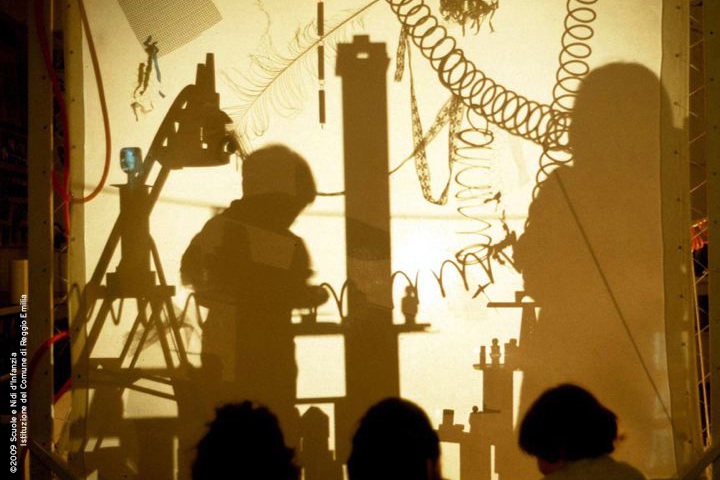
Photo credit: Reggio Children

Play, a Powerful Strategy for Learning. From infancy on, children are naturally drawn to play
which adults label variously as: sensory, exploratory, construction, physical, imaginary, and dramatic play. Most often, play is a seamless mix of all of these and exploration and learning. Understood as freely chosen, personally directed and intrinsically motivated, real play embodies qualities critical to learning as well as to children’s well-being. 

The learning that occurs through play is unlikely to resemble the kind of learning we think of in schools delivered primarily through instruction. Active, fluid, joyous, iterative, play crosses domains and disciplines. Isolating moments as evidence that math or science learning is taking place or a child has learned a particular concept is elusive (and illusive). 

This is precisely what makes meeting a request for measurable educational outcomes fundamentally problematic. If children direct their play—which is a key criterion of free play—then no one else but the child can really set the educational outcome for their play. 

While play’s benefits do not appear as tidy, measurable learning units, they are no less valuable. Their value is of a different, and essential, nature. Real learning is unlikely to occur without motivation. The curiosity that characterizes play is an urge to find out more, reduce uncertainty, and get at more complex or inaccessible aspects of the world. In play, learning crosses affective, emotional, physical, linguistic, and cognitive domains, boosting the whole child. Children gather information about materials and test their properties through play. The capacity to think counterfactually, connecting facts not ordinarily viewed together, emerges spontaneously during pretend play. In building tall and wide, climbing and testing physical abilities, taking on a role, and negotiating story ideas, children’s competence and confidence grow. Through play, children learn what is essential for life that others cannot teach them. 

Framing Play’s Benefits to Children. While museums for children may be passionate about the value of play, they have generally not been successful in articulating play as a valued and productive strategy for learning. “Play is learning” is not a convincing case for play. Communicating how play is a productive strategy for learning must draw on relevant research and be supported by observations of how play appears in various conditions. Without this foundational understanding, museums chase others’ priorities, adhere to cherished beliefs, and fail to follow-through. 

Museums must be proactive in defining the benefits of play for children rather than try to construct ill-suited educational outcomes. Advancing play as a credible strategy requires understanding play, integrating strategies fully across museum experiences, and gathering evidence of play’s benefits. 

Foundational experiences of greatest importance to the museum. Building a convincing case for play begins with a museum focusing on where it believes it can contribute to positive change in children’s lives. It can look to foundational experiences that provide solid underpinnings for a good start in life and to the attitudes, dispositions, and skills that research indicates valuable throughout life and encouraged by play. Not facts, math problems, calculations, or the direct results of structured activities, foundational experiences are among the life dividends, benefits, or impacts of play opportunities. Benefits might include a child feeling connection, acceptance and belonging; a growing sense of competence; or having a enjoying well-being and optimism. 

A focused set of dispositions, skills, or awareness important for children now and in the future is critical. Developing a deep understanding of foundational experiences, dispositions, and understandings is neither quick nor easy. It involves delving into research and learning what these experiences might look like in this exhibit, at that component, in this interaction, or in that program. While a museum may come across a list of possible benefits of play, it can’t simply import that list, from a recent study or from an admired museum. These attitudes and dispositions must align with a museum’s larger purpose, knowledge of its audience and community, and its own expertise and capacity to create engaging experiences likely to impact children in desired ways. 

Photo credit: Vergeront
Creating the conditions for play. Exhibit and program experiences and staff engagement create the conditions for play which include a supportive and relevant context; engagement with others; touching on multiple play patterns; rich and varied materials; and prolonged play episodes connected to the play benefits of highest interest. The better aligned a museum’s play opportunities are with specific components, activities, images, materials, and caregiver, staff, and volunteer interactions, the more likely children will have the opportunity to tap into and exercise those dispositions. Multiple play experiences, during one museum visit, on repeated visits, connected with everyday experiences, are part of the growth and development process for children. 

A theory of change. Connecting the museum’s experiences with the impact it hopes to have is its theory of change; it describes how and why a museum expects desired changes associated with the play opportunities in its environments, exhibits, programs, initiatives, and events. For a museum with an established play approach, a theory of change suggests that children spending more time in rich, varied, connected play experiences with others that they themselves direct will enjoy benefits of, for instance, a sense of well-being, a growing feeling of competence, understanding other perspectives and feelings. 

Benefits, Action. These are not short-term educational outcomes, but are life-time benefits of play. While not measurable educational outcomes, play-related benefits laid out in a theory of change and logic model demonstrate focus, an understanding of relationships, and rigor. Connecting the pieces logically also provides a critical foundation for being explicit about what those changes might look like for children, their parents and caregivers, and community. 

A theory of change provides a museum with a plan for action. The focus, connections, and reasons for believing change is possible lead to identifying impacts and results that can be noticed, described, made visible, and measured in various ways. They can be expanded and carried forward and change lives. No less important, these are the steps allowing a museum to clearly communicate the value of its work to others–including its community and funders that want to support its work and its purpose.

Tuesday, January 25, 2022

The Culture of Childhood

MUSEUM NOTES
Jeanne Vergeront
Museum Planning

Photo credit: Leona Yordy

Over the last few months, I have been having conversations about childhood with Maeryta Medrano, AIA, Founder and President of Gyroscope, Inc. an architecture, museum planning, and exhibit design studio in Oakland, CA. Childhood comes up regularly in planning museums and experiences for children. In fact, in saying that they are for and about children, children’s museums all but assert they are part of childhood. 

After of a kick-off meeting with a museum that is planning to relocate, Maeryta and I sat in a hotel lobby, processing the discussions, jotting notes, picking up and following threads, and tossing out questions. When Maeryta wondered if there is a culture of childhood, we took off again. We excitedly connected ideas from books, articles, research papers, and experience to conclude that, yes, there is a culture of childhood. As a culture, it embodies a unique world view of, for, and about children and the ways in which they find their place in the world and become themselves. 

What is Childhood? 
For readers of this post, childhood is something we all experienced. Childhood was that time in our lives stretching from 1-2 years through 10-12 years. Even if the specifics of our childhoods were different based on where we grew up, our families, our backgrounds, or our cherished memories, our first decade of life was our childhood—foundational, formative, and enduring. 

So, is there a culture of childhood? The idea of a culture of childhood is not completely new and has been the subject of research and writing. Some examples begin to frame what a culture of childhood is. 

Iona and Peter Opie, an English team of researchers, studied and documented the oral culture of childhood in England from the 1950’s – 80’s. Observers of urban children’s street culture in England, they conducted primary fieldwork, library research, interviewed thousands of children, collected children’s literature, toys, and games, and published books of children’s songs and games. In documenting the shared experiences of childhood, focusing in particular on language, the Opie’s work established the culture of childhood as a serious area of study. 

Peter Gray, psychologist and research professor at Boston College, considers the critical role
Photo credit: Sarah Hall
of children in the lives of other children as central to the culture of childhood and undervalued in the lives of today’s children. In The Value of Play, he describes critical roles children play in one another’s growth and development, and expresses concern about adult intrusion into children’s lives. Children become increasingly independent through their relationships with other children. They find and solve problems together; establish, communicate and negotiate rules; and assume roles that adults would assume if they were present. Children playing with other children prepares them for roles as adults in collaborating and getting along, true social advantages in adulthood. 

Author of Discovering the Culture of Childhood, Emily Plank describes her ‘ah-ha’ moment when she recognized how adults and children occupy different cultures: “What if we adults are outsiders to children? What if the problem that we see sometimes as adults interacting with the children in our care and with our own children are intercultural and not biological or not a product of the phases of development? What if there’s a cultural component to it?” 

Photo credit: Nature Explore
The lens of culture provided by these thoughtful observers of children and childhood suggests its presence, its fundamental importance in children’s lives, and its value in understanding the transformative process of children composing their common world. 

What is Culture? Although we may not be accustomed to thinking of a culture of childhood, we are familiar with the idea of culture. Understood broadly in relation to the groups of people, culture is viewed in an anthropological framework as customs, arts, social institutions, and achievements of a particular nation, people, or other social group. We also associate culture with the arts and with other manifestations of collective human intellectual accomplishments. Individuals’ and groups’ attachment to cultural activities, beliefs, and traditions are integrated into their daily lives and are core to their identity. Cultures are ethnic, religious, familial. They are global, national, and local; social, organizational, and team. 

Across this wide range of meanings of culture are some basic characteristics that are relevant to exploring the culture of childhood. 

• Culture is something that everyone possesses in some form or forms. Often unseen or unnoticed, we may not be very aware of culture in ourselves. But it’s there. 
• We all carry cultural traits that we have acquired from others in our group(s) in the ways we listen, give gifts, honor, celebrate, and what we find meaningful. 
• Cultures overlap, rather than exclude one another. Just as cultures interact with other cultures, the culture of childhood interacts with other cultures including the culture of adults. 
• Culture gives us a sense of belonging and contributes to a sense of identity. 
• Culture informs our way of life, permeating everyday experiences—foods, friendships, traditions, language, a sense of place, and play. 
• Culture changes. It evolves over time through interactions with others, with places, with events. 

In unpacking the culture of childhood, we encounter dimensions of culture—spatial, social, emotional, scientific, philosophical, and spiritual—and associated elements of language, belief systems, social structure (friendships and relationships); objects (toys and materials); and arts (expression and meaning making). 

Bringing the Culture of Childhood to Light 
The culture of childhood is children’s shared experience of growing up and finding their place 
Photo credit: Jeanne Vergeront
in the world shaping children’s social identity, creating a sense of community, and opening possibilities. Wrapping around and weaving through the time from 1-2 years through 10-12 years, the culture of childhood is a frame for viewing, understanding, respecting, and valuing children and childhood. 

The child and childhood are at the center of the culture of childhood not adult agendas, goals, growth charts, and developmental frameworks. Touching on and interacting with every aspect of the child and their world, this culture engages with all developmental domains—physical, social, cognitive, language, and emotional—and the unfolding developmental processes. While there is a sequence most children follow (crawling first, then walking), culture is less about timelines and more about experiences, relationships, and children learning and inhabiting their world. 

The culture of childhood recognizes what children have in common as well as variations among individual childhoods. It embraces both the individual child’s particular childhood experiences, settings, and contexts and the shared, evolving childhood constructed over time with other children in a larger context. The culture of childhood embraces an age cohort of children who are increasingly eager to connect with other children and learn from one another what they can’t learn in other ways. As with any culture, there are variations. Childhoods differ depending on children’s backgrounds, their race, specifics of their family, and where they live—their town, region, or city. But, as one father and city leader noted, “Six-year-olds are 6-year-olds. There are experiences all children enjoy.” 

Photo credit: Jeanne Vergeront
 Multiple contexts of children’s lives are backdrops for the culture of childhoo
d. In addition to developmental and   social factors, the culture of childhood is shaped by   settings, place, people, and practices. Culture is present in   and influenced by contexts that are urban and rural; home,   school, neighborhood, and recreational; within family and   community; and ethnic, religious, and national. Carrying   stories, games, and jokes, norms and behaviors, the culture of childhood lives in forts and found spaces, public and civic   places. It moves from group-to-group, from home-to-school- to-the-playing field, from one part of a region to another. 

The culture of childhood is both universal and local. Childhood exists in cultures around the world, shaped by universal fundamentals. Developmentally, children move from dependence to greater independence. They develop new skills and capacities and move from sheltered family relationships to friendships and associations with peers. Early experiences begin in the intimacy of home but soon move beyond the house, around the block, into the neighborhood, to school, camps, and beyond. Seasons, weather, and landscape account for some local variations of childhood culture since children know best what is immediate and local. Weather and geography influence culture and seasonal clothes, activities, play choices, local foods and foodways. 

Shared experiences are central to the culture of childhood: Children need to be part of a group with a coherent identity, shared vocabulary, and collective purpose. As part of an age cohort, they go through experiences together that shape perspectives, interests, enthusiasms, and milestones of their age group. Celebrating birthdays, learning their address, losing a tooth are quintessential moments of childhood that connect children to one another in lasting ways. Favorite toys or books, special clothing, movie characters also create shared memories and moments of meaningful connection. Such shared experiences of growing up together make a mark on childhoods. Public, civic, and social events of communities, disruptive events, and community and national tragedies and triumphs become collective memories that can define childhoods and leave a mark on adult lives. 

The culture of childhood supports children’s social development outside the family. Childhood is a passage from “me” to “we.” While attachment to parents and caregiving adults is important, children increasingly want to connect with and build strong bonds with other children. They make friends and discover the power of friendship. Through social learning, they find ways to function in and as a group. They figure out how to join a game; invent rules and negotiate with one another; they choose leaders and sometimes question the order of the peer group. Some of the transformation involved in children becoming themselves necessarily occurs away from watchful adult eyes. Children develop a perspective on their lives and encounter new perspectives from other children that they can’t gain from adults. 

Photo credit: Jeanne Vergeront
Play is the native language of the culture of childhood
. In play, children learn from and reimagine their world. Playing with other children engages hallmarks of culture—language, objects, materials, expression, meaning, and symbols. Play is a social space where children communicate with one another, with gestures, special words, and shared ideas. They organize themselves; they make up, and revise rules to make play more challenging; in their games they monitor behaviors. Composers, storytellers, actors, and humorists, children propose and discuss ideas, develop plots, assume roles, act-out stories. They bring symbols into their play with words, language, and objects. Their pretend worlds have back stories, rules, special words, and relationships. Constructed and inhabited through play, these worlds provide a wide range of imaginative ways of seeing the world. They carry ways of thinking, doing, and being. In play, children have fun, grow friendships, see themselves as part of a group, and develop a sense of belonging that rolls out into the future. 

By its very nature, the culture of childhood is dynamicChildhood is in a perpetual dialogue with the world that for children is constantly revealing itself to them. While all cultures evolve, children’s alertness to their world, their curiosity, and rapid development across all domains guarantees a changing child. Children are immersed in making meaning and finding their place in an ever-expanding, shifting world using multiple languages, modalities, and media. Through on-going interactions with other children in varied settings, children learn from one another, pass on games and words, and share ideas from other contexts. This is a culture that welcomes and hosts ideas from other settings to influence and enrich it going forward. 

Photo credit: Madison Children's Museum
Nourishing the Culture of Childhood
 
Recognizing and supporting the culture of childhood matters. More than just a time period in children’s lives, the culture of childhood is a living force that becomes an endowment of connection, community, and hopeful futures. 

But how do we expand the benefits to more children of this overlooked and often undervalued cultural experience? 

Let's begin by recognizing the culture of childhood itself. By doing so, we affirm our respect for children and our confidence in their becoming caring, engaged adults and future dreamers, connectors, and leaders. We can also: 

View children as competent learners with mastery over skills, and rich in ideas, rather than as smaller, messier, unfinished adults. 
Commit to creating better childhoods for more children, especially children facing challenges and limited resources by increasing access to places, community, people, programs, and opportunities. 
Make the culture of childhood visible to a larger circle of parents, educators, decision-makers and highlight the roles they can play to strengthen the social infrastructure that supports childhood and its culture. 
Advocate for the culture of childhood to influence the culture of our towns, cities, and regions rather than the reverse that allows busy schedules, structured time, and commercialization to shape the culture of childhood. 
Prioritize play. Besides guarding time and places for children to be children, we need to support children’s freedom to explore, experiment, solve problems together, and take risks. We need to let more of childhood happen out from the watchful eyes of adults. 
Expand the cultural space of childhood. Engage children, families, educators, and community members in co-constructing outdoor spaces, museum spaces, play environments, and other informal learning settings where children can come together, experiment, and creatively explore using multiple modes of expression, materials, and media. 

MUSEUM NOTES 

OTHER SOURCES
• Peter Gray: The Value of Play
• Peter Moss and Pat Petrie. 2002. From Children’s Services to Children Spaces