Showing posts with label Impact. Show all posts

Wednesday, January 15, 2020

What Does Your Museum Make Possible?

First published in June 2016, this post is the last in a series on growing a museum 

After the Mona Lisa 2.0 by Devorah Sperber. North Carolina Museum of Art
The question, what does your museum make possible?” arose as I read a tribute to David Carr, scholar, thinker, and friend of libraries and museums. In Think With Me: David Carr’s Enduring Invitation in Curator (Vol. 59, No. 2), three of Carr’s admirers and museum colleagues, Beverly Sheppard, Marsha Semmel, and Carol Bossert, remember and reflect on Carr’s graceful, insightful, and sometimes provocative ways of thinking, teaching, and mentoring.

When I think of David Carr, I think of his interest in pushing beyond what appear to be the limits of knowing and thinking. I remember the poetic provocations he made seemingly effortlessly in his writings and speaking. Working with him on the Reading the World issue of the Journal of Museum Education that I guest edited in 2004 generated an expanded view of literacy in museums. David explored how reading text, objects, and collections are starting points for taking the experience of the museum beyond its walls.

Libraries and museums, Carr thought, “must encourage us to explore the unfinished nature of our lives, and to generate more questions.” They “must become places that assist the mind’s unfolding–they must recognize knowledge as a process, not a thing.” Museums and libraries he described “as being about what they made possible, not what they contain, presenting their collection as springboards to deepen thought and courageous questions.” (Curator Vol. 59. No. 2. p. 115)

In the Context of the Possible
Thinking with David about what museums make possible is an open invitation to consider their value. How can museums matter to their visitors, partners, and communities? What are promising benefits of visiting a museum, exploring an exhibit, being part of a project or program, discussing ideas with friends or family, studying the catalogue, reflecting on a visit?

Exploring what museums can make possible helps us understand what these benefits might look like for children of different ages, youth from low-income homes, and seniors experiencing isolation; for first time visitors and long-time friends; for regular museum-goers and experience samplers. With images such as these in mind, we can start to envision, size up, and describe likely impacts. Only then can we begin to intentionally contribute to those changes by creating the conditions that increase the chances they will be called forth. Although we may not be able to measure the changes precisely or for several years, a frame around value helps us communicate how museums matter with greater clarity and confidence internally and to supporters and decision makers.  

Setting this thinking in the context of the possible provides a poetic starting point for exploring and capturing museums’ value. It keeps in mind the full measure of a museum’s aspirations even as it follows them to their impacts. A focus on the possible balances quantifying a museum’s value and condensing it to a number, or even a set of numbers.

What can–and do–art, science, history, natural history, cultural, and children’s museums, zoos, aquaria, and visitor and nature centers make possible? How do they inspire, motivate, transform, and challenge children, youth, and adults to think, question, learn, make different choices, act, and perhaps, occupy their lives differently? How do they contribute to individual and common good? 

Some of What Museums Make Possible
Below is a sampling of what museums make possible for individuals, family and community groups, and the larger community.

1.     Give insights into how parts of the world work. As places of things, museums are full of real objects, varied materials, tools, technology, and phenomena. With the freedom to explore, experiences of planned discovery allow children, youth, and adults to interact with natural phenomena and scientific ideas. In maker spaces, they experiment with raw materials and their properties; use shop tools; and engage with skilled facilitators. They find a framework of knowledge in a collection of objects or how parts of the world relate and are ordered.

2.     Offer moments of freedom and respite. The quiet of a gallery, view from a tower, expanse of a sculpture garden, and calm of a nature trail create a separation from the day’s routine and demands. Moments of escape and solitude can empty the mind, transport us to distant places and times, invite contemplation and reflection, make space for new thoughts, and restore us allowing us to inhale more.

3.     Help solve community problems. Museums work with community partners to manage, if not solve, community challenges like homelessness, inclusion, workforce development, health, or environmental problems. The B.B. King Museum and Interpretive Center’s 7-week summer camp in Indianola, MS for children and youth 6 – 15 years has focused on childhood obesity making connections with local music and dance traditions. 

4.     Grow new knowledge across many fields. In the research they conduct and participate in, museums generate knowledge. They contribute to scholarship in carrying out and publishing research on their collections and sites. Some conduct research on learning, embodied cognition, play, or biodiversity. Many more are sites for college or university research. Development of research agendas by museum associations suggests more and more extensive research in museums and a greater role in growing valuable knowledge.

5.     Support life-long learners. Many of the tour guides adding depth to our exploring exhibitions in museums, parks, and zoos are docents. Trained volunteers, they undergo extensive and intensive training in interpretation and communication, the museum’s collections, access and interactive learning. Docent training at the Minneapolis Institute of Art lasts 6 months and involves reading and shadowing experienced docents. Life-long learners, docents facilitate others’ learning.

6.     Develop social capital. Youth development programs that use a positive youth development framework contribute to the development of healthy, contributing youth from all economic, ethnic, and family backgrounds. Such programs in zoos, science museums and centers, art and children’s museums can be year-round and multi-year. Some, like the New York Hall of Science, feed a Science Career ladder at the museum.

7.     Take on big ideas that can make big changes. Along with its community partners, the Children’s Museum of Tacoma has been working to make valuing childhood a community value, co-sponsoring an annual symposium and opening a preschool. Since 2009 The Wild Center in the Adirondack Mountains has been hosting summits on climate change. Museums working with multiple partners using the Collective Impact model to close the achievement gap among children are setting example for other cities.

8.     Increase a sense of agency and competence. Museums provide a chance to learn what others can’t teach us. Changing the outcome of an experiment, assessing physical risk on a climbing structure, balancing across a fallen tree, shaping a pot from clay, building a circuit, or participating in a community project with the museum can be challenging. Attempting something new, sticking with it, feeling successful boosts a sense of agency and confidence.

9.     Change the direction of a life. In sharing their collections, presenting exhibitions, telling stories, giving tours, and presenting speakers, museums inspire interests, ideas, and questions pursued by children, youth, and adults throughout life. Touched emotionally by stories, inspired by a painting or print, developing a hobby, starting a personal collection, connecting with nature, or even becoming a TV anchor after sitting in front of an exhibit camera as a child, museums affect the direction of a life in small and large ways.

10.  Expand the local learning landscape. Museums occupy several noteworthy places on their local learning landscapes. They are sites for field trips that connect with the classroom curriculum and they offer professional development for teachers in STEM, early literacy, local history, and art. Centers for professional development like the Exploratorium’s Teacher Institute play an on-going role in supporting teachers and transforming classroom teaching. Across the country children attend museum schools and preschools at dozens of museums.

11.  Spark extraordinary insights. Museums create larger-than-life experiences where we encounter what is unfamiliar, different, sometimes seismic in connecting with nature, cultures, space, history, or global events. The traveling Bodyworld exhibition revealed extraordinary and sometimes disturbing views of inside the human body. The Wild Center’s Wild Walk takes us among the treetops for an expansive view of the Adirondack Forest. There is a moment of shock and horror coming upon 4,000 victim’s shoes confiscated by the Nazis at the United States Holocaust Memorial Museum.

12.  Invite joy. Everyday in museums, children, youth, and adults find and express delight and joy. They smile and laugh; children skip across the lobby. In the moment, in the presence of beauty, something unexpected or awesome, they feel pleasure, appreciation, and delight. Often visitors leave with great reluctance. Some express their happiness simply like the 4-year old boy at Minnesota Children’s Museum telling his mother, “My heart is happy here.”

13.  Enlarge the imagination. Moments of wonder, amazement, and awe occur in museums. Our sense of creativity and imagination expands as we look at paintings, explore innovative technologies, watch animals, see a dinosaur skeleton, and grasp the range of human accomplishments. We discover that Samuel B.F. Morse, developer of the Morse Code, was also a portrait painter; that Omar Khayyam, Persian poet and author of the Rubaiyat, was a world-class mathematician. We return to a sublime moment in childhood standing at Louisa May Alcott’s writing desk and feel her presence. We view Leonardo da Vinci’s Codex Leicester, a 72-page scientific treatise written backwards in brown ink more than 500 years ago.

14.  Strengthen families. For museums, families are a core constituency. Museums understand the importance of serving them well and in many and meaningful ways. They offer amenities and choices that make a visit easier, more convenient, relevant, and enjoyable for families. They are intentional in developing experiences that engage adults and children together, research family learning, and host family events and celebrations. Museums also provide specific experiences to support families. Some serve as off-site locations for supervised visitation and supervised parenting time. Many offer parenting programs, train staff to facilitate parent-child interactions, offer parent resources and activities to do at home; and strengthen connections to other community resources like libraries and parks.

15.  Call us to act.  Time spent in the museum is just the beginning of a succession of possible responses. Museums spark wanting to know, thinking, trying and testing, framing questions, and acting. Visitors may follow up with conversations with others at home, work, or school; visit another museum, a library, or historic site; make different choices; and get involved with an interest group. Although we don’t know precisely how it happens, visitors don’t necessarily leave the museum behind.

With gracious persistence, David Carr promoted the value and necessity of going beyond, exploring the unfinished nature of our lives, and generating more questions. He encouraged us to find ways to start thinking of something we do not yet understand. Along with pushing beyond what we do and know, he asked that of museums and libraries, setting them in the context of the possible. Thinking about what museums make possible is a promising start, but only a start. Thinking with David will help museums make more possible.

Saturday, December 28, 2019

Consolidating the Gains: After the Museum Doors Open

First posted September 2015, Consolidating the Gains continues the series on growing a museum
Opening Day at Children's Museum of Southern Minnesota

The ribbon has been cut and the doors to the new museum swing wide open welcoming friends, members, supporters, neighbors, and the curious.  

Opening day festivities are well attended. The new spaces are awe-inspiring; the exhibitions sparkle. Fundraising is virtually complete and the punch list has been pared to a manageable length. Systems have been tested and tweaked. Media campaigns have drawn the hoped-for attention. Donor and member events have been great successes. The rounds and rounds of prototyping caught the bugs early. The community discussions that inspired the vision for the big museum project still feel inspiring. Years of planning now seem like a blur. 

Twenty years after opening day at the “new” Minnesota Children’s Museum (http://www.mcm.org) on September 16, 1995 these impressions are still with me along with the many lessons I was fortunate to learn about planning and opening a museum. Yet, as memorable as the planning and opening were, the following year and the lessons learned navigating it have been even more enduring. And I've seen these lessons learned over-and-over again in other museums since then.


The Big Lesson 
Those lessons cluster around a single message. No matter how resounding a success everyone thinks and says the opening and new museum are and how amazingly well the first months go, the critical task is to retain and consolidate the gains made through the expansion and over the first months of operations.

This challenge also comes to mind now as I read and hear about recent openings at the DoSeum; the Thinkery; The Broad; the Mid-America Science Museum; the Children’s Museum of Sonoma County; the new wing at the Columbus Museum of Art; and the Children’s Museum of Southern Minnesota

Whether doubling the physical footprint, building a wing for exhibitions, converting space for events, adding a large-format theater or opening an extensive outdoor area, a large capital project has changed the museum. The transition from planning to opening to running a new institution is one of both planned and unexpected challenges that can make consolidating the gains more challenging than they might seem to be.   

Every new such venture is originally fueled by enormous passion and excitement. Working with a shared vision of a building, a fresh visitor experience, new amenities, and stronger exhibit experience makes coordination and alignment of the museum’s efforts relatively easy. Once that milestone has passed, however, the view ahead is fuzzier. The territory in which a museum now finds itself is new. Familiar signposts, patterns and benchmarks from the past are either irrelevant or in serious need of updating. The temptation is great to feel the museum has arrived and that efforts getting there have the momentum to surge forward. The first months or even year after opening, known as the benefit period, won’t last forever and, in fact, can disappear unexpectedly. 

Along with the sense of enormous pride and accomplishment among staff, volunteers, and trustees on opening is relief and deep exhaustion. And yet, during any long-term project, a museum has cultivated partnerships, shared its aspirations broadly, actively invited the public into its life, and deliberately stepped into the limelight. The action is just beginning.


Retaining the Gains
Just what are the gains that need to be consolidated? During the course of planning, a museum has assessed the need to expand or renovate, made a case for support, cultivated community good will, projected attendance, raised funds, planned exhibits, developed new programs, brought on additional staff, set up new systems, and trained staff. From a new physical footprint to a new community footprint, it has quantified intended gains in areas across the museum and that the museum itself intends to have on its community. It has set new attendance targets and identified new audiences to reach. It has projected growth in expenses as well as revenue; set fundraising goals; structured admission and membership; added new earned income activities; and calculated economic impact. New exhibits with new themes, topics, and learner impacts fill galleries and require on-going maintenance and repairs.

Consolidating gains typically means capturing the lessons learned; stabilizing financially and operationally; determining where to work harder to improve on what works; shoring up areas that lag behind; making the most of available momentum; and recognizing new opportunities. The museum shifts from promises and projections to targets and tracking. In this period of time, the museum has an opportunity to operate and serve from a higher platform. To do so, it needs to meet some consolidation challenges.


Consolidation Challenges 
•   Develop new baselines for benchmarking performance in key areas. In a new, larger, or renovated building, old benchmarks don’t work. Because square footage, attendance, and admission fees change, ratios for tracking key financial indicators and performance necessarily change. To know how the museum is doing and how it can do better, new data is needed, as is the time for collecting data, observing seasonality shifts and multiple cycles, and comparing actuals with projections.

•   Retain and support staff, especially key staff. With the expansion, the museum has added staff with new expertise while existing staff carry important organizational knowledge. Through training, the museum has invested in staff across the museum. The focus now is to retain and grow this expanded capacity during a period of transition. After a major project, people leave for various reasons. Temporary staff and contractors leave as work is completed. Permanent staff may be ready to move on, find a new challenge or change of pace. The same goes for trustees. Be kind.

•   Engage the audience and community at a higher level and in targeted ways. Many, if not most, projects begin with community input to assess the need for expansion, generate programmatic ideas, and prototype exhibits and programs. During the long process that follows, however, there’s little feedback from audiences. Upon opening, a flood of audience feedback, good and bad, pours forth. At this point, a museum needs to make the most of this feedback; be responsive and connect with visitors; and reinvigorate its community engagement strategies. 

•   Focus on new opportunities to grow impact. Greater museum visibility, a sense of optimism, and increased capacity combine to catalyze new and larger opportunities for greater impact. A museum may enjoy a new position on the learning and cultural landscape, have a new seat at the table, or be able to set a new table around its priority interests. With an eye on delivering significant long-term impact, a museum should build on its strongest partnerships, work in areas of emerging expertise, and develop larger initiatives that align with community priorities. 

•   Become the new museum. Expansion has changed the museum. It is a new institution with a new identity created through multiple changes starting with its building, possibly a new location or name, and on-line presence. A new logo, brand, and perhaps name have been unveiled, differentiating the museum from its former self and other venues. Now is the time to fully inhabit the promise of the museum through guest and learner experiences, text panels, the tone and spirit of interactions with staff and volunteers, and everyday moments. 

•   Plan for a new future. The big museum project has been all about a new future for the museum, a future that has arrived and is already quickly receding. It’s time to rethink the museum’s future and get out in front of what’s coming next. Through strategic planning, a museum can reinvigorate its vision, look ahead, and build on the gains to generate new ways to better serve the community.


Sunday, October 13, 2019

Vision, Process, and Position for the Big Museum Project

Second in a series on Growing A Museum; originally posted June 2012


A changing American Swedish Institute reflects a changing Twin Cities


Once in a museum or science center’s life, if it is fortunate, it is able to reinvent, redefine, or renew itself on a major scale.  It may re-craft its mission, vision, and values. It may expand its current home or create a new home.

The impetus for such a major change may come from a strategic plan that points to growth. Evidence of a need for more space to serve a growing audience or to provide additional services and amenities may come from attendance data, stakeholder input, and industry benchmarks. Perhaps a long-awaited opportunity to be part of downtown redevelopment ripens. Funder interest may be more promising than usual. Typically a combination of these factors converges to set the stage for a museum’s next iteration and move it into its future. In these major projects, the thrust of cumulative choices may emphasize greater civic prominence, an impressive architectural presence, or deeper engagement with a changing community. A museum’s transformation may change the local cultural and civic landscape of its city or town.

Regardless of the factors that converge, the scale of the enterprise, or the gathering momentum, bumps are inevitable during the course of a large project. Some are simply due to the nature of a complex effort. Others result from external conditions that would have been difficult to anticipate, like the 2008 recession. Still others come from prematurely launching a project without the key pieces being in place.

Yes, it is important to do a market analysis, a fundraising feasibility study, identify campaign leadership, select an architect, and hire on exhibit planners. Conventional project planning and management, however, kick in later in the process than is often recognized. The earliest stages of a project are difficult to visualize, but they are truly formative. The early swirl of questions and possibilities can be hard to manage and consolidate; but they must be addressed. The desire for a set of concrete ideas of the future and actions for getting there can be very insistent.

Before firing up the board and staff and reinvesting in its future, however, an institution needs to step back, re-examine its past performance, its current status, and its core purpose. It needs to engage in repeated consultation and clarification prior to developing definite plans, concrete steps, and long-term commitments.

The outcome of this critical period of exploration is clarity around a vision that will guide and inspire the project; a process that will support and deliver on that vision; and the position the museum hopes to assume in its community and among its stakeholders.
                   
This sounds simpler than it is. Not only are board and staff eager to get going, but this stage of planning requires both patience and focused attention on institutional planning practices. Perhaps more challenging is how vision, process, and position entwine and interact; they can easily lean into, meld with, and be confused with one another. Yet they are decidedly separate and make distinctly different contributions to the endeavor. To confuse them can cause problems and require course corrections along the way. Clarity around vision, process, and position often distinguishes two equally ambitious projects from one another.


Vision Leads
Contrary to numerous examples, a project vision is not a list of superlatives: the best, the most, the premier, or world classBig is not a vision, nor is having concepts for five galleries. Like a museum’s strategic vision, a project vision is a compelling response to community priorities and recognized needs based on what a museum does consistently well and is recognized for. In short, where it matters.

Creating a vision is a prelude to uncovering opportunities and developing future plans. A museum must look out at its community and connect those priorities and challenges with its own mission and assets. This phase explores questions such as: What are present and future challenges to the quality of life in our community? What are community priorities for the audience we hope to serve? How might we respond to these needs? In the past, what have we done especially well? What does the community see as our contributions and our assets? What is our current and likely future strategic context? What else is on the local cultural and learning landscape?

To explore these questions, a museum will engage a range of stakeholders  including members, donors, parents, voters, politicians, other organizations, educators, and business leaders to assure varied perspectives from across the community. Some people are able to imagine and articulate the existing and emerging community needs a museum might respond to. Others will share their interests and motivations for using services. Information and perspectives are gathered through interviews, focus groups, visitor panels, environmental scans, and readily available needs assessments.

Pushing hard on what will distinguish a museum and help it flourish is invaluable. By connecting the big, pulsing dots between itself and its community, a museum can make its vision for the project both more compelling and more responsive to needs. To draw others to the project and engage their support, a museum's vision must be roomy enough for others to find a home for their hopes and aspirations. Such a vision also integrates internal and external factors: the museum’s interests, capacity, and conditions and those of the community. As such, a vision is a durable guide for board and staff in planning, making decisions, assessing choices, and brokering priorities.


Process Supports
A major museum planning project is a matryoshka doll of processes, nesting at successive scales yet all in service to realizing the vision. The visioning process moves from gathering and distilling stakeholder perspectives and information; to finding synergies among priorities, interests, assets, and opportunities; to bundling significant threads in compelling ways; and finally to testing, refining, and adopting a vision. Not only is this where opportunities and innovation are to be found, but arriving at a vision through a broad, inclusive process removes a great deal of risk for a project. If well conducted, it ensures the plans that do emerge will be robust, appealing, and have community support to see them to fruition.

By defining the nature and magnitude of likely change–relocation, a new building, a strategic level change in audience, a focused role in workforce development–this initial process lays necessary groundwork for charting successive master planning steps. It must be completed before launching the parallel, intersecting master planning processes of exhibit-experience-program planning, architectural-facility planning, fundraising planning, business planning, etc.

These intertwining master planning processes help realize the vision by shaping the building, cultivating resources, building awareness, and operationalizing the vision. At the very heart of what a museum hopes to accomplish, however, and at the head of the queue for getting there, is planning the visitor and learning experiences in exhibits and programs. Without a well-developed, attractive image of the museum’s transformational change, what it will look and feel like for visitors, and what it will mean for the community, experience and exhibit planning are challenged to move forward in a meaningful way. A list of topics, hope for attracting a broader age range, and ideas about a "wow" experience is a limited alternative to a full and inspiring vision. Other decisions and processes build on how exhibits will fulfill the project vision and look to a clear and shared vision as well.

At any scale, a process choreographs steps that engage players and their expertise and perspectives. It allocates resources for accomplishing tasks in concrete ways that help move towards and realize the vision. A museum’s internal capacity in experience planning, operations, finance, development, and leadership is as critical to any process as multiple perspectives, coordination among steps, time, and accountability to assure the museum moves forward with the process.


Position Follows
A solid position in a community and among stakeholders is invaluable for a museum embarking on the multi-year process of major institutional growth and change. Position, how a museum is recognized, viewed, and valued in the lives and minds of its visitors, donors, and decision makers, reflects what it accomplishes for its community and itself.

A secure position builds on where a museum has consistently delivered value and been successful, rather than on what it finds attractive among its peers’ positions, locally or nationally. Sometimes a museum will over focus on how it wishes to be viewed on the local cultural, learning, and social landscape or with a particular stakeholder group without realistically considering its own history, actual capacity, or the current context. Claiming a position that involves going toe-to-toe with a local museum already well established in that spot is a costly and risky proposition. A museum wants to be confident its position is one it can actually and effectively assume over time.

Recognizing its value from the standpoint of others offers insights that can challenge a museum's view of itself. Questions about itself and potential position might ask: Is this position true to our deeper purpose? Is it validated with our distinct products, experiences, and expertise? Does it enable our growth? Does it bring something to the community that is missing and valued? Is it already occupied by another organization? A realistic assessment of a museum’s distinct contribution to its stakeholders and a track record it can point to with confidence (if not great pride) strengthens its position.  

For these and other reasons, a museum’s position benefits from a clear, strong vision grounded in hearing community voices about what they need and want that is not being provided and which aligns with a museum’s mission territory. At the same time, attention to position can strengthen a vision, a major project, and a museum over its lifetime. Focusing on position can sharpen a project’s vision by considering it from both internal and external perspectives. It can help coordinate a complex project by pointing to a common aim expressed across multiple dimensions of this remarkable opportunity. Finally, it can set a museum up to increase capacity, invest resources, and build a track record that will continue when the project ends and the next phase begins.


Working Together
Regardless of how a museum goes about its early stage of a major project, its vision, process, and position have to work together. Vision should lead, process should support, and position should follow. Allowing these to get out of balance or confused one with another can slow down planning, use resources, and erode morale and credibility.

Launching a process without a solid project vision is setting off on a voyage where little is known about the purpose of the journey or its destination. With the enthusiasm that characterizes most beginnings, a museum will gather expertise, form teams and committees, make-up timelines, and start activities. Before long, however, teams will be revisiting the same questions and encountering obstacles that require inspiration and direction from a vision to resolve them. Multiple starts, lost time, and frustration characterize a process leading the way and untethered to a vision.

When position assumes too great a priority, especially too early in planning, a museum tends to focus on what’s new, now, and wow rather than on its mission, strategic interests, and strengths. For instance, a museum might claim an attractive niche without understanding it well or without the track record, reputation, or related capabilities required to occupy it fully. Without a clear vision for guidance, a museum, in fact, assumes an image or a posture rather than a meaningful position grounded in actual relationships and accomplishments.

Pressure from many sources to get the project going nearly assures that a museum will not focus too much on vision or for too long. Occasionally, however, a museum does become enamored with crafting a vision for its project. Lingering around the vision can keep a project on too lofty or aspirational a plane, allowing the vision to become too grand, precious, or simply unrealistic in scale.
Reinventing, redefining, or renewing itself on a major scale is a huge opportunity for both a museum and its community; it is a reinvestment in their futures. The early stages of exploration set the stage for great possibilities. It is the time to shape a compelling vision that can guide and inspire a process for realizing that vision and can help the museum assume the position to which it aspires.

Tuesday, August 28, 2018

Rewind: Building Capacity to Have Capacity

MUSEUM NOTES

Jeanne Vergeront
Vergeront Museum Planning


In the dynamic, fast-changing social, cultural, economic, and technological environment in which museums serve and navigate, the need for greater, new, and additional capacity is enormous and relentless. Audience interests change; attendance surges and softens; the surrounding neighborhood changes; long-time staff leave and new expertise is needed; projects get larger; partnerships become more complex; and new media replaces the last new media. The list is long, changing, and distinct for each museum.  

While having internal capacity is essential for a museum’s resilience, building that capacity deliberately is too often an afterthought. We launch strategic planning, initiate extensive community engagement projects, plan a major expansion, or amp up customer service. Before hand, do we explore whether staff, trustees, and volunteers have the capacity to do this well?

Based on conversations I have with museum staff as they prepare for major efforts, probably not. In fact, a significant aspect of my museum work involves capacity building for the planning being done through observing, coaching, building awareness, strengthening skills, giving feedback, introducing practices and protocols, and sharing resources. This is regardless of a museum’s size or maturity.

Capacity building is the deliberate and ongoing process through which individuals, groups, and organizations increase their ability, knowledge, skills, and other capabilities to identify and meet planned and unplanned challenges: what you need to be really good at what you do now and tomorrow. The role of capacity building is to facilitate organizational learning, strengthen operations, bring a level of consistency to offerings, and increase the museum’s ability to stretch, be nimble, gain traction, and rebound.

Assuring the capacity necessary to implement a major plan may be embedded somewhere in the plan itself. In many plans I have seen and developed myself, increasing capacity to, for instance, be accessible and inclusive, co-create with the community, or use a space as a laboratory for experimental approaches to collections is considered belatedly and sometimes not at all.

A seat of the pants approach often becomes the default method for dealing with reality. In these scenarios, the education director now writes grants; the building maintenance manager also does exhibit upgrades; the marketing assistant is writing exhibit text; and the science program coordinator steps forward to work with neighborhood artists. I know this from first-hand experience; I took on innumerable projects, initiatives, and plans with scant preparation. Such willingness and flexibility is valuable. But is something being added or is other work overlooked? And is quality the result? There are, obviously, other ways to access these skill sets.

In museums we tend to build capacity as we hire staff with particular expertise, skills, and experience. We also upgrade existing systems and invest in new ones; we provide professional development opportunities through coaching and training, workshops, and conferences. Capacity, however, is emphatically more than skills, equipment, and systems. It is taking risks and making new mistakes; working collaboratively and valuing others' perspectives; focusing on the long view not the short sprint. Museums need individual capacity to think, question, experiment, learn, and challenge in order to grow the organizational capacity to respond to changes and opportunities. Cultivating these mindsets and dispositions need time and support.

From work in and with many museums, the pattern I see is a general satisfaction with existing capacity until a weakness emerges and disrupts plans. We assume we have the skills, expertise, and outlooks we need in the right areas or will access them soon enough. We are, however, constantly contending with unexpected shifts in growth, emerging expertise, and an improbable combination of skills. Required capacity must reflect changes, adjusting excess capacity in one area and inadequate capacity in another.  

Often, when museums get stuck and don’t know why, it’s because they haven’t been attentive to cultivating skills, talents, and experience. Investing in the learning and skill development of staff and trustees declines and the mix of skills and expertise looks much like it did 7 or 15 years ago.

We carefully select staff and trustees because of their set of skills, attitudes, expertise, and experience. We need to be as deliberate in recognizing their contributions and investing in their continuing growth. Providing well-considered opportunities to increase individual and group capacity signals confidence, motivates, and enriches the experience bank. If cultivating life-long learning is a priority for our visitors, it has to be for staff and trustees as well.

Here are 3 questions I keep returning to as I think about building the kind of organizational capacity a museum wants to–and should–have to navigate the exciting and uncertain future and to do well in the process. While not simple to address, they are essential for a robust internal dialogue about  the nature of the changes the museum is looking for and progress being made. 

Do we have enough capacity and in the right places? Growing capacity often focuses on adding skills in a new area: evaluation, social media, bilingual staff, event planning. That approach, however, doesn’t consider the context of current challenges, long-term plans, and the collective and present skill and talent pool. A museum can assess the capacity it currently has and will need, determine in what individuals or groups it is needed, and identify steps to grow it over the coming year as part of its annual planning.

How do we build the capacity we need on an on-going basis? The need for capacity building never goes away. Every year, staff and trustees join the museum and some move on. Every year a museum has new goals and priorities. So, every year should be an opportunity to invest the time and opportunity to grow and strengthen the skills, talents, and experience bank of staff, trustees, and volunteers.  

How do we know whether our professional development efforts are succeeding as we need them to? As I think about decades of professional development, I wonder whether my work with museum staff or board–or with teachers years ago as a staff development coordinator for a school district–were effective. The recent report, The Mirage: Confronting the Hard Truth About Our Quest for Teacher Development, by TNTP presses on assumptions about teacher improvement and raises similar questions about the effectiveness of the professional development museums provide. How do conferences stack up for building capacity? Do coaching, mentoring, staff exchanges, seminars, webinars, and institutes make a difference?

I don’t intend to endorse one type of capacity building over another, nor do I want to object to seat-of-the pants methods of capacity building. I am, however, advocating for the same kind of deliberate approach to building staff, trustee, and volunteer capacity to implement an organizational plan that goes into developing it.

How does your museum prepare for and stay on top of these changes so it is not playing catch up?

Below are some resources about capacity-building.   
• The American Alliance of Museum’s Museum Assessment Program  with support from IMLS provide opportunities to improve a museum’s knowledge, alignment, and ability in selected organizational areas 
• The Getty Leadership Institute, an executive education program for museum leaders to develop their knowledge and skills in order to manage change and forge bright futures
 Future Proof Museums, a year-long program for museum fellows
• Noyce Foundation’s Leadership Institute at one time supported increasing the capacity of museum leaders to manage change, focus outward, engage peers and form key partnerships 
• Non-profit Lifecycles:Stage-Based Wisdom for Nonprofit Capacity looks at capacity from an organizational and developmental perspective by Susan Kenny Stevens

Monday, February 13, 2017

Museums as Learners

Photo: Bethlehem Museum of the Mind

“We are a learning organization.” I’ve come across that statement in countless strategic plans and learning frameworks. Executive Directors often describe their museum in this way in recruiting new staff or updating the board. This phrase appears in countless capacity building grants too. While pleased by this statement, I am also curious about what a museum means and how it acts on that pledge.

All organizations learn; some are more intentional and strategic in learning and in channeling knowledge into being a better organization. How is your museum as a learner?

In The Fifth Discipline: The Art and Practice of the Learning Organization MIT professor Peter Senge describes 5 characteristics, or disciplines, that need to work together as an ensemble for building companies into learning organizations. A prominent management fad in the early 1990’s, approaches to learning organizations have spread to other enterprises and have been updated. Related ideas have emerged as learning cities, learning communities, communities of practice, and learning circles.

Business management trends may come and go, but learning as a long-term interest persists in and defines museums. At all stages of their development and regardless of size, museums promote life-long learning for visitors, generate new knowledge through research, share and learn from peers and partners, and develop new skills and strategies for navigating a complex, dynamic environment. How are museums able to do well for themselves and for their visitors and communities without being learners themselves?

David A. Garvin and Amy Edmonson, professors at Harvard Business School, note that learning organizations are skilled at two things. They are skilled at creating, acquiring, interpreting, transferring, and retaining knowledge. They also act purposefully, modifying their behavior in response to new knowledge and insights they’ve acquired. Within a learning organization, 3 conditions must be present: specific practices that support learning processes; an environment that encourages learning; and leadership that values learning.

What kind of place is your museum for organizational learning and cultural? Is your museum a place that learns continuously and strategically? That integrates learning into its work? That responds to change and challenge by learning together? Is your museum’s leadership continually looking for opportunities to learn? Does learning cross team and department boundaries and create a sense of community?

Some guiding questions and related examples may provide useful pieces for advancing your museum as a learning organization.

Does your museum have a learning agenda?  A learning agenda designates and communicates areas that are a priority for the entire museum and that overlay professional development topics for a department or team. Learning areas might be community engagement, adult learning, play, green practices, social media, or inclusion. The focus may emerge from the strategic plan, the learning framework, collaborations, weak organizational performance, or a city issue.

A collective commitment that could stretch over months or a year, a learning agenda may seek to deepen current knowledge, build a shared understanding in an area of emerging importance, or develop new skills. Besides providing clarity and direction, having a learning agenda demonstrates that staff, trustee, and volunteer learning is valued by and valuable to the museum.

For instance...
• A museum that included being a learning organization in its commitment statements in its planning framework also identified 4 related commitments: evidence-based practice, many kinds of teachers, knowledge shared with others; and revisiting and challenging assumptions. 

• In reporting on his trip to Berlin with Hüttinger Interactive Exhibits (Nürmberg, Germany) Paul Orselli described the coordinated staff training and learning excursion he participated in and how he saw it expressing a commitment to staff learning and capacity. 

What supports for organizational learning are in place? A selected topic can be explored in various ways. A museum may commission a study of best practices, form study groups, develop a training program and schedule, or form a task force. It may identify a question to study together as a staff: how has community engagement changed us as an institution? Or what does it mean to be a thought leader? Whatever the approach–and often multiple approaches are selected–dialogue and inquiry flow through the process.

Regardless of particular methods, it is critical to allocate time in schedules; span teams, departments, and hierarchies;designate shared practices; and introduce systems to capture and share knowledge. Without tangible and intangible supports for constructing knowledge collaboratively, organizational learning is a struggle.  

For instance...
• In active practice, a team member brings an activity or program to engage the group in discussing how it supports an innovation strategy, engages participants, or supports family learning. With the group’s input, the activity is aligned and strengthened.

• Minnesota Children’s Museum has a Video Volunteer who is responsible for capturing museum staff development efforts through digital video and sound. Videos are for training new staff members on museum philosophies and practices.

• Inspired by Reggio pedagogy and guided by research agendas and learning frameworks, museums including the Exploratorium, Providence Children’s Museum, Columbus Art Museum, and Portland Children's Museum (OR) are following practices for making learning visible.

How do you make new knowledge into institutional knowledge? Everyday, each of us has numerous opportunities to rethink, learn, and discover some piece of information, assumption, or idea. Some encounters are incidental and some are central to a museum’s learning interests. We learn about a membership structure a museum is implementing, hear about a study on curiosity, go to a workshop on inclusion, or read the task force’s report on digital technologies.

For organizational learning to make a difference, a museum needs practices for sharing information, reflecting on and consolidating new knowledge, determining the relevance of information, and getting information and ideas to stick. With time and dedicated practice a museum will develop its own approach to learning as a group.   

For instance...
• Lisa Marcinkowski June describes in her 2013 post, Is Your Museum a LearningOrganization?," a process similar to After Action Reviews from the U.S. Army that captures the lessons learned from past successes and failures, with the goal of improving future performance. The exercise uses 4 questions: What did we set out to do? What actually happened? Why did it happen? What are we going to do next time?

• Recognizing that all museum staff and volunteers interact with visitors in some way, The Wild Center has developed a set of training opportunities so all staff and volunteers have a shared language and understanding of The Center’s interpretive practices.

How do you use new knowledge to create change? Putting new knowledge to work to make a difference is a critical moment in emerging from a one-time learning project to creating an on-going learning culture. At this point, a museum starts to use data to inform decision-making. It discovers whether its strategies are, in fact, able to move performance indicators, and whether its feedback loops relay meaningful information to the necessary people.

Throughout the process, a museum also needs to be open to stumbling on and capturing unexpected  connections and insights which may be as, or more, valuable than intended outcomes. Before hitting the pause button on a project, a museum needs to ask what it will do differently as a result of this work and what it has learned from this learning project to improve the next.

For instance...
• After implementing the museum-wide training program, The Wild Center saw an increase in membership, an improved visitor satisfaction, and fewer visitors reporting they did not interact with staff. Results have been sustained and improved over 5 years. 

Along with along with the signature, position, organization, telephone numbers, fax, and address on an email I received recently from an executive director, was, “I am currently reading The Lean Start Up by Eric Ries. What book or journal would you include that you are reading? What book would your colleagues name?  

Monday, November 7, 2016

When Play’s the Thing ... 27+ Things You Can Be Doing at Your Museum


The Beach at The National Building Museum (Photo: Noah Kalina)

Museums are among the few public institutions where play is not only tolerated, but is encouraged. Play has a presence across museums and it is not strictly for children. At The Strong, National Museum of Play, it is the focus of the entire museum. Sometimes the topic of an exhibit, or a strategy for exploration in programs, play might also be the inspiration for reimagining exhibit experiences as the National Building Museum did at The Beach. Games are used to enhance learning in museums just as role-play is used to bring history to life. Science museum exhibits are designed to create playful learning experiences. Increasingly, museums are adding nature play experiences as the Museum of Life and Science has with Hideaway Woods. Play is sometimes a question explored as it was at a Toledo Museum of Art installation.

Concern with learning, well-being, and 21st century skills has given a boost across museums to better understanding how play intersects with creativity, language development, learning, health, and social-emotional development. Not surprisingly, this positions play as a driving idea in many museum learning frameworks.

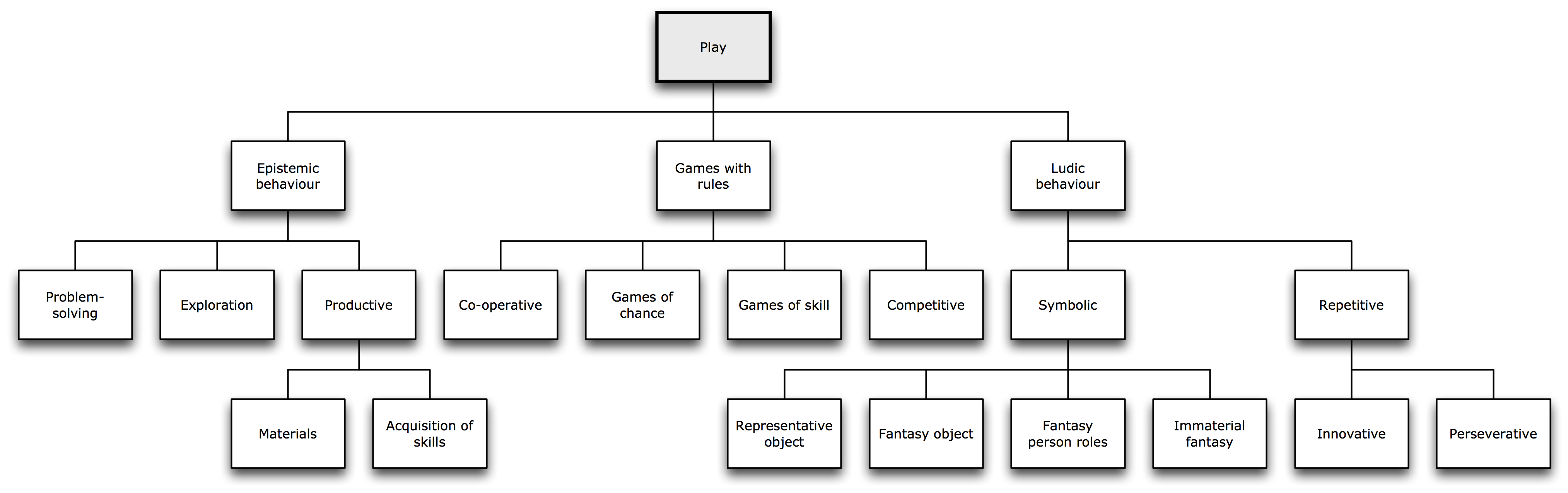
But how do we understand play? As pervasive as it is, understanding play is no simple matter. Play is complex and multi-faceted with multiple theories of play, various play taxonomies, and different types of play. Because it is familiar and we already know about it, we often assume that play is self-explanatory. Play is at the intersection of multiple disciplines but not an established academic discipline itself; it is unlikely that staff with degrees in play studies will guide a museum’s exploration of play. Yet, like any cornerstone idea for any museum, having a shared understanding of play is invaluable.

Are you and your museum grounded in play? What aspects of play are important at your museum? What is its role in the museum? How does it relate to other priorities and how does it contribute value? Answering these questions is not quick and easy, nor is digging deeper to be more grounded in an understanding of play. There are, however, ways to go about answering them. 

Get started by jumping in anywhere in the activities below. Proceed in no particular order.
  1. Play. Play yourself. Play with blocks, bubbles, pieces of fabric, sticks, large pieces of fabric, cardboard boxes, tape, stones.  
  2. Read about play: articles, journals, blogs, reports, and books.  
  3. Invite and collect childhood play memories from staff and board.
  4. Compile collected play memories, combing through them for threads and themes. Incorporate
    What are staff play memories?
    some into the annual report, the museum’s website, grant proposals.
  5. Develop a definition of play for your museum with your colleagues.
  6. Compare your museum’s definition of play with those from 2-3 other museums.
  7. Gather 5 definitions of play from researchers and theorists.
  8. Add more loose parts to exhibits, programs, outdoor spaces, increasing the variety and quantity.
  9. Think about and explain how those loose parts will inspire and extend play; incorporate these ideas into staff training.
  10. Hire people who are OK with loose parts that are varied and that migrate among exhibits.
  11. Observe play in your museum: families at play, couples at play, children at play.
  12. Record observations about play in your museum. What kinds of play are you seeing? What does it look like? 
  13. How do families play together?
  14. From your observations, identify 3 examples of how visitors appear to be learning through play.
  15. Talk with other staff about play. How does it look in different exhibits; among children of different ages, for children with different needs and abilities; for teens and adults?
  16. Practice distinguishing among different types of play: dramatic play, constructive play, exploratory play.
  17. Carefully read graphic panels in your galleries. What do they convey about the museum's interest 
    in play? 
  18. Dig into the differences among pretend play, imaginative play, and dramatic play. Are there any? Is one better suited to your museum? Why?
  19. Observe play in different settings outside the museum: on playgrounds, in parks, in stores, on street corners, and in natural settings.
  20. Talk with parents about play: how do they see their child’s activity at the museum in relation to play? How do they see their role in facilitating it? How do they see play connecting with learning?
  21. Talk with teens and with adults about play and how they see themselves playing.
    Play with staff (Photo credit: Fantastic Norway)

  22. Develop a perspective on games and gaming for your museum.
  23. Look at other “big ideas” at your museum like early literacy, creativity, inquiry, making, learning, exploring, executive function, etc. How does play connect with them? Draw, map, or explain the connections.
  24. Develop 3 questions you want to know more about play. Figure out how to go about answering them.
  25. Develop a perspective on the role of adults in children’s play at your museum.
  26. Locate responsibility for play in position descriptions.
  27. Set up play training for museum staff–all museum staff.
  28. Sign up for play training for yourself.
  29. Search for play taxonomies: Bob Hughes, Corinne Hutt, Mildred Parten, Dr. StuartBrown.
  30. Develop a logic model for play and its outcomes at your museum. 
  31. Play. Play with staff.