Showing posts with label Learning. Show all posts

Sunday, May 22, 2022

The Uneasy Relationship Between Play and Educational Outcomes


MUSEUM NOTES
Jeanne Vergeront
Vergeront Museum Planning

A query on ChildMus several years ago captured a tough situation so many of us face so often. A museum educator asked for suggestions in dealing with a funder request. The funder wanted to support exhibits with specific measurable educational outcomes for at-risk children at his museum, a museum geared towards play and primarily serving 4-and-5-year-olds. From a rumpled copy of my reply to him and notes on how museums struggle with similar versions of this expectation, I’ve explored the uneasy relationship between play and the quest for educational outcomes. What follows is the core of my response on ChildMus with some changes for flow and clarity and more recent thoughts on managing the relationship in favor of play. 


The situation you describe around play vs. measurable educational objectives is one so many  in our field can relate to and one that is frustrating. I agree with some of the responses you’ve received about play and educational outcomes. I would go further, taking an approach that explores what play can deliver in the spirit of play and equivalent to objectives. The organization that wants to support exhibits with specific measurable outcomes for at-risk children is well intentioned but misunderstands some basic realities about children, museums, learning, and play. 

A push to close the achievement gap and show results is frequently at odds with a value on children’s play in museums, preschools, kindergartens, and at recess. While there’s no easy way to reconcile these interests, it would be a mistake to abandon play in favor of measurable educational outcomes even with the promise of funding. Similarly, it would be irresponsible not to work at making visible the value of play for children in museums and other settings. The need to move beyond a collision of these perspectives is imperative in order to serve the interests of children, museums, and their communities. 

The Nature of Learning. Learning does not occur through a single episode, a well-structured brilliant lesson, or even one-on-one tutoring on a specific concept. Not in museum exhibits, programs, and not in schools. That’s not the nature of learning. 

Learning is the accumulation of experiences a learner has, connects with, and makes meaning of through sensing, reflecting, thinking, and talking. That’s largely true regardless of age, setting–school, museum, program, or exhibit, library, playground–or strategies such as reading, play, moving, or experimenting. Without the agency of the learner, repetition, revisiting and connecting past experiences; without time, and social and physical interactions with objects, materials, people, ideas, and the environment, learning does not occur. 

As learners we construct our understanding not from a single experience or source, but from a variety of episodes over a stretch of time and generally in relation to others. Regardless of their experiential approach, museums serving children take advantage of this. Children will learn about the world–or the slice of the world an exhibit invites them to explore–by engaging, comparing, experimenting, watching others, asking questions, trying and missing the mark, moving, and making connections among objects, tools, materials, and environments. Even without museums setting any measurable learning outcomes for them, children will learn in rich, engaging museum environments. It happens through play. 

Professionals in museums and other informal learning environments need to be clear about play and the nature of learning themselves as well as educate stakeholders, partners, and supporters about this. Those insisting on educational outcomes for play are doing a better job than play advocates have in communicating the value of play. 
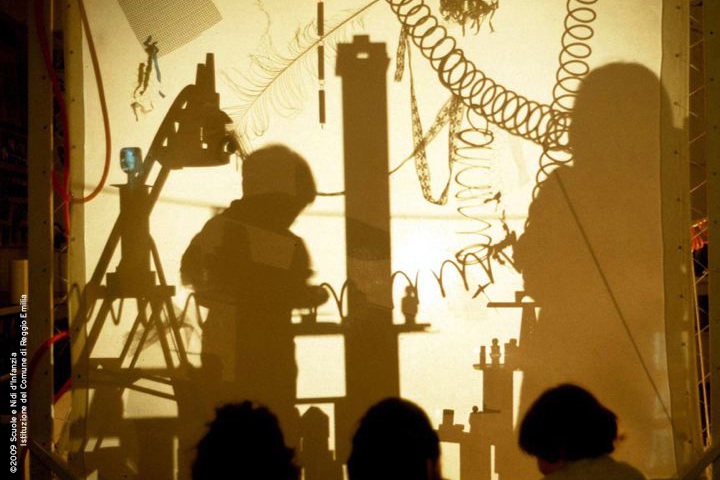
Photo credit: Reggio Children

Play, a Powerful Strategy for Learning. From infancy on, children are naturally drawn to play
which adults label variously as: sensory, exploratory, construction, physical, imaginary, and dramatic play. Most often, play is a seamless mix of all of these and exploration and learning. Understood as freely chosen, personally directed and intrinsically motivated, real play embodies qualities critical to learning as well as to children’s well-being. 

The learning that occurs through play is unlikely to resemble the kind of learning we think of in schools delivered primarily through instruction. Active, fluid, joyous, iterative, play crosses domains and disciplines. Isolating moments as evidence that math or science learning is taking place or a child has learned a particular concept is elusive (and illusive). 

This is precisely what makes meeting a request for measurable educational outcomes fundamentally problematic. If children direct their play—which is a key criterion of free play—then no one else but the child can really set the educational outcome for their play. 

While play’s benefits do not appear as tidy, measurable learning units, they are no less valuable. Their value is of a different, and essential, nature. Real learning is unlikely to occur without motivation. The curiosity that characterizes play is an urge to find out more, reduce uncertainty, and get at more complex or inaccessible aspects of the world. In play, learning crosses affective, emotional, physical, linguistic, and cognitive domains, boosting the whole child. Children gather information about materials and test their properties through play. The capacity to think counterfactually, connecting facts not ordinarily viewed together, emerges spontaneously during pretend play. In building tall and wide, climbing and testing physical abilities, taking on a role, and negotiating story ideas, children’s competence and confidence grow. Through play, children learn what is essential for life that others cannot teach them. 

Framing Play’s Benefits to Children. While museums for children may be passionate about the value of play, they have generally not been successful in articulating play as a valued and productive strategy for learning. “Play is learning” is not a convincing case for play. Communicating how play is a productive strategy for learning must draw on relevant research and be supported by observations of how play appears in various conditions. Without this foundational understanding, museums chase others’ priorities, adhere to cherished beliefs, and fail to follow-through. 

Museums must be proactive in defining the benefits of play for children rather than try to construct ill-suited educational outcomes. Advancing play as a credible strategy requires understanding play, integrating strategies fully across museum experiences, and gathering evidence of play’s benefits. 

Foundational experiences of greatest importance to the museum. Building a convincing case for play begins with a museum focusing on where it believes it can contribute to positive change in children’s lives. It can look to foundational experiences that provide solid underpinnings for a good start in life and to the attitudes, dispositions, and skills that research indicates valuable throughout life and encouraged by play. Not facts, math problems, calculations, or the direct results of structured activities, foundational experiences are among the life dividends, benefits, or impacts of play opportunities. Benefits might include a child feeling connection, acceptance and belonging; a growing sense of competence; or having a enjoying well-being and optimism. 

A focused set of dispositions, skills, or awareness important for children now and in the future is critical. Developing a deep understanding of foundational experiences, dispositions, and understandings is neither quick nor easy. It involves delving into research and learning what these experiences might look like in this exhibit, at that component, in this interaction, or in that program. While a museum may come across a list of possible benefits of play, it can’t simply import that list, from a recent study or from an admired museum. These attitudes and dispositions must align with a museum’s larger purpose, knowledge of its audience and community, and its own expertise and capacity to create engaging experiences likely to impact children in desired ways. 

Photo credit: Vergeront
Creating the conditions for play. Exhibit and program experiences and staff engagement create the conditions for play which include a supportive and relevant context; engagement with others; touching on multiple play patterns; rich and varied materials; and prolonged play episodes connected to the play benefits of highest interest. The better aligned a museum’s play opportunities are with specific components, activities, images, materials, and caregiver, staff, and volunteer interactions, the more likely children will have the opportunity to tap into and exercise those dispositions. Multiple play experiences, during one museum visit, on repeated visits, connected with everyday experiences, are part of the growth and development process for children. 

A theory of change. Connecting the museum’s experiences with the impact it hopes to have is its theory of change; it describes how and why a museum expects desired changes associated with the play opportunities in its environments, exhibits, programs, initiatives, and events. For a museum with an established play approach, a theory of change suggests that children spending more time in rich, varied, connected play experiences with others that they themselves direct will enjoy benefits of, for instance, a sense of well-being, a growing feeling of competence, understanding other perspectives and feelings. 

Benefits, Action. These are not short-term educational outcomes, but are life-time benefits of play. While not measurable educational outcomes, play-related benefits laid out in a theory of change and logic model demonstrate focus, an understanding of relationships, and rigor. Connecting the pieces logically also provides a critical foundation for being explicit about what those changes might look like for children, their parents and caregivers, and community. 

A theory of change provides a museum with a plan for action. The focus, connections, and reasons for believing change is possible lead to identifying impacts and results that can be noticed, described, made visible, and measured in various ways. They can be expanded and carried forward and change lives. No less important, these are the steps allowing a museum to clearly communicate the value of its work to others–including its community and funders that want to support its work and its purpose.

Saturday, March 26, 2022

Learning Together in Museums


MUSEUM NOTES
Jeanne Vergeront
Museum Planning

Originally posted December 2017 

New views on learning together
(Dalston Mirror House by Leandro Ercich)

When we think about learning together in museums, we note that museums are social spaces. We focus on visitors as part of groups, small intergenerational social groups–families–and school or community groups. We plan for learning in such groups in exhibits, on tours, and in structured program activities.

While the group is a powerful context for learning in museums, learning together also occurs in ways that are not necessarily visible, within a group, or planned.

Adults and children; first-time visitors, seasoned members, staff and volunteers; people in groups and exploring solo are each likely to be learning together. That’s not surprising. This is how we learn. Beginning with the finely tuned interactions between mothers and infants, we build meaning together through social interaction. David Hawkins, referencing Vygotsky, Dewey, and Malaguzzi, stated there’s never learning that is not socially constructed.

Because we do make sense of our world through interactions with others, we are often learning from them informally through conversations, gestures, and observation. In a gallery this may be a visitor noticing how someone handles a tool or refolding a paper airplane after watching how another paper plane floats down. It may be a docent learning from a tour member’s question or someone eavesdropping on a conversation about a painting on view.

The ideas we pick up from others and build on are part of learning together and critical for us doing our jobs. Someone’s stickie note posted on the talkback board may spark an idea for an idea for an exhibit activity. The grant proposal you are writing or the conference session presentation you are working on is your learning together with colleagues. Without learning from others’ well-framed question, study results, or trenchant observations, my blog posts would consist of a few phrases and some examples.

Learning together is not the same as getting people together in a group with an intention for them to learn from a given agenda. Just being together in a public lecture, at a staff training, or at a funder’s gathering of grantees to learn about its projects does not necessarily involve learning together.

A working definition for learning together might be the active, co-exploration among informal learning partners to make meaning through watching, listening, talking, or gesturing. These learning partners may, or may not, be obvious, known to one another, or even present.   

A visitor engaging with an exhibit might be inspired by seeing how someone uses their body to lift a heavy object; from noticing the features of an elaborate block tower created and left by others; or from observing a technique for working with a new material. Nearly hidden as these moments are in the flow of words and movement at an activity, in front of a fish tank, tapping on a screen, learning together is learner driven, on-the-spot, and occurring before our very eyes. And they happen in a flash.

Learning together in the Zone of Proximal Development
For instance, we sometimes see a child pair up with another child or call on an older partner to work with on an activity or solve a problem. Bringing together different levels of information, skills, interests, and experience expands the available range of capabilities, of sense making and meaning making. These interactions produce new learning and insights such as, “Oh! I see how to do that now.” Learning is occurring through what Vygotsky calls the Zone of Proximal Development, the difference between the actual and potential level of development available through collaboration with a more capable peer.
• When museums create collaborative experiences and activities that invite a wide range of capabilities, skills, knowledge, and previous experience they support learners in benefitting from more capable or knowledgeable peers and enhance meaning making.

Just-in-time information pertinent to the moment
In the lively mix and mingle that can occur around a display case or an exhibit activity several conversations may be murmuring along at one time. Anyone nearby might overhear someone’s excitement about what they are looking at, hear an explanation of how something works, or pick-up on the significance of a tiny detail. At that moment, the learner gets something they would be unlikely to get otherwise: just-in-time information pertinent to the moment, the place, the activity, and what’s going on. Not everyone leaves with the same understanding, but each does have a relevant understanding of their own
• Museums can add to the richness of visitors’ explorations and inquiry by facilitating opportunities for conversation in spaces where people can bump into one another, work or stand side-by-side, and eavesdrop. Something fascinating to notice and talk about in places to linger also encourage conversation.  

A dialogue through the medium of materials
Photo credit: Spielgaben.com
Two children work side-by-side exploring clay at a worktable. One child looks at the other child’s clay construction, a construction with wires. Noticing the wires, the child adds wires to their construction. When the other child sets a piece of fabric on top of the wires, the other does as well. That child then carefully presses one shell and then several more into the clay and announces that this is treasure at the bottom of the ocean. At first we may be inclined to view this dynamic as one child copying from another. That moment when one child glances at another’s choices and process to shape and elaborate a piece of clay may be a dialogue between them through the medium of a material.  
• Museums can support back-and-forth explorations by creating places to work side by side with easy visual access that allows seeing what someone else is doing. Offer a wide range of materials that prompt rich, new dialogues. Mirrors mounted overhead showing what’s happening from a different perspective provide additional opportunities to borrow, expand, and learn together.

Revisiting what we have heard others say
In an out-of-the way spot, someone sits alone in relative stillness. Waiting for someone? Seeking quiet time? Enjoying a moment of reflection? In what may appear to be a solitary moment, someone could be considering any one of a number of things: the light in this space, the source of light in a painting the docent noted, and echoes of others’ comments about changing light and shadowOne of the processes that occurs in museums is reflection, through which we learn. In reflection we revisit something we have experienced, something we have heard others say. We continue the conversation through our silent inner speech; remembered voices of others enter our thinking.
• To support reflection and internal conversations that build connections and understanding, museums can create quiet spaces with comfortable seating, and views that engage and calm.

Learning from others who are not present
Voices from the past make
connections in the present

Even when we are exploring an exhibit by ourselves, we are not alone. In fact, we are likely to make connections between what we are experiencing and what happened previously and with others who are not present. We interact with the artist when we think about what we see in a painting, even if it’s a silent, “I don’t get it.” We transport a strategy we saw someone else use and apply it to another situation. Reading and responding to a question on a text panel is a silent conversation with the author, unknown to us, who composed the question. We may share our experience later with someone over coffee.
• Museums support connections with others across time and space by asking questions, offering suggestions, creating challenge and uncertainty…in text panels, through staff engagement, through discrepant objects. These and other strategies encourage learners to make multiple connections that are meaningful physically, with others, and with previous experiences.

Everyone learns something different together
Sometimes a group of visitors spontaneously becomes a team working together at an exhibit. They create a challenge or invent a problem they must solve together and organize themselves around the challenge. It may be to move blocks on a crank-operated conveyor belt from one level to the next in record time. Commands come down to crank faster, updates are issued on how time is ticking away, tasks are added to the challenge, new workers are added to cause, and materials are adapted. In these moments, everyone learns something different together.
• Connected experiences, ones that flow physically, that work with varying numbers of visitors and allow visitors to assume different role support self-forming groups of visitors directing their experiences and learning together.

Learning together makes possible what might not otherwise occur. No amount of planning on the museum’s part could provide the on-the-spot support or information, the extra pair of hands, or the just-in-time idea that makes learning together happen.


Sunday, October 3, 2021

Seeing Ourselves as Learners


MUSEUM NOTES 
Jeanne Vergeront 
Vergeront Museum Planning 


Photo Credit: Anagram Bookshop

Fresh from a recent 2-hour Zoom with my Thursday morning thinking group, I wondered what I would do without them and, for that matter, without my Wednesday afternoon talk group. For years these lively, meandering conversations have excited my mind, introduced me to new ideas, and dislodged me from some brittle certainties. They have sharpened my thinking for some Museum Notes posts. To be honest, these rich collegial conversations (along with videos of babies and dogs) have recharged and delighted me over these pandemic years. 

So, when I watched Paul Orselli’s FAQ interview with Dr. Preeti Gupta and Dr. Lynn Tran on professional learning’s role in rebuilding the museum field, my mind took off to think about museum staff and volunteers as learners. 

Learning happens everywhere, all the time and over time. All of us, from all walks of life, throughout our lives, learn in everyday moments, casually, in virtually every setting we are in. We learn at home, work, school; on-line, in the garden and on walks; when we talk to neighbors over the fence or travel the world. We are constantly adding to, tinkering with, or revising our thinking and learning. That’s just the way it is in this world and it's just the way we are as humans. 

Photo: Portland Children's Museum
We are so wired to learn from birth that we almost have to try to not learn. Still, we do have to work to continue learning in meaningful, relevant ways to stay abreast with our dynamic world and changes in our jobs, museums, communities, and ourselves. We encounter new technologies, theories, perspectives, relationships, vocabulary, health research, etc. all the time. 

How do we prepare ourselves as individuals and as professionals for these changes? How do we keep up with, be invigorated by, and enjoy the changes we encounter? Discover and explore new ideas? I can’t think of another way than to grow ourselves as active, engaged learners, the kind of learners we hope our visitors are. 

Of course, we all grow somewhat as museum learners, but I am certain we could grow more as self-directed, supported learners if we were more intentional and viewed our learning more broadly. I have found myself thinking about the following questions. 

• How do we square our explicit museum commitment to advance learning without also committing to being active, intentional learners ourselves? 
• What limits supporting vibrant learning communities among colleagues? 
• How can we engage and support learners in a vibrant, on-going museum learning community? 
• Why not get started right now? 

How do we square our explicit museum commitment to advance learning without also committing to being active, intentional learners ourselves? This is a critical question to address honestly. Museums liberally sprinkle their visions, missions, and values with learning; life-long learning; education and educational. Learning is at the heart of other ideas: expanding public knowledge, an ever-deeper understanding, or engage, educate, and enlighten. Museums identify as places of informal learning and as part of the learning ecosystem. They focus on family learning, early learning, and experiential learning. Websites highlight how museums accomplish their learning interests—educational outreach, field trips, teaching strategies, innovative learning experiences, and PD workshops for teachers. Museums often talk about co-constructing experiences with visitors, but less so about co-constructing knowledge among colleagues. 

Being true to museums’ roles and responsibilities means seeing ourselves as learners, infusing our work with an energy around our learning as well as visitors’. It means working in a state of curiosity, questions, ideas and making meaning together. This is a responsibility of both the organization and its staff and volunteers. 

What limits supporting vibrant learning communities among colleagues? Time, always scarce, is inevitably the big hurdle in growing a robust learning community among colleagues. We are busy, often carrying large workloads which hardly allows enough time to cover everything; schedules vary. Unfortunately, time is also critical for growing a community of learners. It is necessary for reading, reflecting, and discussing articles, studies, and ideas; for exploring complex issues in a meaningful way; for following ideas and integrating practices into the museum’s work; for tracking impact; and, for building trust. Professional growth during brown bag lunches simply doesn’t communicate that the activity is valued as much as saving time is. 

Funding is also critical to staff learning being a priority. Realistically, professional growth isn’t likely to reduce costs. More likely it will add costs and compete for time with demands of job responsibilities. Fortunately, other benefits accrue: improved staff satisfaction, innovative strategies, greater collegiality and long-time friendships; and increased capacity and impact. 
Mini-YMEC reunion at ASTC:
Paul Richard & Paul Tatter

How we see ourselves as thinkers and learners plays out here as well. While we come into our positions with expertise and skill, we may not question 5 or 10 years later how sharp our skills are. When confident in our expertise and experience in our area, we may not challenge assumptions, consider new scholarship, or try new practices. So busy doing, preparing, and moving to the next set of deadlines, we assume our work has a beginning and end rather than fits into repeating cycles which invite reflection and learning. 

Responsibility for professional growth may receive inadequate attention in a museum, as an afterthought, or tucked into “other duties as assigned.” A patchwork of responsibilities in HR, department budgets, or director’s choice means required training tops the list and annual conferences are automatically approved. Midyear budget trimming takes a bite out of it. 

A robust professional growth and development program is not an item on a checklist, but an expression of a museum’s values, its commitment to its people, a belief in its impact, and its investment in its future. It takes time, resources, collaboration, and imagination. 

How can we engage and support museum learners in a vibrant, on-going museum learning community? Conjure up the most powerful professional learning experience you’ve ever had, something that really inspired you, changed your perspective, or energized you to do something differently. Was it discovering a new practice? A deeper understanding of a familiar concept? Glimpsing how to engage more effectively with visitors? And what about it was so valuable? Navigating diverse perspectives? Extended time with colleagues? Time to consider ideas critically? Moving at your own pace? 

As informal learning settings, museums start with an advantage in creating learning experiences that are participatory, learner-directed, offer choice, and reflect an understanding of adult learners. Then, museums limit themselves to a few formats like trainings and conferences to deliver targeted professional content. This contrasts with museums encouraging staff to shape experiences that reflect their own learning interests. 

These interests vary widely across any museum. Staff may be brand new or long serving; have a museum background or not; have practical or philosophical inclinations; be drawn to local or national issues. Still, everyone deserves access to professional learning and growth opportunities that suit them. The following examples (many of which are, unfortunately, no longer active) illustrate just how wide-open learning opportunities can be, opportunities where museum learners adapt formats, play with group size, and modify along the way. 

Thinking Groups, self-forming groups of practitioners, are connected by an interest such as facilitation, design thinking, assessment and documentation, early years, or cultural competency. Thinking groups are flexible. Small or large, they may be contained within a museum or reach across museums, link with academic or other settings. Familiar in museums as communities of practice (CoP), members get together regularly around a shared concern or a passion for something they do and learn how to do it better together. 

Thinking—or working—groups may be formed to address museum as well as field-wide needs such as regional support networks, leadership development; and exhibit resources. Thirty years after two groups of children’s museums formed YMEC (Youth Museum Exhibit Collaborative) and MC2 exhibit collaboratives (Midwest Children’s Museum Collaborative), members still talk about how much they grew professionally through their involvement, sharing with others, and solving problems together. 

Extended Inquiry is not just for evaluators and researchers, not just for scientists, and not just for grants. Rather, on-going inquiry can be carried out with colleagues at a museum and in other places with shared interests. Do you have a chewy question? Most everyone does—about their practice, learning, observation, the power of objects that can be explored through various approaches. Team-based Inquiry and collaborative action research are two just examples of processes. 

Years ago, I facilitated several groups of K-12 teachers engaged in year-long action research projects. These teachers spent the school year questioning, observing, introducing new strategies, reflecting, and changing their practice in areas of importance to them. They were invigorated by formulating research questions that mattered to them, critiquing their own classroom practice in order to change it, and thinking with colleagues. 

Small group reflection in Reggio 2013
Study Tours, focused group-learning experiences, combine travel with an extended investigation of an approach, set of practices, or other settings. A 2013 museum study tour allowed 52 participants on 9 museum teams along with partners from research, higher ed, design, and early childhood to participate in an 8-day study tour of the municipal schools of Reggio Emilia (Italy). With daily presentations by early childhood specialists, educators and studio teachers, visits to the infant-toddler centers and preschools, a tour of the Documentation and Educational 

Research Center, and facilitated reflections, the study tour allowed extended amounts of time for exploring and reflecting which is typically absent from professional learning experiences. Study tours can involve less time and money while maintaining the benefits of exploring other settings with group visits to arts organizations, libraries and nature centers, or behind-the-scene tours of museums. 

• Museums have book groups for their members (http://www.museumedu.org/museum-book-clubs/); why not for staff? Reading groups can take many forms: be small or large; sample topics or deep dive into a subject; be in-person or virtual; include one or multiple departments or museums; be facilitated or open-discussion. What they have in common is a shared experience with varied perspectives, new research, content connections; and time for lively discussion. 

In the mid 1990’s ASTC fielded an NEH-funded project for staff in museums in 3 areas, Boston, Twin Cities, and the Bay Area to read a number of classic books paired with science exhibits. Books included Plato’s Meno, Swift’s Gulliver's Travels, Shelley’s Frankenstein, and Keller’s A Feeling for the Organism. Discussions were facilitated in seminars by St John’s College tutors including Tom Simpson. A participant in the project, I found the readings and discussions both strenuous and invigorating. This project stands out as rich and multi-layered, an impressive invitation to learn together. 

What many, if not most, of these professional growth opportunities have in common is that personal choice and external support are built into them. They involve shared interests, growing relationships, continuity over time, building trust, and offering a sense of comfort and safety. 
Design Thinking Boot Camp:
Minnesota Children's Museum

Why not get started right now? The list 
doesn’t have to end there. Be inventive; 
shape your own professional learning experiences. 
Be bold! What about a boot camp, your very 
own think tank, or a symposium? Start with 
what sparks your curiosity. What you want 
to know more about: adult learning? the 
socio-cultural context in learning? tinkering 
for elders? What topics in articles, journals, 
and blogs have made you light up thinking, 
“Yes! I’ve been waiting for that!” Look 
below at some resources that might move 
you and your colleagues forward and build 
some momentum towards a museum 
professional learning community. 
 
Form a group, even a small group of two or three. Name it to help get it going. I once started a group called “The Little Big Ideas Club” with two friends. We had ideas for projects that we wanted to explore; they weren’t big or remarkable project ideas. 

Join an existing talking or thinking group like NISE Network’s Team-based Inquiry. 

Check-out the following links or websites. These resources are for different audiences, evaluators, scientists, educators, the problem finders, and the curious. Most resources link to tools and more resources. You will surely find something. 


Sunday, April 21, 2019

Customer, Learner, Citizen

Photo credit: Vergeront
Originally posted January 2011


Visitors, audiences, guests, customers, clients, patrons, users, the public. How do you or your museum refer to the people it serves and hopes to serve? 

Articles, blogs, conversations, and even mission statements suggest there is little agreement about this important term among museums. In fact, labels are often used interchangeably. This might imply that it doesn’t really matter what we call the adults and children who walk through the doors, enroll in classes, become members, shop at the store, explore exhibits, and visit our websites.

In fact, what we call our museum’s public beneficiaries really does influence how we think of them, plan for them, serve them and our communities, and even assess our impact. “Visitor” might have the lead as a standard term, but with major shortcomings. It is not only impersonal, but it also lumps together millions of people into one undifferentiated mass. It implies a temporary relationship with someone who will be leaving soon. Finally, it ignores the vast number of people who may not physically come to the museum but who have an interest in and a relationship with it. Teachers and school administrators, volunteers, partners, funders, business leaders, neighbors, and taxpayers are only some of the stakeholders who don’t fit the label "visitor."   

Visitor is not so much a wrong term; it is simply inadequate. The lively, exciting activity around audience conceptualizations seems to suggest this as well. (Falk, J. 2006;  Stylianou-Lambert, T. 2010. Pekarik and  Mogel. 2010.)

Somewhere between a one-size-fits-all category of visitor and a research-based audience segmentation is a view of museum visitors as:
  • Customers
  • Learners
  • Citizens
While very basic as a taxonomy, this nevertheless focuses on the person, engages with museum practices, and aligns with most museums’ broad strategic interests. It also accommodates the very real possibility that one person is likely to be a customer, a learner, or a citizen at various times during a museum visit depending on their interests, choices, and activities.

Considering the particular roles and associated interests of customers, learners, and citizens opens the possibility of relationships with them that are more personal than abstract and that may be on-going. It places people in the social context of museums. And it facilitates understanding, describing and assisting people in what they hope to accomplish by connecting with the museum.
  • Customers purchase memberships, attend events, shop in the store, and use websites. They are interested in friendly service, personal satisfaction, a good value, comfort, easy navigation, and a positive experience. 
  • Learners visiting exhibits, participating in a program, or upgrading skills expect rich accessible content, opportunities to apply existing skills and experiences, or appreciate art. They may want to learn together as a family or provide a learning experience for their children.
  • Inspired to serve their community, eager to expand or share skills, or acting on a long-standing interest, citizens may be volunteers, participants in research, advisors, advocates, or enthusiasts. They bring energy, expertise, and goodwill that help a museum strengthen its community connections.
Getting to know and plan for customers, learners, and citizens suggests new contexts and practices. We tend to construct a context that takes into account qualities we attribute to someone in a particular role. So distinguishing among roles is likely to sharpen awareness of expectations and associated contexts. Alternative assumptions, approaches, and practices may come into play along with new resources and studies.
Customers

  • Customers. Satisfying customers brings to mind ways to be helpful, the importance of taking the extra step, and the potential of an on-going relationship that serving visitors does not. Two decades ago museums experienced a surge of awareness around satisfying customers. Meeting or exceeding their expectations became a priority. Subsequently, customer service procedures were developed, staff training was implemented, and satisfaction levels are measured and tracked. Lobbies increasingly offer designated lines (i.e. member express), food and other amenities, and activities to engage children while parents purchase tickets. A reputation for exceptional customer service builds a valued brand and good will that benefits a museum for years.
Learners
  • Learners. Imagine the discussions, questions, and choices a team planning an exhibit for learners would have compared to the same team planning an exhibit for visitors. To plan for learners, a team might develop a definition of learning. It might identify attributes like curiosityrich experience bank, or creative, that learners bring to the objects, images, text, media, and activities a team will shape into an exhibition. The team could use generic learning outcomes or content-based frameworks to frame learning goals and evaluate the exhibit’s impact, just as it could design exhibits using research on the connection between family learning and exhibit characteristics. The more developed a view of the learner a museum has, the more fully it is able to deliver on a promise of learning value.
Citizens
  • Citizens. Museums invest significant resources in developing partnerships, growing networks, recruiting volunteers, delivering programs in the community, and reaching new audiences. These are long-term efforts and a challenge to sustain. Engaging citizens in this work, however, can shift resources and results. Whether they are neighbors, hobbyists, volunteers, activists, artists, inventors, or scientists, citizens bring high levels of motivation and commitment. Moreover, their experiences, expertise, and perspectives are assets that help the museum serve its customers and learners more effectively, expand its cultural knowledge, research a pressing local issue, or bring a wider range of the community into the museum. While listening, nurturing relationships, and building trust take time, authentic citizen engagement goes directly to a museum’s aligning its interests and assets with its community’s priorities.
Everyday, museums open their doors, look sharp, eagerly await and welcome visitors. If, however, a museum were to focus on serving its customers, inspiring learners, and engaging citizens, it could accomplish this and more. A museum could also help itself become a recognized and valued asset in its community.
  • Falk, J. 2006. An identity-centered approach to understanding museum learning. Curator: The Museum Journal. 49/2: 151-164.
  • Pekarik, A.J. and B. Mogel. 2010. Ideas, objects, or people? A Smithsonian exhibition team views visitors anew. Curator: The Museum Journal 53/4: 465-483.
  • Stylianou-Lambert, T. 2010. Re-conceptualizing museum audiences: Power, activity, responsibility. Visitor Studies: 13(2): 131-144.

Saturday, March 9, 2019

Rewind: Creativity, Play, and Learning


Combinatory play seems to be the essential feature in productive thought.
ALBERT EINSTEIN 
Some of us might say there’s some relationship between creativity and play…maybe. Stretching a bit, some may say they appreciate play for its role in creativity. Fewer are likely to have considered the possibility that creativity and play are closely related. Mostly we tend to think of creativity and play as worlds apart. 

Play is for younger children; creativity is for adults and older children. Creativity is a charm that unlocks potential; play is for blowing off steam. Creativity is serious business, play is what happens when there’s nothing else to do. Creativity seems mysterious; play is ubiquitous.

Yet, looking at creativity and play more closely and together highlights some important similarities and connections between them as well as to learning. 

Admittedly there are many views of both play and creativity. Furthermore, both concepts are difficult to capture and often assigned overly elastic or simplified meanings. Traditionally creativity has been considered unrestrained, uninhibited, cathartic and emotional; or individual talent and flashes of insight. More recently creativity has been theorized from perspectives of education, sociology, psychology and philosophy. It is viewed as generating something new that has value. Educators in the schools for young children in Reggio (IT) consider creativity as the art of thinking. Then there is one of many recursive five-stage processes. Expansive territory, indeed.
The Inner Circle by Jaime Filipe

No less vague and fraught, play is likewise viewed through multiple lenses of psychology, evolutionary biology, and child development and enjoys many definitions. Complex and ambiguous, play is recreation, the child’s work, and a pleasurable activity carried out for its own sake. Just as there are multistage processes for creativity, there are play taxonomies galore. According to Martin Buber, “Play is the exultation of the possible.”  

The rhetorics of creativity and play mirror one another in significant ways. We see in both, ideas and forms that are consumed with pleasure. In neither is the object, form, or idea accepted as a given. Whether manipulating blocks, making music, designing a new font, or redesigning packaging, we do something to whatever we started with, combining, stretching or somehow up-ending its original form. In play and creativity, we draw on stored information, ideas and skills from accumulated experiences and settings. In both creativity and play, a similar push-and-pull of drives is at work. We make bold connections, are flexible, and find different combinations of ideas on the one hand, and we respond to the drives of conformity, familiarity, and predictability on the other. And although forts, songs, apps, and new food products may result from play and creative activity, neither necessarily produces tangible products.


Creativity In Play
A sense of a more substantial relationship than a list of similarities between creativity and play emerges from recent thinking in cognitive science and neuroscience. It builds, in fact, on Einstein’s idea of creativity as combinatorial play. Versions of this idea have been explored in articles in American Journal of Play as combinational creativity (Boden p. 7) and combinatory play (Stevens. p. 99).

Leaf Bowls by Kay Sekimachi
In combinatory play a person uses conscious, deliberate connection making and imagination, manipulating familiar ideas, images, sounds, or forms and comes up with unlikely combinations of ideas, images, sounds, or forms. Recombined they are novel, surprising and valuable. We may experience this in combining disparate information, repurposing an abundant discard, imagining dried leaves as a bowl or translating a metaphor into an immersive environment. When we do, we play with possible outcomes, adapt to unexpected results, and link what had seemed unlinkable. We envision what is not present, compare and contrast various combinations, fuse and peel apart constructs to arrive at a new whole. The brain plays.

Connecting previously unconnected images, facts, or elements in ways that are new and meaningful occurs through both conscious and unconscious cognitive play. The mind hovers between structure and openness; it wanders between focused attention and diffused attention. It skates freely with and among a series of combinations without imposing a conclusion. This is a complex form of play as well as thinking.
Falcon Model made of cardboard boxes

The Brain Plays
Thinking outside the box speaks directly to creativity as well as play. For both, this image celebrates freedom from constraints and attraction to possibilities. Creativity invites us to detour rigid frameworks, assumptions, and rules. By thinking outside the constraints of a cardboard box’s original size, proportions, and purpose, a familiar box is transformed into a child’s boat or spaceship or an animation artist’s detailed scaled model.  

Thinking outside the box also suggests how we might look at the relationship between creativity, play, and learning. Making connections between one thing and another is also fundamental to a conceptualization of learning as a connection-making process. Deliberate and conscious, learning involves connecting formerly isolated concepts, linking abstractions with hands-on concrete application, associating previous experiences with a fact, and reinforcing understanding a concept. In contrast to the fresh, unlikely combinations that characterize creativity and play, learning is concerned with making connections that construct a meaningful system of relationships that changes and grows with experience.

Just as creativity requires sidestepping conventional ways of exploring thought, structure, and objects, letting go of well-used and decidedly separate categories for play, creativity, and learning allows us to see how each helps advance the case for and supports the others.


Judging from the number of articles, reports, blogs, journals, and magazines, there’s no shortage of opinions, advice, and evidence about the importance of creativity and creative development and how to foster it. A valued attribute for 21st century learners, creativity enables us to respond to a rapidly changing world and deal with the unexpected by extending our current knowledge and skills to novel situations and by using it in new ways. For everyone–a parent, barista, software programmer, museum, plumber, accountant, or a child–the day job requires creativity. 

Taking any of these three seriously means taking all seriously. Valuing creativity and learning relies on valuing play (at every age). Providing for one provides well for the others. Expanding experiences and enriching opportunities in one area, fuels the other two. If we want children, youth, and adults; citizens, learners, and workers to be creative, follow different ways of imagining, thinking, linking, exploring and challenging ideas, we need to create the conditions that allow players, connectors, and learners to think artfully, to combine and recombine, connect and reconnect pleasurably even exuberantly.

To do this, we have every reason to be generous with tools, machines, images, designed objects, natural forms, found materials, artifacts, and bio-facts; in maker spaces, studios, discovery rooms, and ateliers; backyards, play yards, and junkyards; experiment stations, kitchens, or labs. Unlikely, intriguing, and fresh combinations will emerge as we hold back on judgment and ease up on the pressure to come to closure. We need to respect the element of time for imagining, drawing on previous experiences, successes and failures; for building and rebuilding representations; and for talking about, working with, reflecting on, and making ideas or connections their own.


  • How do you see the relationship among creativity, play and learning? 
  • How do the connections among them expand your understanding of each?
  • How would you create the conditions in your museum or classroom to invite all three?  
Related Museum Notes Posts

Creative work is play. It is free speculation using the materials of one’s chosen form.
STEPHAN NACHMANOVITCH

Tuesday, January 1, 2019

Learning With and From Objects: Part 1


San Miguel Toy Museum
San Miguel de Allende, Mexico
Madison Children's Museum
I recently read Object Lessons in Early Learning by Sharon Shaffer, founding director of the Smithsonian Early Enrichment Center (SEEC) in preparation for an interview for an upcoming issue of Hand to Hand, the publication of the Association of Children’s Museums.

Now a consultant for early learning in museums nationally and internationally, Shaffer draws on her experience at SEEC in Object Lessons to provide an overview of the role of object-based learning in museums, from historical, pedagogical, developmental, and interpretive perspectives. The book offers a solid run through of educational philosophies that fit with museums as informal learning settings: those of Dewey, Vygotsky, Bruner, and Piaget. In particular, Shaffer focuses on how those theories help us understand young children’s learning in general and their learning with and through objects in particular. She provides a wide range of examples of object lessons.

Reading Shaffer’s book advanced my thinking about using objects in museums with children. This area of strong and lasting interest for me was sparked when I read Simon Nicholson’s How NOT to Cheat Children, The Theory of Loose Parts in the 1970’s. In fact, part of my inspiration to start Madison Children’s Museum back then was a strong feeling about the value of objects in children’s play, exploration, and learning. I hoped that a children’s museum would provide more children with richer, more varied environments and access to a greater range of objects to use, manipulate, investigate, and transform through exploration and play.

Now, after nearly 40 years of planning, observing, reading, and writing about children using objects and materials in play, classrooms, exhibits, and environments, I am still working on understanding the role objects actually play in children’s explorations in museums, in particular. We have our beliefs and intentions, but what is actually happening?

While I’ve learned more about children using objects in museums through this on-going inquiry, I’ve also learned that the questions are not that simple. Not only is there a great range of objects in museums, but they also serve multiple purposes, in a great variety of museums that are evolving themselves. At the same time, acceptance of children in museums is also changing.

As I read Shaffer’s book, I thought, in particular, about children learning with and from objects in museums, the nature of the objects we select for them, the child’s and adult’s roles in exploring objects, and the settings in which object-based learning occurs. 

The result is a two-part exploration centering on the child’s interests related to learning with and from objects that hopefully both honors and nudges both traditional museums and children’s museums to better serve those interests.

Object-centered
The museum field continues to define itself in terms of objects. The American Alliance of Museums (AAM) Code of Ethics for Museums states that museums make “a unique contribution to the public by collecting, preserving, and interpreting, the things of this world.” Yet, while the field defines itself in terms of objects, discussion about objects—varying definitions of objects, the purpose of objects, and the changing role of objects in museums—continues. Adding zoos to the definition of museums as AAM has done makes sense as far as collections go; but considering animals as objects certainly expands that meaning. Furthermore, as museums approached the turn of the 21st century, objects increasingly have had to compete for museum attention with a visitor-centered approach, community engagement, and the role of experiences.

Museums, even traditional museums, are no longer limited to housing collections of objects. (Think MASS MoCA, user-generated content and objects in museums, etc.). Whether museums need objects to be museums (see Conn and Dillenberg below) and what counts as objects (explored here and hereis part of an on-going, lively discussion.

While only a small number of children’s museums have collections, I do see children’s museums as object based, a view I think is consistent with Steven Conn’s view of museums in Do Museums Need Objects? “as places of ideas—places where knowledge is given shape through the use of objects and exhibitions.”  And I would include the physical environment in this roomy definition of objects.

For me the shifting and expanding status around the museum object is a sign of a continuing, shared value around objects across museums, as well as an opening for exploring children’s learning from and with objects in both traditional museums and children’s museums.

The Same, Only Different
Swimming in objects, children’s museums find the question where are the objects in children’s museums perplexing. These museums see themselves as object centered at their core. The earliest children’s museums were collecting museums with hands-on artifacts to serve children. In the 1960’s the modern children’s museum concept emerged from Mike Spock’s experimenting with removing objects from cases for children’s hands-on exploration.
Blue Trowel by Claes Oldenburg  at Kröller
Müller Art Museum in Otterlo Netherlands

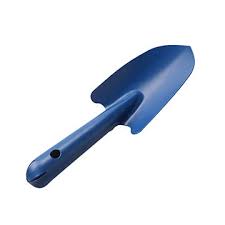
Blue garden trowel at the big box store 


In most children’s museums, objects are literally everywhere. Children move, carry, drop, hide, wear, build, and imagine with objects and materials. In fact, the centrality of objects in children’s museums is expressed in many ways, from museum names (Please Touch, Do-Seum, and Hands On) to learning approaches, hands-on, loose parts, real stuff, and materials exploration.

For children’s museums, object centered means abundant, varied objects and materials that children can explore, use, direct, put together, take apart, and incorporate into their play, problem solving, and social interactions. These settings express a great faith in the power of the object to provide children with information, knowledge, understanding, and meaning. In their shape, texture, weight, size, smell, and other properties, objects hold vital information about the world. They are opportunities for asking questions, experimenting, testing hunches, working out new meanings, and building an understanding of themselves and the physical and social environment.

Even spaces for infants and toddlers are full of objects that they can see, sense, explore. They carry balls, scoop sand, fill baskets, push chairs, turn spinners, and clutch books as they scoot, crawl, and toddle. As they repeat an action or activity, they unpack and repack their growing understandings. And they draw conclusions about their agency, how objects respond to different conditions, and what else is possible.

This is consistent with the Association of Children’s Museum’s Standards for Professional Practice definition of objects as primarily serving as tools to motivate learning, addressing the developmental needs of children, and carrying out learning objectives. 

In art, science, history, and natural history museums, object centered most often means objects that are collected, preserved, researched, exhibited, interpreted, and viewed. These objects come down to us from another time, from many cultures, from far away, and from artists and inventors. Children’s first-hand experience seeing original and rare objects sparks curiosity and creates excitement. In some settings a hands-on gallery activity in a discovery room or a family center can extend the child’s exploration beyond the visual experience, expanding knowledge of the object’s materiality, use, and connection to everyday experience.
When plastic or fiberglas objects deliver
an important experience

Hand-sewn fabric fruits and vegetables
(Children's Museum of Southern Minnesota)
When it comes to critically considering objects in children’s museums, we tend to focus on how they fail the criteria of traditional museums by insisting on viewing objects through a traditional lens of authentic, rare, representative, etc. Often, the focus is on the obvious artificiality of plastic food in a grocery store exhibit. The ubiquitous plastic food in children’s museum grocery stores is hard to defend beyond durability and ease of cleanliness. But, how discerning is such a criteria for authenticity when the object is a life-size fiberglass cow that a child can stand near (or under), and can compare the size of a leg, tail, or ear?     

Traditional museums and children’s museums also differ in being able to categorize and analyze their objects. Artwork, natural history specimens, and anthropological collections lend themselves to classification systems. Categorizing and analyzing balls, ball tracks, and Bernoulli blowers; sieves and scoops, bubble wands–not to mention bubbles—is clumsy and full of exceptions, to say the least. A taxonomic approach to organizing and describing objects such as blocks and cardboard boxes that have been recently and variously used as a rocket ship, a submarine, and a giant crawl-in guitar would miss a fundamental richness. I suspect there are work-arounds that the The Strong museum may use in its collection and Toy Hall of Fame or a Reggio-inspired documentation approach that could look at children’s exploration of objects and materials. Maybe we should look into this.

Over the years, the broader museum field has made some accommodations to children’s museums’ and science centers’ looser definition of objects to include props, interactive components, and giant toys. At the same time, a growing agreement about the value of engaging children with objects in museums is occurring and is documented in Shaffer’s book. Nevertheless, both traditional museums and children’s museums could be working harder and more effectively on the promise of children learning with and from objects. In my next post, I want to explore 5 areas  
§  Great Beginnings
§  What Objects Say
§  Freedom to Explore
§  Context Matters
• Access and Availability

Resources
• Steven Conn. (2010) Do Museums Still Need Objects?  Philadelphia: University of Pennsylvania Press.
• Rebecca Schulman Herz, Museum Questions.
• Rebecca Schulman Herz. “Where are the objects? Why is this a museum?” Curator. May, 2017.
• Eugene Dillenburg What, if Anything, Is a Museum?” Exhibitionist. Spring 2011.
• Hilde Hein. "The Matter of Museums" . Journal of Museum Education, Vol. 36, Number 2, Summer 2011.
• Phillip Kennicott. “Is it a museum or not? The question is worth asking.” The Washington Post. October 2018. 
• Scott G. Harris. 2002. Perspectives on Object-centered Learning in Museums. Mahwah, NJ: Lawrence Erlenbaum Associates Publishers.
• Elizabeth Wood and Kiersten F. Latham. (2016) The Object of Experience: Transforming Visitor-Object Encounters in Museums. New York: Routledge.