Friday, April 15, 2022

Thinking Ahead, Thinking Big

Denver Children's Museum (Photo: Vergeront)
  

MUSEUM NOTES
Jeanne Vergeront
Vergeront Museum Planning

I have been hearing from museums taking stock, looking ahead, and facing their futures boldly. Some are consolidating changes made and lessons learned during the pandemic. Others are addressing new realities as extreme weather events increase. Some are anticipating leadership changes. 

 Regardless of their size, situation, or location, museums are challenged to make sense of the last few years and prepare for a less certain future. They wrestle with the number, scale, and variety of changes they’ve experienced, or recognized, over the last two years. Changes across the museum in attendance, staff transitions, and finances are occurring in the context of great changes in the lives of visitors and the communities they serve. 

 With museums viewing themselves in new ways and facing the future with courage, I have been wondering what might assist them in their endeavors. What started out as notes from conversations with children’s museum folks, blogs, and articles has evolved into a framework for museums to think big and move forward boldly. 

Resting on four pillars fundamental to a museum’s value to audience, communities, and itself, this framework is neither a roadmap nor is it exhaustive. It is a tool for stimulating discussion and reflection, challenging assumptions, and opening possibilities. Four pillars for thinking ahead are:
 
• For Someone and About Something 
• A Distinctive, Experiential Approach 
• A Better World Strategy 
• Making Change Visible 

Museums are complex entities. Guided by an enduring purpose, they are made possible by people to serve people. They manage valuable resources and interact with a dynamic external environment. Moving a museum forward is likewise complex. The four pillars support the rich complexity embedded in museums as well as help reveal opportunities that can strengthen museums in meaningful ways. Taking big steps starts with understanding what is core, distinct, valued, and full of potential and is advance by bold thinking. 

These four pillars are explored with museum examples and suggestions for reflection and discussion to engage the museum’s thinking. As these examples show, a museum doesn’t have to be big to think big. While using examples from children’s museums, the framework works for other museums that also serve children on field trips, at camps, and with their families as part their broader purpose to enrich the community by making art, science, or history accessible. 

For Someone and About Something
Children, their interests, their people, and long-term well-being are at the very heart of children’s museums. Guided by vision, mission, and values, they create engaging and fun play and learning experiences and environments for children and their adults. Children’s museums are highly committed to a core audience of young children and the trusted adults in their lives: parents, grandparents, caregivers, and teachers. 

Madison Children's Museum (Photo: Vergeront)
 Museum Examples: Children’s                 museums define their audience                 variously as: children birth to 12 years;         children’s first decade; children 2                 through 10 years and their families; and     ages newborns through eleven years         old, but designed to engage learners of     all ages. Pittsburgh Children’s Museum      has opened Museum Lab on its                 campus for youth 10+. 


Think About
• Who must your museum serve fully to advance its vision and mission? 
• What are capabilities and strengths of these children that inform your museum’s experience planning? 

In addition to identifying a core audience of children across an age range, children’s museums often identify strategically important groups it intends to serve recognizing that these children may not have a high presence at the museum. These might be children from under-resourced backgrounds; with special needs and abilities; from diverse racial, ethnic, and cultural backgrounds; or non-English speaking children and families. 
Explore & More (Photo: Explore & More)

Museum Examples: The youngest of these emerging audiences are often served in a separate early years space while targeted experiences such as camps serve youth 13 and up. Explore & More offers sensory-friendly accommodations for children with special needs. Many museums have access programs that reduce barriers related to cost. 
Think About
• How does serving children in these groups help your museum accomplish its mission and vision? 
• In what ways is your museum welcoming and creates a sense of belonging for all children? 

Children’s museums are also about something important in children’s lives. Some are discipline- based concentrating on  STEM or the arts. Many center on childhood and quintessential experiences of childhood especially around play—building, climbing, pretending, stories. Some museums highlight what is interesting and important to children about where they live and places they know; or on understanding the world. 

Museum Examples: A sampling of focus areas include: Everyday Science, Backyard Nature, Imagination and Inventing; the Arts and Sciences; and health and wellness and cultural connectedness                                                                                                          
Think About
• What is your museum about? What are its primary areas of focus? 
• Why are these areas important to your museum’s purpose? 

Children’s museums are also for and about their communities. They understand their audience and consider the context of the community or region. The opportunities, challenges, and changes an area is experiencing and will experience also inform the museum’s focus. 

Amazeum (Photo: Vergeront)
Museum Examples
: The Amazeum focuses on: Land, industries, and people who built 
and sustain Arkansas culture. The DoSeum explores connections between STEM, Arts, and Literacy. Madison Children’s Museum explores arts, science, history, culture, health, and civic engagement. 
Think About
• What does your museum offer children and the community that is currently missing and valued? 
• What kind of a difference in the lives of children could you make? 

A Distinctive Experiential Approach
As places for children, museums create varied experiences that engage, support and delight children, invite play, spark learning, and create a fund of memories. When these experiences and offerings carry a distinctive, consistent style, a museum stands out from other venues serving a similar audience: schools, libraries, summer camps, and even other museums. 

Grounded in its purpose, audience, focus, and community, a museum’s approach comes through in its exhibits, programs, environments, and events and how they engage visitors in exploring, playing, and learning. A museum’s image of the child, its view of play and learning, insights around its focus, and something essential in its character contribute to its particular experiential mix and its brand. 

Museum Examples: Across children’s museums, approaches often emphasize exploration, play, discovery, and learning. Many consider themselves to be child-centered, object-based, interactive, immersive, accessible, process-oriented, and/or community-focused. Approaches may play with novelty and surprise, focus on relationships, highlight beauty, prioritize local and sustainable materials, or incorporate making and co-creating with artists. 
Think About
• What is included in your museum’s experiential approach? 
• Which qualities play a more significant role? 

Minnesota Children's Museum
(Photo: Vergeront)        

  A distinct approach blends elements that support content,     connections, and context to generate varied engagement     strategies for rich and varied exhibit and program                 experiences. A strong approach is capable of engaging a     wide age range and multiple generations, connecting          domains, accommodating both individual and group              interests, and serving first time and regular visitors. Most       elements of an approach have multiple dimensions. 

   Museum Examples: “Accessing the material world” not       only reflects being object-centered, but also expanding       access; encompassing small objects and large spaces;       indoors and out, and placing objects in unusual contexts.       “Nature” may cover nature play, natural materials, play as     biomimicry, or art and nature. 
    Think About
    • How does your museum’s approach engage with the interests and salient characteristics of your audience? 
    • How does your museum translate its approach into exhibit design and program development? 

Clarity of approach provides a museum with a shared understanding and tool for developing experiences with appeal and impact. When well-integrated into the organization, an approach is supported by expertise, capacity, fluency, and resources. It evolves with time without chasing trends. It supports innovation and attracts new opportunities. If thoughtfully layered, consistent, and meaningful, the approach contributes to the museum’s value. 

Museum Examples: Investing in its approach, might mean building internal capacity around play; increasing staff expertise on environmental education; working regularly with artists; and being guided by allies and advisors on cultures. 
Think About
• In what ways does your museum keep its distinctive approach front-and-center internally, among staff and with the board? 
• How is the approach reflected in your museum’s staffing, exhibit planning processes and design, program formats, staff interactions with visitors, graphics, etc.? 

A Better World Strategy. 
Setting a museum’s experiential approach in a strategic context is an opportunity to think forward, act boldly, and grow impact. Recognizing a museum’s assets and where it has a track record points to where a museum can take a leadership role in responding to community priorities related to children’s well-being and resilience; to environmental justice; to diversity, equity, access and inclusion. 

An early step in scaling up and increasing impact is packaging museum assets into projects and multi-year initiatives. Assets include successful, well-tested exhibits, programs, learning resources, digital products, and staff expertise, as well as partnerships, financial resources, and community goodwill. 

Louisiana Children's Museum (Photo Credit: Vergeront)
Museum Examples: Louisiana Children’s Museum’s popular early years gallery and programs are anchoring a multi-year initiative for parents and babies during the first 3 years of life supported by resources co-developed with university and community partners in child development and infant-toddler mental health. 
Think about
• What museum assets with connected purposes could work together more effectively by focusing them, investing in them, and building on them? 
• What large-scale project or set of initiatives might your museum develop or develop further? 
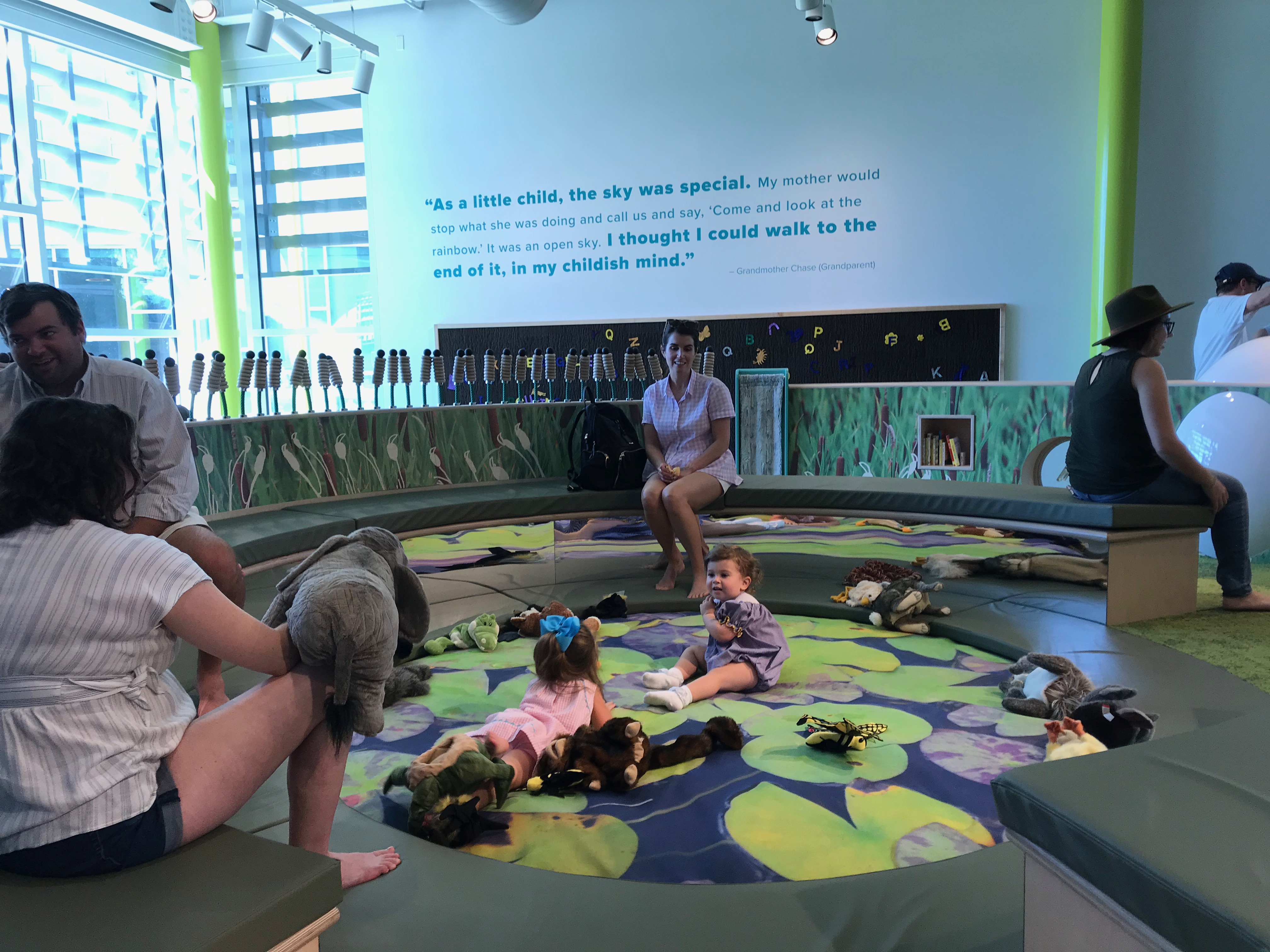
When a museum organizes its assets into coordinated offerings and actions, it can build strategy. Strategy that supports children’s growth and development in the context of challenges they face now, and in the future, is a means to focus efforts and grow impact. 

Museum Examples: Stepping Stones Museum for Children’s ELLI preschool classrooms are grounded in a research-based early language and literacy framework and supported by the museum’s rich environments and professional development. Creativity in the Community is Providence Children’s Museum’s three-year state-wide initiative to connect all of the state’s children to its creative community. 
Think About
• In what ways could an emergent strategy link to children’s futures and community priorities? 
• Where can additional research and new partners direct and strengthen this strategy? 

Change can happen at many scales. System-level change involves engaging at meaningful points with a system that can impact children’s lives. Engaging with educational, healthcare, safe streets, or public housing can initiate system-level change around school readiness, childhood obesity, child mental health, or sustainability. 

Museum Examples: Kidzeum worked with teachers, curriculum specialists and administrators in one school district to transform science learning outcomes for elementary students by developing curriculum and using the museum as science classrooms.  
Think About
• Where are opportunities for your museum to effect system-level change? 
• What resources does your museum have and will it need—partners, space, expertise—to create change? 

As strategy develops, goals, and objectives take shape. Potential benefits and impacts, both qualitative and quantitative, come into focus. Linking museum resources and efforts to the impact it intends to have is the museum’s theory of change which maps out the change process. 
Discovery Museum   
  

Museum Examples: Discovery Museum’s long-time focus on environmental education was extended with development of  Discovery Woods and expanded to become intentionally and  visibly sustainable in its operations.                                               

Think About:                                                                                  

• What do your museum's community impact goals look like?        • What is your museum’s theory of change that shows how the     museum believes it can reach those goals? 


Meaningful change takes time—time to fully integrate transformative work into the life of the museum. This process involves a deepening understanding of the conditions that support consequential change, taking action on multiple fronts, implementing and improving the work at the same time. 

Museum Examples: Boston Children’s Museum’s long-running Powering School Readiness starts with its Play Space early years exhibit. It includes Countdown to Kindergarten, the exhibit and guidebook, and web-based resources on executive function, language, and play.  
Think About
• What expertise, experience, and resources are critical for your museum to sustain and grow its strategy? 
• How can your museum hold itself accountable for these changes over time? 

Making Change Visible
If a museum wants to matter, it must find ways to show that it does matter. Sharing its commitments, occupying a public role, communicating what it learns, and telling its story well are critical to awareness of a museum’s work on behalf of children. 

A museum’s values guide its everyday decisions and actions. Largely intangible, commitments often go unnoticed. Unless it acts with great intention a museum’s core beliefs can become good intentions. Operationalizing commitments, calling attention to even small activities, and connecting actions to current issues help spotlight where heart, energy, and resources converge. 

Museum Examples: The Utica Children’s Museum has merged with the ICAN Family Resource Center and will use trauma-informed approaches to design exhibits and develop programs to be a welcoming place for all children. 
Think About
• How does your museum demonstrate to the child, parents, staff, volunteers, trustees, supporters, and partners that it values the child’s capabilities such as creativity, caring, or agency? 
• In what additional ways can your museum demonstrate its values and priorities more obviously? 

The position a museum occupies on the local landscape, the role it intends to play and how it wants to be viewed by stakeholders, is a public expression of its identity and the contribution it plans to make. This leadership position is grounded in actual accomplishments and strengthened with networks of relationships. Among the roles a museum might play are convener, connector, catalyst, resource, advocate, or thought leader around its values and priorities. 

Greentrike's Children's Museum at JBLM
Photo Credit: Greentrike
  Museum Examples: Greentrike, an evolution of the Children’s Museum of Tacoma, is an            education and advocacy organization with            multiple sites and services that also                      convenes an annual symposium around                being a children and youth-centered                    community.       
    Think About
    • What visible presence in the community does     your museum currently have that it can build        on? 
    • What public leadership role can your museum occupy where it has a track record and strong partnerships? 

Museums are learning organizations. They ask questions, learn from and with their audiences, and draw on research from the museum field and beyond. Increasingly museums are integrating research into creating play and learning experiences; audience engagement; and local conditions affecting children’s well-being. By articulating its research interests; working with college, university, and healthcare research partners; and conducting its own research, a museum can initiate change and move the field forward. 

Museum Examples: Through ACM’s Children’s Museum’s Research Network, children’s museums have researched play, learning, adults’ perceptions of learning, and social emotional behaviors in children’s museums. Denver Children’s Museum’s Play Institute includes multiple research partners. Bay Area Discovery Museum’s mission is to transform research into early learning experiences that inspire creative problem solving. 
Think About
• How does your museum stay current with research in areas of high relevance? 
• What are your museum’s compelling questions about children, their well-being and futures it can explore through research on its own and with partners? 

Children’s museums have high hopes for children, their communities, and their futures. Powered by purpose and passion, they are in a unique position to make better childhoods and promising futures for children a reality. To move forward, museums must translate their mission and strategies into fresh, compelling stories for multiple audiences. 

The same creativity and passion that fuels engaging and memorable exhibit and program experiences, can tell museums’ stories and make their case. They can share new research findings, document and present children’s work in and beyond the museum’s walls, and share their own studies with stakeholders, leaders, connectors, and the field. 

Museum Examples: Many museums have produced publications on play, making, and kindergarten readiness. Parent resources on play can be found on Minnesota Children’s Museum’s website or blog and on the science of brain development on Boston Children’s Museum’s website.  
Think About
 • How can your museum make the research-to-practice connection visible to help stakeholders better understand the critical importance of early childhood experiences for bright futures? 
 • What if your museum’s annual report published what it had learned in the past year about supporting play and learning? 


Museum Notes 

• Carol A. Scott: Beyond the Walls: Demonstrating the social impact of museums is critical to their success 
Trends Watch 2022: Museums as Community Infrastructure

Saturday, March 26, 2022

Learning Together in Museums


MUSEUM NOTES
Jeanne Vergeront
Museum Planning

Originally posted December 2017 

New views on learning together
(Dalston Mirror House by Leandro Ercich)

When we think about learning together in museums, we note that museums are social spaces. We focus on visitors as part of groups, small intergenerational social groups–families–and school or community groups. We plan for learning in such groups in exhibits, on tours, and in structured program activities.

While the group is a powerful context for learning in museums, learning together also occurs in ways that are not necessarily visible, within a group, or planned.

Adults and children; first-time visitors, seasoned members, staff and volunteers; people in groups and exploring solo are each likely to be learning together. That’s not surprising. This is how we learn. Beginning with the finely tuned interactions between mothers and infants, we build meaning together through social interaction. David Hawkins, referencing Vygotsky, Dewey, and Malaguzzi, stated there’s never learning that is not socially constructed.

Because we do make sense of our world through interactions with others, we are often learning from them informally through conversations, gestures, and observation. In a gallery this may be a visitor noticing how someone handles a tool or refolding a paper airplane after watching how another paper plane floats down. It may be a docent learning from a tour member’s question or someone eavesdropping on a conversation about a painting on view.

The ideas we pick up from others and build on are part of learning together and critical for us doing our jobs. Someone’s stickie note posted on the talkback board may spark an idea for an idea for an exhibit activity. The grant proposal you are writing or the conference session presentation you are working on is your learning together with colleagues. Without learning from others’ well-framed question, study results, or trenchant observations, my blog posts would consist of a few phrases and some examples.

Learning together is not the same as getting people together in a group with an intention for them to learn from a given agenda. Just being together in a public lecture, at a staff training, or at a funder’s gathering of grantees to learn about its projects does not necessarily involve learning together.

A working definition for learning together might be the active, co-exploration among informal learning partners to make meaning through watching, listening, talking, or gesturing. These learning partners may, or may not, be obvious, known to one another, or even present.   

A visitor engaging with an exhibit might be inspired by seeing how someone uses their body to lift a heavy object; from noticing the features of an elaborate block tower created and left by others; or from observing a technique for working with a new material. Nearly hidden as these moments are in the flow of words and movement at an activity, in front of a fish tank, tapping on a screen, learning together is learner driven, on-the-spot, and occurring before our very eyes. And they happen in a flash.

Learning together in the Zone of Proximal Development
For instance, we sometimes see a child pair up with another child or call on an older partner to work with on an activity or solve a problem. Bringing together different levels of information, skills, interests, and experience expands the available range of capabilities, of sense making and meaning making. These interactions produce new learning and insights such as, “Oh! I see how to do that now.” Learning is occurring through what Vygotsky calls the Zone of Proximal Development, the difference between the actual and potential level of development available through collaboration with a more capable peer.
• When museums create collaborative experiences and activities that invite a wide range of capabilities, skills, knowledge, and previous experience they support learners in benefitting from more capable or knowledgeable peers and enhance meaning making.

Just-in-time information pertinent to the moment
In the lively mix and mingle that can occur around a display case or an exhibit activity several conversations may be murmuring along at one time. Anyone nearby might overhear someone’s excitement about what they are looking at, hear an explanation of how something works, or pick-up on the significance of a tiny detail. At that moment, the learner gets something they would be unlikely to get otherwise: just-in-time information pertinent to the moment, the place, the activity, and what’s going on. Not everyone leaves with the same understanding, but each does have a relevant understanding of their own
• Museums can add to the richness of visitors’ explorations and inquiry by facilitating opportunities for conversation in spaces where people can bump into one another, work or stand side-by-side, and eavesdrop. Something fascinating to notice and talk about in places to linger also encourage conversation.  

A dialogue through the medium of materials
Photo credit: Spielgaben.com
Two children work side-by-side exploring clay at a worktable. One child looks at the other child’s clay construction, a construction with wires. Noticing the wires, the child adds wires to their construction. When the other child sets a piece of fabric on top of the wires, the other does as well. That child then carefully presses one shell and then several more into the clay and announces that this is treasure at the bottom of the ocean. At first we may be inclined to view this dynamic as one child copying from another. That moment when one child glances at another’s choices and process to shape and elaborate a piece of clay may be a dialogue between them through the medium of a material.  
• Museums can support back-and-forth explorations by creating places to work side by side with easy visual access that allows seeing what someone else is doing. Offer a wide range of materials that prompt rich, new dialogues. Mirrors mounted overhead showing what’s happening from a different perspective provide additional opportunities to borrow, expand, and learn together.

Revisiting what we have heard others say
In an out-of-the way spot, someone sits alone in relative stillness. Waiting for someone? Seeking quiet time? Enjoying a moment of reflection? In what may appear to be a solitary moment, someone could be considering any one of a number of things: the light in this space, the source of light in a painting the docent noted, and echoes of others’ comments about changing light and shadowOne of the processes that occurs in museums is reflection, through which we learn. In reflection we revisit something we have experienced, something we have heard others say. We continue the conversation through our silent inner speech; remembered voices of others enter our thinking.
• To support reflection and internal conversations that build connections and understanding, museums can create quiet spaces with comfortable seating, and views that engage and calm.

Learning from others who are not present
Voices from the past make
connections in the present

Even when we are exploring an exhibit by ourselves, we are not alone. In fact, we are likely to make connections between what we are experiencing and what happened previously and with others who are not present. We interact with the artist when we think about what we see in a painting, even if it’s a silent, “I don’t get it.” We transport a strategy we saw someone else use and apply it to another situation. Reading and responding to a question on a text panel is a silent conversation with the author, unknown to us, who composed the question. We may share our experience later with someone over coffee.
• Museums support connections with others across time and space by asking questions, offering suggestions, creating challenge and uncertainty…in text panels, through staff engagement, through discrepant objects. These and other strategies encourage learners to make multiple connections that are meaningful physically, with others, and with previous experiences.

Everyone learns something different together
Sometimes a group of visitors spontaneously becomes a team working together at an exhibit. They create a challenge or invent a problem they must solve together and organize themselves around the challenge. It may be to move blocks on a crank-operated conveyor belt from one level to the next in record time. Commands come down to crank faster, updates are issued on how time is ticking away, tasks are added to the challenge, new workers are added to cause, and materials are adapted. In these moments, everyone learns something different together.
• Connected experiences, ones that flow physically, that work with varying numbers of visitors and allow visitors to assume different role support self-forming groups of visitors directing their experiences and learning together.

Learning together makes possible what might not otherwise occur. No amount of planning on the museum’s part could provide the on-the-spot support or information, the extra pair of hands, or the just-in-time idea that makes learning together happen.


Tuesday, January 25, 2022

The Culture of Childhood

MUSEUM NOTES
Jeanne Vergeront
Museum Planning

Photo credit: Leona Yordy

Over the last few months, I have been having conversations about childhood with Maeryta Medrano, AIA, Founder and President of Gyroscope, Inc. an architecture, museum planning, and exhibit design studio in Oakland, CA. Childhood comes up regularly in planning museums and experiences for children. In fact, in saying that they are for and about children, children’s museums all but assert they are part of childhood. 

After of a kick-off meeting with a museum that is planning to relocate, Maeryta and I sat in a hotel lobby, processing the discussions, jotting notes, picking up and following threads, and tossing out questions. When Maeryta wondered if there is a culture of childhood, we took off again. We excitedly connected ideas from books, articles, research papers, and experience to conclude that, yes, there is a culture of childhood. As a culture, it embodies a unique world view of, for, and about children and the ways in which they find their place in the world and become themselves. 

What is Childhood? 
For readers of this post, childhood is something we all experienced. Childhood was that time in our lives stretching from 1-2 years through 10-12 years. Even if the specifics of our childhoods were different based on where we grew up, our families, our backgrounds, or our cherished memories, our first decade of life was our childhood—foundational, formative, and enduring. 

So, is there a culture of childhood? The idea of a culture of childhood is not completely new and has been the subject of research and writing. Some examples begin to frame what a culture of childhood is. 

Iona and Peter Opie, an English team of researchers, studied and documented the oral culture of childhood in England from the 1950’s – 80’s. Observers of urban children’s street culture in England, they conducted primary fieldwork, library research, interviewed thousands of children, collected children’s literature, toys, and games, and published books of children’s songs and games. In documenting the shared experiences of childhood, focusing in particular on language, the Opie’s work established the culture of childhood as a serious area of study. 

Peter Gray, psychologist and research professor at Boston College, considers the critical role
Photo credit: Sarah Hall
of children in the lives of other children as central to the culture of childhood and undervalued in the lives of today’s children. In The Value of Play, he describes critical roles children play in one another’s growth and development, and expresses concern about adult intrusion into children’s lives. Children become increasingly independent through their relationships with other children. They find and solve problems together; establish, communicate and negotiate rules; and assume roles that adults would assume if they were present. Children playing with other children prepares them for roles as adults in collaborating and getting along, true social advantages in adulthood. 

Author of Discovering the Culture of Childhood, Emily Plank describes her ‘ah-ha’ moment when she recognized how adults and children occupy different cultures: “What if we adults are outsiders to children? What if the problem that we see sometimes as adults interacting with the children in our care and with our own children are intercultural and not biological or not a product of the phases of development? What if there’s a cultural component to it?” 

Photo credit: Nature Explore
The lens of culture provided by these thoughtful observers of children and childhood suggests its presence, its fundamental importance in children’s lives, and its value in understanding the transformative process of children composing their common world. 

What is Culture? Although we may not be accustomed to thinking of a culture of childhood, we are familiar with the idea of culture. Understood broadly in relation to the groups of people, culture is viewed in an anthropological framework as customs, arts, social institutions, and achievements of a particular nation, people, or other social group. We also associate culture with the arts and with other manifestations of collective human intellectual accomplishments. Individuals’ and groups’ attachment to cultural activities, beliefs, and traditions are integrated into their daily lives and are core to their identity. Cultures are ethnic, religious, familial. They are global, national, and local; social, organizational, and team. 

Across this wide range of meanings of culture are some basic characteristics that are relevant to exploring the culture of childhood. 

• Culture is something that everyone possesses in some form or forms. Often unseen or unnoticed, we may not be very aware of culture in ourselves. But it’s there. 
• We all carry cultural traits that we have acquired from others in our group(s) in the ways we listen, give gifts, honor, celebrate, and what we find meaningful. 
• Cultures overlap, rather than exclude one another. Just as cultures interact with other cultures, the culture of childhood interacts with other cultures including the culture of adults. 
• Culture gives us a sense of belonging and contributes to a sense of identity. 
• Culture informs our way of life, permeating everyday experiences—foods, friendships, traditions, language, a sense of place, and play. 
• Culture changes. It evolves over time through interactions with others, with places, with events. 

In unpacking the culture of childhood, we encounter dimensions of culture—spatial, social, emotional, scientific, philosophical, and spiritual—and associated elements of language, belief systems, social structure (friendships and relationships); objects (toys and materials); and arts (expression and meaning making). 

Bringing the Culture of Childhood to Light 
The culture of childhood is children’s shared experience of growing up and finding their place 
Photo credit: Jeanne Vergeront
in the world shaping children’s social identity, creating a sense of community, and opening possibilities. Wrapping around and weaving through the time from 1-2 years through 10-12 years, the culture of childhood is a frame for viewing, understanding, respecting, and valuing children and childhood. 

The child and childhood are at the center of the culture of childhood not adult agendas, goals, growth charts, and developmental frameworks. Touching on and interacting with every aspect of the child and their world, this culture engages with all developmental domains—physical, social, cognitive, language, and emotional—and the unfolding developmental processes. While there is a sequence most children follow (crawling first, then walking), culture is less about timelines and more about experiences, relationships, and children learning and inhabiting their world. 

The culture of childhood recognizes what children have in common as well as variations among individual childhoods. It embraces both the individual child’s particular childhood experiences, settings, and contexts and the shared, evolving childhood constructed over time with other children in a larger context. The culture of childhood embraces an age cohort of children who are increasingly eager to connect with other children and learn from one another what they can’t learn in other ways. As with any culture, there are variations. Childhoods differ depending on children’s backgrounds, their race, specifics of their family, and where they live—their town, region, or city. But, as one father and city leader noted, “Six-year-olds are 6-year-olds. There are experiences all children enjoy.” 

Photo credit: Jeanne Vergeront
 Multiple contexts of children’s lives are backdrops for the culture of childhoo
d. In addition to developmental and   social factors, the culture of childhood is shaped by   settings, place, people, and practices. Culture is present in   and influenced by contexts that are urban and rural; home,   school, neighborhood, and recreational; within family and   community; and ethnic, religious, and national. Carrying   stories, games, and jokes, norms and behaviors, the culture of childhood lives in forts and found spaces, public and civic   places. It moves from group-to-group, from home-to-school- to-the-playing field, from one part of a region to another. 

The culture of childhood is both universal and local. Childhood exists in cultures around the world, shaped by universal fundamentals. Developmentally, children move from dependence to greater independence. They develop new skills and capacities and move from sheltered family relationships to friendships and associations with peers. Early experiences begin in the intimacy of home but soon move beyond the house, around the block, into the neighborhood, to school, camps, and beyond. Seasons, weather, and landscape account for some local variations of childhood culture since children know best what is immediate and local. Weather and geography influence culture and seasonal clothes, activities, play choices, local foods and foodways. 

Shared experiences are central to the culture of childhood: Children need to be part of a group with a coherent identity, shared vocabulary, and collective purpose. As part of an age cohort, they go through experiences together that shape perspectives, interests, enthusiasms, and milestones of their age group. Celebrating birthdays, learning their address, losing a tooth are quintessential moments of childhood that connect children to one another in lasting ways. Favorite toys or books, special clothing, movie characters also create shared memories and moments of meaningful connection. Such shared experiences of growing up together make a mark on childhoods. Public, civic, and social events of communities, disruptive events, and community and national tragedies and triumphs become collective memories that can define childhoods and leave a mark on adult lives. 

The culture of childhood supports children’s social development outside the family. Childhood is a passage from “me” to “we.” While attachment to parents and caregiving adults is important, children increasingly want to connect with and build strong bonds with other children. They make friends and discover the power of friendship. Through social learning, they find ways to function in and as a group. They figure out how to join a game; invent rules and negotiate with one another; they choose leaders and sometimes question the order of the peer group. Some of the transformation involved in children becoming themselves necessarily occurs away from watchful adult eyes. Children develop a perspective on their lives and encounter new perspectives from other children that they can’t gain from adults. 

Photo credit: Jeanne Vergeront
Play is the native language of the culture of childhood
. In play, children learn from and reimagine their world. Playing with other children engages hallmarks of culture—language, objects, materials, expression, meaning, and symbols. Play is a social space where children communicate with one another, with gestures, special words, and shared ideas. They organize themselves; they make up, and revise rules to make play more challenging; in their games they monitor behaviors. Composers, storytellers, actors, and humorists, children propose and discuss ideas, develop plots, assume roles, act-out stories. They bring symbols into their play with words, language, and objects. Their pretend worlds have back stories, rules, special words, and relationships. Constructed and inhabited through play, these worlds provide a wide range of imaginative ways of seeing the world. They carry ways of thinking, doing, and being. In play, children have fun, grow friendships, see themselves as part of a group, and develop a sense of belonging that rolls out into the future. 

By its very nature, the culture of childhood is dynamicChildhood is in a perpetual dialogue with the world that for children is constantly revealing itself to them. While all cultures evolve, children’s alertness to their world, their curiosity, and rapid development across all domains guarantees a changing child. Children are immersed in making meaning and finding their place in an ever-expanding, shifting world using multiple languages, modalities, and media. Through on-going interactions with other children in varied settings, children learn from one another, pass on games and words, and share ideas from other contexts. This is a culture that welcomes and hosts ideas from other settings to influence and enrich it going forward. 

Photo credit: Madison Children's Museum
Nourishing the Culture of Childhood
 
Recognizing and supporting the culture of childhood matters. More than just a time period in children’s lives, the culture of childhood is a living force that becomes an endowment of connection, community, and hopeful futures. 

But how do we expand the benefits to more children of this overlooked and often undervalued cultural experience? 

Let's begin by recognizing the culture of childhood itself. By doing so, we affirm our respect for children and our confidence in their becoming caring, engaged adults and future dreamers, connectors, and leaders. We can also: 

View children as competent learners with mastery over skills, and rich in ideas, rather than as smaller, messier, unfinished adults. 
Commit to creating better childhoods for more children, especially children facing challenges and limited resources by increasing access to places, community, people, programs, and opportunities. 
Make the culture of childhood visible to a larger circle of parents, educators, decision-makers and highlight the roles they can play to strengthen the social infrastructure that supports childhood and its culture. 
Advocate for the culture of childhood to influence the culture of our towns, cities, and regions rather than the reverse that allows busy schedules, structured time, and commercialization to shape the culture of childhood. 
Prioritize play. Besides guarding time and places for children to be children, we need to support children’s freedom to explore, experiment, solve problems together, and take risks. We need to let more of childhood happen out from the watchful eyes of adults. 
Expand the cultural space of childhood. Engage children, families, educators, and community members in co-constructing outdoor spaces, museum spaces, play environments, and other informal learning settings where children can come together, experiment, and creatively explore using multiple modes of expression, materials, and media. 

MUSEUM NOTES 

OTHER SOURCES
• Peter Gray: The Value of Play
• Peter Moss and Pat Petrie. 2002. From Children’s Services to Children Spaces


Thursday, December 2, 2021

Because a Good Question is Hard to Find

MUSEUM NOTES 

          Jeanne Vergeront 
       Vergeront Museum Planning 

        Originally posted April 2018


I love a really good question: chewy, shiny, juicy, provocative. Like a brilliant cup of coffee or morning pastry it makes my day.

A good question can be strategic or tactical; pedagogical, experiential, or operational; evaluative or reflective. Really good questions are like an itch. When we have been bitten by a good question, we simply have to come back to it again and again.

But really good questions are hard to find and have at the right moment. Gradually, however, I have realized that appreciating good questions has also helped me find more good questions. I notice questions in reading and interviews and I collect them. I write them down on scraps of paper and in notebook margins. I borrow and up-cycle promising questions. Sometimes I search stacks of sticky notes to get unstuck myself; frame a blog post, prepare for a workshop, or push my thinking. I occasionally suggest a question when someone’s process is off track and needs a reset. Framing questions has become my tool for thinking, learning, and working.

As our questions go, so goes our thinking, noticing, choosing, experimenting, and acting. Consequently thinking hard about what makes a really good question is thinking well spent. Yes, good questions are open-ended, but they are far more than that. They help us focus and get at more complex or inaccessible aspects of the world. They generate more questions. Asking, Who owns this place? easily prompts another one like, What can we do to increase a sense of ownership in our museum?

The questions that follow come from various sources: questions I have heard and read; borrowed and modified; constructed and revised. My appreciation goes to many, especially Lani, who forms many, good, strong, useful questions that reveal other questions. The questions I have selected are not only roomy, but help get at what we frequently miss until it's too late. They also help illustrate qualities of robust, productive questions. Perhaps they will invigorate your thinking about questions, offer a just-in-time question to hone, or start your list of really good questions.

Really good questions serve different functions. Some are openers, inviting exploration and opening dialogue. By asking, How can we develop an identity together as a group, or as a community? a question can initiate changes in how we see others, ourselves, or situations and create greater change. A question like, Whose agenda is it, any way? can challenge our thinking. Questions to invite analysis are different than ones to invite reflection. A question for sustained study will not help in deciding how to begin an experiment. Some questions, like, What makes a good stick? provoke thinking with their simplicity.

Seemingly small differences among questions matter. Questions get better when we take a close look, push on what is being said and not said, and compare. For instance, the question, What partners can we collaborate with to create a better version of our ideas and learn from? offers meaningful distinctions compared to, Who should we partner with on this project?

Frequently, questions nestle inside of other questions and we must look for those questions. Examining them uncovers assumptions and reveals lacking relevant or foundational knowledge. When we wonder, how can we serve families in our community, we might want to start by asking, What ideas do we have about families in this neighborhood?

So it’s not surprising that a really good question does not emerge full-blown but is developed by peering into it, pushing on its assumptions, honing it, and finding the right language for it. This circling around and through a question is explored in A Shiny Question. An initial question moves through four versions.
• What do children learn in a neighborhood-based learning environment?
• How do children become connected to the neighborhood?
• How do children of different ages experience their community?
• Finally:  How are children of different ages and cultural groups building connections to their neighborhood through our community program?

Staying with a really good question is important because often we don’t know the answer to it. In fact, a really good question often is one that can’t be answered. What does your museum make possible? tugs at our thinking, encouraging us to back up and reexamine beliefs and aspirations. While challenging us to be compassionate, generous, and bold, (and imagine what that looks and feels like) we are not likely to come up with a crisp to-do list or measurable goals but we may have a stronger sense of what creates meaningful change.

We can end up with the same old answers unless we find new starting points. What does this mean? is a familiar question when we look at information gathered from observations and surveys. How much more thinking, discussion, and insight could emerge from asking, What is the deeper structure of these ideas? This may surface more thoughts about what lies beyond the obvious words, numbers, drawing, shapes, or activity that produced them.

An uncomfortably open question like, What is worth discovering? pushes us to consider new starting points as does, What is fascinating to children? We might ask, What are we not seeing in this situation or opportunity? when familiarity with a situation clouds our vision. On the other hand, asking What questions have I not asked that I should be asking? can help in navigating unfamiliar territory or exposing biases that hinder us.

Because we often confuse intention with achievement we need more productive questions. We want visitors to set challenges and take risks. We want them to care about climate change. Goals that insist this will happen because we plan for it are highly unlikely to be realized. However, a question that asks more of us and our thinking, like, How can we encourage and support visitors in setting their own challenges? may push us to imagine new ways of thinking about agency and engagement.

When we want to bring others’ perspectives into our thinking and planning, for instance in visitor experience planning, we might ask, What relevant competencies and questions do visitors bring with them to the museum that we are not thinking about? 

Often our thinking stops short of where we hope it will take us. Our team, department or partners may enjoy a deeply satisfying exploration about shared values or practices. Will it continue? To create new space we may need to ask, How can we keep our shared understandings open and moving, experimental, improvising?

Sometimes a rich and complex question emerges from dropping a single word. Consider, What are the rules? compared with What are rules? The latter opens a whole new line of exploration about who makes the rules and where they come from.

While asking a lot of questions is important, being alert to really good ones is critical. The more attuned we are to finding good questions, the more likely we’ll come across one that someone has thoughtfully honed and asked. Then it is ours to write down, revise, and polish. Ultimately, being inclined to refine a promising question to suit our purposes is the best way to answer the question: What makes a good question?

Wednesday, October 20, 2021

I Have a Problem with Failure


MUSEUM NOTES 
Jeanne Vergeront 
Vergeront Museum Planning 


I have a problem with failure. Let me be more specific about that. I have a problem with how we celebrate failure, especially for children. 

How many times have you heard, or said yourself: children learn from failure, failure is good for children. We say, fail forward with such certainty and confidence that we believe it. How do we know children learn from failure? Or that it’s good for them? 

Yes, failure is a part of life. Mistakes are inevitable. It’s valuable for children to be able to deal with setbacks. Distress or frustration tolerance is an important life skill to master. And fostering protective factors and resilience has life-long benefits. Is celebrating failure the way to accomplish all that? 

Children, as novices in this world, take on many new things every single day: forming words, riding a bike, making friends, learning to read, helping around the house, understanding the physical world. But block towers crash. Estimates are off. A cherished toy is left on the plane. It’s what happens. Children get hurt and they will experience disappointment. Some setbacks are difficult to observe. 

When there is so much to marvel at in children’s urge to play, their eagerness to try so many things, and their delight in their accomplishments, why are we so eager to celebrate their failures? Remarkably, we even ask them to enjoy their failures.  

Our assumptions about children and failure suggest that we underestimate them and their capabilities. When we see failure as a tool for teaching competence, we are not recognizing that even very young children are already competent learners. They are curious and resourceful. They are already exploring, experimenting, learning, and they are ready to move on to something new. We also underestimate children’s capabilities to follow their interests, assess their capabilities, meet challenges, and ask for help when we make their world too narrow, safe, and predictable. Celebrating failure is, unfortunately, becoming an antidote to relentless perfectionism in the lives of too many children. 

I am puzzled about why we are so certain that how we, as adults, view failure would be the same as a child’s experience of failure. I suspect our adult lens on children’s experiences is clouding our perspective. We confidently assume that we know what’s going on for the child when they climb a tree and can’t get down, spill milk, forget to do their homework, or hurt a friend’s feelings. 

We might consider what the possibility of trying something risky, stretching to meet a challenge, learning something new, or accomplishing a hard task feels like to a child. Fascination with what might happen is powerful; a child wonders what will happen if they try this, then what will happen, and then what will happen next? When things didn’t go as we think they should, we assume failure. The child, however, finds new information, a better idea, something else to try, and moves on. Where we see failure, a child finds an opportunity to figure out how a lid snaps closed, how to slow down a bike, how to make-up with a friend, or build a sturdier fort. 

Before labelling something as a failure, we should consider what’s happening for the child. For instance, what does a child experience as a setback? And what does that mean to them? Especially for young children, an adult idea of success or failure is irrelevant. Children don’t know about failure until we teach them about it, often with sharp words, a look of disappointment, or a rush to fix everything. In play, children often incorporate setbacks into a play narrative, a new construction, or the rules of a game. When a child plays, tinkers, or putters, they don’t have a checklist or time frame as adults do in many areas of child development and education. “Shares with a friend.” CHECK. “Carries a bucket of sand without spilling.” CHECK. 

Championing failure implies that we view life as a test. For children, especially younger children, life is practice, not a constant, on-going set of tasks and tests. By celebrating failure, we are judging all the time, placing everyday happenings on a game field of win-lose, success-failure, right-wrong. Is it really helpful to label an effort a failure and add a dose of shame or embarrassment to how a child understands what happened? Lost a mitten? Dropped something down the drain; knocked over the glass vase, didn’t make the team? 

What else are we saying by celebrating failure? There's a message that we value failure over persistence or having new ideas. That adults’ naming failure takes precedence over children understanding and incorporating what they’ve learned, or finding new ways to solve their problems. Ironically, by calling out failure we might just be stigmatizing rather than celebrating it. 

True failure does exist and should not be trivialized. We don’t, however, need to celebrate failure in order to accept that life and learning are seamless ways of wondering, exploring, finding out, and growing. Richard Feynman, 1965 Nobel Prize Winner in Physics reminds us: 

    Being wrong is not a bad thing like they teach you in school. 
It is an opportunity to learn something. 
There are no mistakes, only lessons. 
Growth is a process of trial and error. 

We might fail less and celebrate accomplishments more if we were to create physical and social-emotional environments and experiences for children in museums, classrooms, playgrounds, backyards, and homes that: 
  • Value persistence and having ideas 
  • Highlight open-ended materials and activities 
  • Encourage focus and absorption 
  • Make room for children to choose and follow their choices 
  • Manage expectations and patience 
  • Invite conversation about ideas and what’s happening 
  • Trust children to direct their play, exploration, and learning 
  • Celebrate accomplishments, small and large 
  • Let play happen; in play, outcomes are undefined, consequences are minimal