Thursday, May 22, 2014

Documentation: Looking Again


When I think of “the Image of the Child” I believe that if Reggio thinkers had not invented it, children’s museums would have had to. Stated so affirmatively, this compelling idea is central to children’s museums’ aspirations. It is the North Star for children’s museums to view all children as capable, competent, rich in ideas and potential; to be viewed as strong in spirit, active agents in their own learning.

I think of documentation in much the same way. A fascinating, complex process, it is a practice well suited to children’s museums, their settings and purpose.

Documentation, however, is not an immediately clear and obvious process. For instance, it is not showing your passport or drivers’ license to identify yourself. It is not timing-and-tracking visitors through an exhibit. Nor is it accountability and using an activity checklist to verify a child does or does not display a skill in an exhibit.

Documentation does, however, follow the child, looking at what she does in order to glimpse how children think and learn. Documentation captures and gives visibility to what is present in children’s activity, interests, ideas and thinking that we are not yet seeing or hearing.


Bringing Visibility to Children’s Potential

Moved by our curiosity and questions, documentation is shaped by focused observations, enriched by other perspectives, and fueled by new insights to further engage children’s potential.

We can describe documentation as a shared, iterative, and reflective process that involves gathering information and interpreting traces of children’s work and words. Unpacking this definition is not simple. Like Reggio philosophy in general, the parts are interconnected. But let me try.
  •  Documentation is a process– noticing, following, and focusing on children’s conversations and questions, their drawings and movements. It’s a process fueled by a question about children’s interests, their thinking, what fascinates them, how they experience a phenomena and express their ideas.
  •  It involves gathering information about children’s work and words. We observe children’s exploration of materials; listen in on their conversations; record their questions; follow their process and where it leads; notice how they represent their ideas; capture traces of their work and words. We take photos, write notes, video, and collect the work itself.
  • Documentation is shared.  Rarely is documentation a solo endeavor. At its best, it involves multiple points of view in dialogue with each other. When photos have been sorted, notes transcribed, museum educators, designers, teachers, parents gather to look at what has been collected and to wonder, discuss, and ask questions among themselves about what this might mean. What thinking do others imagine was behind this gesture, the group’s interest in snails, the rhyming game?
  • Iterative: Documentation is more a spiral than a straight line. It’s a process that revisits itself and the initiating question. Engaging around the documentation draws in new and varied perspectives on observations; distills them into fresh insights; and suggest possibilities about where to go next. Backing up to revisit something glossed over is not unusual and usually yields a new awareness. 
  • Reflective: The exchange among these co-researchers invites thinking about a child’s choice of a word, use of a material, the fascination with the tree bark. Co-researchers wonder where else this exploration might go next. What is the child saying with her words, play, representations, or body language? What other possibilities are contained here? Through reflection we make meaning from what we have seen–and see again. 
  •  The process continues through more iterative cycles, generating more questions, suggesting where this learning can go next, framing how we might relaunch an exploration. How might changes to this activity or component extend children’s explorations of bicycles? How can we learn more about children’s fascination with tape? How can we enrich the experiences and environments we create and facilitate for children? What new questions do we have?

Documentation and Children’s Museums

I am particularly struck by 4 ways in which documentation is a critically valuable tool for children’s museums to do their work better. First, documentation maintains the continuity, integrity, and richness of what’s happening in the space and in the moment. It preserves the flow of activity, cohesiveness of the context, and operative social and physical relationships for children and for adults.  More narrative than checklist, documentation does not extract a word or action from its context and isolate it. Documentation is alive–just as alive and lively as children and their thinking and learning.

Children’s museums are process-oriented in their values and practice. We value the pathways of doing and learning children engage in: what’s involved in getting to the top of the climber, trying varied strokes to squeegee paint on Plexi, placing one block on another just so, and approaching the giant ant with new confidence. Museums also rely on processes such as exhibit development and prototyping to create experiences and environments for children and to engage their potential. Especially noteworthy is that documentation occurs during the course of a project or development of an exhibit. In paralleling and intersecting with the child's process rather than being added at its conclusion, documentation easily informs what comes next in a project or how to improve an experience.

Third documentation is research. While it may not rely on control groups and random samples, it is a research approach grounded in our questions and observations of children and pursued with intention. It focuses on their engagement, experiences, and expressions in ways that advance our understanding of children. Currently, children’s museums draw on research and evidence about children’s thinking and learning as part of planning and evaluating experiences, programs, and environments. Through documentation, children’s museums are actively engaged in building a body of knowledge about children’s thinking, ideas, and learning in settings for play and exploration created for them. 

Finally, documentation makes more than just children’s learning and thinking transparent; it also brings clarity to our thinking and learning. Our knowledge building about children’s thinking and exploration parallels their research and knowledge building. Through documentation we become co-researchers and co-learners with children, and, for that matter, with parents and caregivers. This iterative process inspires more learning and reflection. Just as we are inspired to revisit our work, children who see their own work and thinking documented may be inspired to revisit their experiences and go deeper into their ideas.

Just as Reggio-inspired practice looks different in different communities and contexts, documentation is different in different settings: in Reggio and in the US; in schools and in museums; from one museum to another. Documentation may occur in the context of a classroom project, a project with a community partner, exploring children’s ideas about a topic or question, prototyping for a new exhibit, creating a pop-up experience, or because we have questions about children. In any case, documentation is a process that can and should occur in the everyday life of the museum and children.

While still new in museum settings, documentation is happening more and more. Do you have examples of documentation projects in museums? If so, let’s share them. I would love to hear from you.


Related Museum Notes Posts


Wednesday, May 14, 2014

Book Sculptures


 "There is no Frigate like a Book, 
to take us Lands away,..." 
(EMILY DICKINSON)


For the ingenuity, beauty, and delight books bring and the unexpected possibilities they offer in their many forms:


Books for hiding 


… for relaxing 


… for play 


… for the garden 


… for the garden wall 


… for fashionistas 


… for celebrating

… for contemplation 


Some of these creations I have come across on my walks and travels. Some have been sent to me by friends and colleagues. A few have shown up as design precedence for projects. All suggest possibilities.


Related Museum Notes Posts

Monday, May 5, 2014

Framing Experiences


Held Within What Hung Open and Made to Lie Without Escape (Gregory Euclide)

Exhibitions are the primary way in which museums fulfill their educational purpose. Increasingly, more museums are developing exhibitions that provide experiences: senses-on, minds-on, and hands-on engagement with people, spaces, situations, and objects. Captivating, absorbing, and memorable for visitors, exhibition experiences leverage the object and material rich environments of museums and their social settings that engage interests and invite choice,  extending even to the impressions we take away and incorporate into our lives daily.

Experience-based exhibitions are familiar in science centers and children’s museums. Increasingly they have a presence in research- and collections-based museums as well. With greater attention to the public’s interests along with a growing body of research on learning in museums, museums are gradually shifting from a focus on subject matter and objects to a focus on visitors and to experiences that interpret content through the senses, emotions, physical engagement, and conversation rather than through text.

No simple definition categorically differentiates experience-based exhibitions from those that are not. They are, however, less likely to be flat, static, didactic, and predictable. As some of the following examples illustrate, exhibitions with a high experience quotient tend to insert the visitor into a moment or a different space, reducing the membrane between being outside and inside something intriguing. Experiences immerse visitors in phenomena, technologies, or stories; create a sense of the past in the present moment; take the visitor on a journey; challenge assumptions and perceptions. Often experience emerges from physical sensations of being up high, glimpsing dramatic views, sensing motion or being in motion, being swathed in light. Experiences have spirit or a spirit and often are memorable in their beauty.

Thermon Statom's Untitled at the Telfair
 • Light, glass, color, and shape create an airy, buoyant sensation in Therman Statom’s Untitled intriguing glass house installation at the Telfair Museum of Art in Savannah. The enclosures, openings, flow of spaces, and transparency of materials allow the visitor to see images overlap and float almost magically.

Open House: If These Walls Could Talk at Minnesota History Museum uses a powerful organizer–a single St. Paul address and the lives of 50 families who lived there over 118 years–to draw visitors into exploring stories of new immigrants becoming citizens in a changing city.

• Temple statues at the Norton Simon Museum in Pasadena mounted on a long run of parallel pillars create a sense of being in a temple. By referencing their original location, this striking installation creates context, maintains relationships of scale, and interprets content through experience rather than, or in addition to, text.

• Perched at an unimaginably high position far above the Mississippi River flowing below is the Charles E., a full-size Mississippi River towboat in the Mississippi River gallery at the Science Museum of Minnesota. Visitors stepping up to the controls in the pilothouse, have a remarkably expansive view of the River and valley below.

Noah's Ark at the Skirball Cultural Center
• In the giant Anthill in Minnesota Children’s Museum’s Earth World, visitors enter the Anthill as their normal size compared to tiny ants covering the walls. Spiraling into the anthill, the size of the ants grows and grows until deep in the tunnels, a 6-year old is the size of the giant queen ant. 

• Extraordinary pairs of animals populating the massive boat in Noah’s Ark at the Skirball Cultural Center are captivating. Made of coiled rope, fly swatters, chopsticks, purses, and oilcans, these whimsical, full sized, approachable creatures invite play, wonder, and interaction. Both strange and recognizable, they add a modern twist to an ancient and familiar story. 

Countless more examples could be cited, from the simple delight of standing inside of a giant bubble; to being in the elements–water, rain, wind or fog; to feeling re-embodied by green screen technology; to feeling favored by the butterflies in a butterfly pavilion. As varied as they are, these exhibition experiences share similarities. They offer visitors an opportunity to immerse themselves in a distinct feeling of place or time, change their perspective, and connect through their senses and sensibilities. Very likely the teams for these exhibitions set out on their tasks somewhat differently, took some side trips along the way, and made choices that transformed the exhibitions themselves. 

Planning for Experiences
Developing exhibitions that are strong experientially requires a shift from exhibitions-as-usual. This is true regardless of the nature of the experience a museum is interested in offering for its visitors. Essential to a successful move is a museum backing its exhibition team in taking risks. In parallel, an exhibition team needs to modify perspectives, planning approaches and tools. This new territory requires new words, more verbs, shared definitions, expanded visual vocabularies, and more experiential strategies. Team members must find new space in which they can throw out wild guesses, become friendly provocateurs to colleagues, and look for new sources of design precedence. As a team, they must develop fluency in questions such as, “how could this be more of an experience?”

An experience is for someone, while an exhibition is about some thing. This change in perspective ripples in small and large ways through planning, throughout the exhibition itself, and even through the value visitors take away. Two significant shifts occur. First, the visitor moves to the center of planning. The focus becomes serving a person or people rather than an idea or abstract concepts. While subtle, an image of a person who is engaged and capable replaces a view of someone in need of help or waiting to be taught something. Clearly, every visitor brings abilities, interests, relationships, and a bank of life experiences to an exhibition. These are resources along with curiosity, feelings, and recollections that a team can build on in shaping experiences.

The Bubble Building (Dezeen)
Here is the second shift. With the visitor in mind, an exhibition’s value to the visitor is not just through the mind. Well-constructed experiences offer something that is not possible to learn through verbal messages and written text. Exhibitions that are strong as experience move from delivering content to engaging visitors in exploring, co-constructing, and consolidating ideas and information. The varied ways a visitor is present in an exhibition–physical, social and emotional as well as intellectual–are ways they actively engage with and connect experience ideas and concepts. Understanding that learning is a broader, more varied set of processes directed by the visitor plays a far greater role in planning an experience-based exhibition. Both thread through experience goals.

Experience Goals
Just as nothing categorically differentiates experience-based exhibitions from those that are not, experience goals are not dramatically different from typical exhibition goals. They are, however, different in some respects. Differences become apparent in looking into a working definition of experience goals, unpacking its parts, and highlighting how the parts lay the groundwork for robust exhibition experiences.

Experience goals focus on the visitors’ direct engagement with a set of varied opportunities present in the immediate environment, related to a chosen topic, story, or theme, and support the visitor in making multiple connections.

The visitor: The visitor is the subject of experience goals. As agents, visitors activate the experiences, setting in motion what is static without them. In bringing skills, dispositions, interests, previous experiences, questions, imagination, and their own perspectives into the exhibitions, they are co-constructors of experience. Visitors complete the experiences sketched out by the exhibition team.
• A team can reinforce the visitor’s critical role in shaping experiences by characterizing the visitor as driver of the experience. Goals might start with: Concerned citizens will…; Inquisitive children and families will…; or Art lovers will

Direct engagement: Active verbs are called for in experience goals. Reflecting the first-person engagement of experience, verbs replace the relatively formulaic, noun-heavy, and passive language typical of education goals. Action verbs assure the visitor of having a role in shaping the experience. Doing rather than watching; engaging rather than understanding.
• Verbs expressing how visitors become co-creators of value include: activate, animate, appreciate, connect, direct, discover, empathize, explore, expand awareness, follow, immerse, interpret, invent, investigate, navigate, reflect on, stretch, transform.

A set of varied opportunities: Robust, actionable goals set the stage for wide-ranging experience strategies that support active engagement across many fronts: personalizing the experience, adjusting the pace, and following interests; initiating conversations or finding solitude; making choices or anticipating what might happen; using the body to measure distance and experience proportion.
• Varied opportunities engage multiple senses, domains, and modalities, venturing beyond the cognitive realm to embrace beauty, joy and delight, compassion, even reverence. Naturally, varied opportunities include full body experiences of being in a crowd, balancing, feeling the wind, or even feeling uncomfortable.

Present in the immediate environment:  Experience goals help concentrate exhibition planning on optimizing what visitors can engage with directly. Physical, social, emotional as well as cognitive engagement allows them to observe, move, talk, touch, construct, draw information, and make meaning.
• Immediate opportunities lay in navigating the site, spaces, structures and their features; glimpsing views; hearing sounds; moving around objects and changing positions; exploring materials; operating tools and mechanisms; completing tasks; being part of something bigger than one person can make happen. 

Related to a chosen topic, story, or theme: Experience goals frame 3-5 significant aspects of an exhibition topic or story casting them as roomy aspirations for the visitor. While stated broadly, experience goals give direction to (and are supported by) objectives that sharpen the focus on relevant forms and formats for engagement. These are, in turn, supported by experience strategies and design, messages, and text.
• A first crack at three goals might be: 
1) Investigate the arroyo as a place and an ecosystem; 
2) Engage in physical exploration and challenges across the site and its natural and built features: and 3) Reimagine the environment through creative expression.

Support the visitor in making multiple connections: Experience goals lay the groundwork for encouraging visitors to make connections they value. Connections, a basic way of capturing, if not defining, learning include connecting lived experiences with others’ stories; physical sensation with a natural phenomena; smaller ideas with a bigger concept; actions with consequences.
• Experience strategies for exhibitions are responsive to and supportive of how visitors make choices, explore ideas, and engage with others, follow possible paths, determine what might happen next.

Museums excel as places for experience; they are powerful sources for wholehearted engagement, for wondering, reflecting, connecting, and making meaning. Most museums ground some part of their exhibitions in experiences at least some of the time. Very likely, if asked about a powerful moment in a museum, visitors would share an experience: a view, a dramatic shift in perspective, a found connection with another person or a distant time. Experience goals help accomplish this important work in framing a team’s intentions and aspirations on behalf of its visitors, opening the possibility of extraordinary and durable experiences for visitors and for the museum.


Related Museum Notes Posts
Abundance

Saturday, April 19, 2014

Experience Goals for Exhibitions


Photo credit: Wind Portal (Dezeen)

“Can’t live with them, can’t live without them!”  That was the first line delivered in a booming voice in a Science Museum of Minnesota theater production at the Midwest Museums conference years ago. The actor was referring to museum trustees, but I think the statement captures how many feel about goals for exhibitions, galleries, programs, and initiatives.

In museums, goals are a way of establishing what we hope to accomplish with major opportunities such as a gallery or an exhibition. Robust, aligned goals grounded in high-level master plans or learning frameworks are invaluable at every step of creating an exhibition. Types of goals are numerous in exhibition planning: a broad statement of purpose, benefit to visitors or the museum, and communicating a theme or concept. Different types of museums lean towards different types of planning and goals, as do individual museums. In general goals set direction and express intention. They establish priorities for how objects, design, media, structures, interactive elements, labels, space, and staff will deliver an exhibition’s topic or story and engage visitors in a memorable way.

As critical as goals are, the right kind of goals makes a great difference in whether an exhibition hits the mark with its own intentions and with the visitors it engages. After coaching several museums recently in developing goals for new galleries, I am convinced even more of the advantage of framing experience goals for exhibitions, galleries, and initiatives.

Goal Troubles
On too many projects to count, I have seen teams struggle to develop robust, productive goals. Visitor experience goals that consider the entire museum experience can overwhelm a focus on what happens for visitors in an exhibition. Project goals, partner goals, audience goals, and budget goals become entangled priorities. Educational goals inevitably cast the museum setting as a classroom. Confused or flabby goals plague a project to its end and beyond.

Educational goals often begin with, “Visitors will learn” or “visitors will understand.” This is followed by content, concepts, and sometimes highly abstract ideas related to the topic. With heavy overtones of the classroom and curriculum, education goals tend to confer a formal, intensive learning approach on an exhibition. Invisibly they push exhibition design, activities, and text towards delivering content that can be difficult even through structured, lengthy classroom presentations with limited distractions.

While valued for inviting observation, reading, and thinking, museum exhibitions are not suited to be the educational settings schools are. Museums’ lively, sensory rich, and social settings distract and interrupt learning that needs concentration. At the same time, these very qualities engage our senses, minds, bodies, imaginations, emotions, and recollections. They allow us to follow interests, make choices, and connect with people, places and past happenings. Responsive to physical, social and emotional, as well as cognitive needs, exhibitions are quite capable of crossing domains. Limiting exhibitions to a single domain constrains their richness and narrows their impact.

Replacing education goals with experience goals does not remove content or ignore visitor knowledge and expectations about a topic. Content is critical to visitor engagement and a project’s value. Exhibitions must have relevant, well-researched content, that is clearly communicated using the best methods and media. While necessary, solid content is only a piece of an exhibition.

On Experience
It is hard not to have an experience in or out of a museum. At the car wash or museum; by design or by happenstance, memorable or miserable, we are always having an experience. Experience is what happens through senses-on, minds-on, and hands-on encounters with people, spaces, situations, and objects. Through our choices, interactions, and active engagement, we more or less inhabit even daily experiences. Experiences extend to the impressions we take away, some of which we are aware of and many we are not. At some level, we change with and through experiences.

Museums use exhibitions to create memorable experiences for visitors to engage with phenomena, stories, issues, and collections. Connecting deeply with art in a sculpture garden or exploring dioramas with others is an experience. Playful exploration or focused problem solving in a maker space is also an experience. Engaging with complex concepts about the future or walking through a trail of time is an experience too.

Experience goals help museums deliver stronger experiences better. Centered on the potential of the experience, these goals are attuned to opportunities for engagement, cross domains, and expose the richness of objects and materials. They also recognize that experiences begin before visitors arrive at the museum and continue beyond.

Experience Goals and Planning for Museum Experiences
The nature of experiences as first-hand, direct, and immediate engagement readily builds on key museum attributes: being visitor centered, encouraging active engagement, and valuing the benefits of wide-ranging possibilities. Although a promising start, to make an exhibition experience durable and compelling is complex. Fortunately setting the right goals helps. 

When teams frame goals for the experiences they hope visitors will have, their focus shifts for the visitor, engagement, content, and design. First, the people who will have the experience move to the center of the team’s and the exhibition’s vision. An emphasis on specific content recedes. An image of the visitor as inquisitive and competent advances and replaces an image of someone needing direction, knowledge, and help. Furthermore, a visitor immersed in the experience is less of a passive recipient of exhibition plans. As a more active agent, the visitor can help shape and co-construct what might happen in the moment in the exhibition.

Second, a focus on experience broadens the view of learning. It accommodates the rich, fluid territory of thinking, imagining, and revising knowledge. Skills and dispositions as well as knowledge are relevant; beauty, joy, delight, and reverence are as valued as concepts. Finally, planning for experiences shines a new light on design. More and more, physical surroundings support the experience in particular ways. Design decisions focus on conditions that encourage a particular experience and mitigate obstacles.

Experience goals recognize that exhibitions are experiences, rippling through planning, design, engagement, and beyond. More on how this plays out and the goals that guide experience planning in the next Museum Notes post: Framing Experience Goals.


Related Museum Notes Posts


Friday, April 4, 2014

Reggio-inspired Opportunities for Spring


Photo Credit: Andrea Fox Jensen
Spring always needs a little prodding here in the Upper Midwest, and especially this reluctant spring. While the new green shoots and forward observers are slow in making their presence known, some Reggio-inspired opportunities are, fortunately, appearing and delivering promise.  

The Reggio-inspired opportunities emerging this spring have been brought along by the November museums group study tour in Reggio Emilia (IT). Our group of 50 participants from 11 museums including partners from higher ed, libraries, community organizations, early childhood, and preschools enjoyed presentations by early childhood specialists, educators, and studio teachers. We visited infant-toddler centers and preschools, explored dynamic and beautiful exhibit spaces, discussed museum documentation projects, and investigated the Reggio-museum connection.

In following our curiosity and questions about adapting Reggio practices to museum settings, we encountered new possibilities, extended our imaginations about children’s potential, and sometimes took unexpected turns in our thinking. It is fair to say many of us returned to our museums, schools, and community centers wrapped in a powerful, invigorating confusion of possibilities. Eager to harness the sparks and insights of this intense and inspiring experience, many of us have since been building on existing projects, following new connections, and sharing work one another. Several opportunities are coming up and are worth exploring.

 Opal School of the Portland Children’s Museum, a Reggio-inspired tuition-based preschool and public charter elementary school, has a series of current offerings that extend their imagination regarding the capacity of children. A new e-book, Creating Possible Worlds: The Teacher’s Role in Nurturing a Community Where Imagination Thrives, documents a year of study in the preschool classroom that explored how the world of imagination and storytelling supports the world of science and reason. Five multimedia modules are also available at Opal School Online. Upcoming events in Portland include: Reading the World, May 1-2, that studies the role of quality in education and features the opportunity to observe class in session. The annual Summer Symposium is June 19-21 where Opal School teacher-researchers are joined by colleagues for reflection on a year of teaching and learning, exploring the role of materials in education, and connecting to the natural world.  
  
Two Reggio-inspired pre-conferences have been added to InterActivity 2014, the Association of Children’s Museum’s annual conference in Phoenix (AZ) this year. The Reggio approach and children’s museums are strongly aligned around some foundational areas: an important role for the environment and materials in learning, parent engagement, and strong community connections. Building on the museums study tour, responding to interest, and providing new starting points for Reggio-inspired practice in museums, the pre-conferences are an opportunity to explore Reggio ideas, insights and practices from a children’s museum perspective. Scheduled for May 13, these pre-conferences are for anyone interested in Reggio-inspired practice and working in or with museums. The morning pre-conference is Exploring Foundational Ideas in a Museum Context; the afternoon pre-conference is Making the Reggio-Children’s Museum Connection.

• Wheelock College in Boston is hosting an Inquiry Institute on June 19 that will explore ways to document informal learning in museum settings as well as open a conversation that explores ways of using documentation in public and visible ways. Bobbi Rosenquest and Stephanie Cox Suarez are planning this institute with other members of the DIG group (Democracy Inquiry Group) made up of teacher educators and faculty from several Boston area colleges. Jeri Robinson and staff from the Boston Children’s Museum; Julie Berenson, director of learning and engagement from the De Cordova Museum and Sculpture Park and the Lincoln Nursery School (Lincoln, MA); and two New Hampshire teachers working with artists will share new work-in progress. DIG recently published a special issue on documentation in The New Educator with articles targeting educators, families, mayors, stakeholders.


Related Museum Notes Posts

Tuesday, March 25, 2014

Play in the Sun


Play is the currency of childhood. It’s hardly surprising then that groups of parents, educators, early childhood educators and specialists, researchers, pediatricians, playworkers, and museum professionals devote thinking and learning to understanding children’s play, enriching it, and creating more play experiences. 

For more than 3 decades, my work has focused on play in in many forms. Through undergraduate and graduate school, teaching, and working in and with museums, opportunities to explore children’s play and the conditions that support have been and continue to be part of my work. As much as I enjoy deepening my understanding of play, sharing resources with others so they can interpret and incorporate it into their work makes any discovery an even better find.

Recently play has been in the sun in books, journal articles, in research and stories, about children and play, and in both current and culturally significant contexts. Four works have stood out for me in underscoring play’s complexity and many dimensions. Moreover, they are particularly helpful in bringing clarity to aspects of play that we struggle to articulate and that we gloss over as if simple or self-evident to others.

  • In Free to Learn, Peter Gray offers insights into the voluntary nature of play.
  • The Story of a Sand Pile, recorded by G. Stanley Hall, highlights the value of time and continuity of play in extending its value.


Play’s Social Benefits: Gray
In Free to Learn, Peter Gray sweeps across the evolution of childhood play, follows the origins of schools today, and explores a radical approach to schooling. In this challenging book, Gray’s evolutionary perspective sheds light on some meaningful dimensions of play often referred to but seldom explored in relation to one another.
 
Play is often characterized as voluntary or freely chosen, an attractive quality especially in contrast with school. These terms, however, can be interpreted in quite different ways. They can, for instance, suggest a non-compulsory activity or a fluid social exchange among children working to find common ground during play.

Play is voluntary because players are always free to quit. Anyone dissatisfied in play feels entitled to quit; each player knows it. If too many people quit because their ideas are not incorporated or they are relegated to undesirable roles, play ends. Consequently, to keep play going, players must satisfy both their own desires and those of other players through negotiation, listening, flexibility, building on ideas.

Gray adds depth to understanding play’s voluntary nature by providing an evolutionary context. Through play, children learn how to treat one another respectfully, in ways that meet others’ needs and desires. Play is satisfying when children treat each other as equals despite differences in size, strength and ability.

This voluntary aspect of play illustrates another benefit of play. Children learn through play what they can’t be taught by others through verbal instruction. Confidence, choice and control, empathy, being attuned to others, cooperation, and self-control must be learned through experience.

If we want to bring others along in valuing play and if we want to create the conditions that encourage and support children’s social engagement in play, fresh perspectives like Gray’s are necessary.


Pretend Play and Causal Relationships: Gropnik and Walker
Children’s pretend play is often viewed as a function of cognitive limitation–their inability to distinguish between fantasy and reality. In the Fall 2013 issue of American Journal of Play that takes stock of the theoretical frameworks used in play in many domains, Alison Gopnik and Caren Walker take a look at how pretend play connects with learning.

In pretend play children engage in a kind of internal exploration involving objects and play partners. While this play takes place in the real world, children are also constructing unreal, and sometimes very elaborate, scenarios about possible, imaginary worlds. Gopnik and Walker suggest that children’s thinking involving pretense during play is actually grounded in reality thinking. The child imagines alternative possibilities, for instance, how an object might behave. Using various investigations through play episodes, the child revises the idea (or theory) to better fit the causal structures she knows about from interacting with the real world.

Gopnik and Walker have been working to provide empirical evidence of the cognitive mechanisms that supports this idea. Their study looked at preschool-aged children’s abilities to use alternative, or counterfactual, reasoning about the effects of pretend actions on a gear toy that used imagined causal relationships. Results of the study suggest that children can reason about the outcomes of actions on complex causal structures during a pretend play scenario. An ability to imagine possible worlds and alternative possibilities, they suggest, might be contributing to children’s connecting causal reasoning and learning.

Even in settings where play is valued, pretend play seems to be valued less for its learning value than other types of play are. Gopnik’s and Walker’s work contributes an important and somewhat surprising connection. Not only are children engaged in learning during pretend play, they are engaged in complex causal reasoning.


Children’s Thinking in Play: Paley
Vivian Paley is a teacher, a dedicated and sensitive observer of young children at play, and a storyteller of play. She is interested in and alert to children’s stories though play and shares some of these in Story and Play: The Original Learning Tools. Children, she says, transcribe everything around them into play. A word overheard, a snail in the garden, the marks on a stone, a rising tower of blocks are folded into children’s play. Passed from child to child, they are replayed and replayed through multiple stories to make sense of the new word, the snail’s family, or the balance of a block.

Paley herself is transcribing the world around her as she listens to and watches the children’s many stories in play. She shares, for instance, the inclusive gestures a group of young children make to bring a severely brain-damaged boy into their story; how his husky whisper is picked up as part of the play narrative; and how children recognize the desire of the boy to be part of their story. No curriculum, lesson, or activity could ever teach children, especially ones so young the empathy they showed. But children find their way through play.

Just as children do, Paley replays and replays these episodes, listening closely to the actual sounds of play in order to understand the meaning of the behavior. In unfolding them, stretching and interpreting them, and in going deeper, she finds children’s thinking in their play.

For those of us seriously interested in play, Paley shows us the necessity of closely listening to and following children’s play. In replaying children’s stories in play, we are rewarded with a glimpse into what thinking is like in a child’s head. This work places us side-by side with children in their search for meaning. It deepens our understanding and allows us to support children’s thinking through play where they find it and want to go with it.

Time and Continuity in the Value of Play: Hall
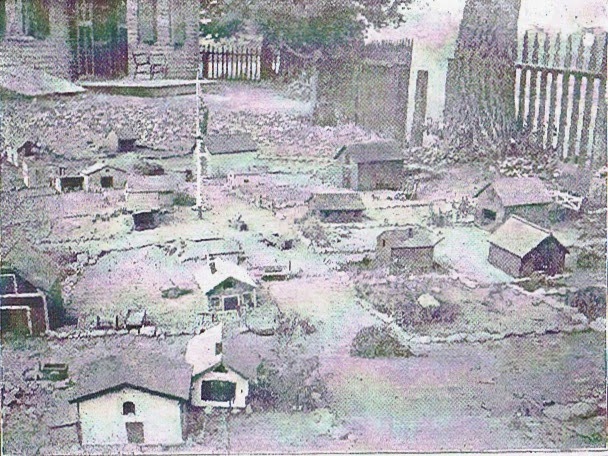
In The Story of a Sand Pile, G. Stanley Hall documents what happens when the mother of 2 boys, 7 and 9, has a load of sand delivered to the yard of their house near Concord (MA) in the late 1890’s. Left to their imagination and ingenuity the 2 brothers along with a half-dozen friends transformed the sand pile into an elaborate and extensive community over the course of a summer. From the first simple lean-to structure made of a board, to the appearance of animals (inspired by a rotten knot of wood), a system of roads, and hay put up in pressed bales 1”x2” for market, the boys shaped the land, whittled a population small figures, and introduced laws and government.

Virtually every aspect of life as they knew it was captured and incorporated into to this complete community: tools evolved, a tiny newspaper (with 7 subscribers) was started, a quarry was founded, stanchions installed in the barn for cows, and felt coins became the currency. The extensive details the boys incorporated were suggested by events such a disastrous shower, found objects, questions the boys raised, and observations of their surroundings.

Great interest, ingenuity, imagination and skills transform a sand-pile
In his unadorned sketch of the boys transforming the load of sand, Hall provides a rich example of the enormous possibilities and varied benefits of extended play. The sand-pile kept these boys busy over the summer and engaged others in the town for several more years. In attending to nearly every aspect of this real and imagined sand-pile community, the boys followed existing and new interests, sharpened their skills in using tools, solved problems, amended decisions, and displayed a spirit of self help. “On the whole,” Hall writes,” the ‘sand-pile’ has, in the opinion of the parents, been of about as much yearly educational value to the boys as the eight months of school.” Even after the sand-pile was removed, Hall notes, groups of boys continued with the enterprise, more proud than envious of it.

 Play is a complex activity one we know integrates several dimensions, each with potentially significant implications for children’s development. It is not enough to simply champion play for children in schools, neighborhoods, backyards, museums, parks, and day cares. Even with many voices chanting play’s benefits to children, we are lacking some necessary pieces.

We need to understand play’s value through multiple and fresh perspectives–research, evolutionary biology, story, the past. Each offers valuable insights and methodologies that challenge our thinking and raise new questions. They model ways we might bring greater rigor to our work in play. At their best, they encourage a spirit of experimentation in us to increase children’s access to play and expand its benefits for children so more children can play in the sun.


Related Museum Notes Posts