Tuesday, February 18, 2014

Climbing Houlihan’s Tree


“Mothers for miles around worried about Zuckerman’s swing. They feared that some child would fall off. But no child ever did. Children almost always hang onto things tighter than their parents think they will.”
Charlotte’s Web by E.B. White

When I was 4 years old, my 5 year-old sister, Kim, and 3 year-old neighbor, Pat Houlihan and I climbed the tree between the house and the garage in Pat’s backyard. We climbed higher and higher until we couldn’t climb any higher. We were as high as the house roof and it was exhilarating; the view through the branches and leaves was fascinating. We couldn’t climb down either, but we were not concerned, standing on a branch with our arms wrapped around the trunk. When Mrs. Houlihan called and said, “Pat, Jeanne, Kim, where are you?” We called back to her and told her where we were. We also waved so she could see us. When she told us to come down, we said we would if we could, but we couldn’t. The branches were too far apart. It did not take Mrs. Houlihan long to call the fire department. Firefighters with ladders arrived soon and we were carried down. I can still climb Houlihan’s tree in my mind, sense my arms wrapped around the trunk, and thrill at seeing the world below. (In full disclosure, my sister says I climbed the tree alone.)

 Adventure playground-much like Bethnal Green
Twenty-five years later, I was doing research on adventure playgrounds in London for my thesis: looking at where children play on structures when they build the structures. One site visit was to the Bethnal Green adventure playground where children had used scrap lumber, ropes, discarded roller conveyors from the grocers, hand tools and nails to build rambling structures. I watched as children lugged plastic bread crates with them as they climbed up to a platform about 25 feet off the ground. Each child arriving at the platform settled into a crate and started rolling down the 40-foot run of the slide. Partially secured sheets of plywood were all that protected them from careening off the slide and down. I shuddered and winced as I watched child after child whip down that slide. Derrick, the Play Leader, cheered them on along with the other children. Each child emerged from the wild ride glowing and crowing with excitement. Their delight and pride erased the sense of alarm I had felt watching them.

Like most adults, I’ve seen both sides of risk taking, my own and children taking theirs. As many adults do, I wonder whether children today are finding the freedom to take and learn from the kind of physical risks that have long been part of play and childhood. Where are the settings children explore actively and with independence? Are there parks, playgrounds, empty lots, garages, and backyards close by and and is there time for children to explore heights, experience high speed, handle dangerous tools, be near dangerous elements (like water or fire), and engage in rough-and-tumble play? Along with some bumps, bruises, blood, and occasional bone breaks, children are assessing their capabilities, learning about the physical world, exulting at conquering a challenge, and feeling a grand sense of competence through their risky play.

The Necessity of Risk 
From positive and inviting, to healthy and necessary, and to be avoided at all costs, risk is understood in a number of ways. It is challenge, uncertainty, peril, and the possibility of loss. Risk is so present in our lives, running through many daily activities and settings, familiar and new, indoors and out that it can be all of these. It naturally runs through children’s play.
While adults may try to protect children from risk, children need to learn to assess and manage developmentally appropriate risk for themselves. Play offers opportunities for children to learn first hand about their own abilities; coordinate their movements; estimate distances; grapple with uncertainty; overcome fears; and push the limits of the familiar. Adventurous play and the risk taking that comes with it impacts a child's physical and emotional development.

We can miss children’s competence and all that they have discovered about their own abilities if we allow our worries and fears to overwhelm us and scour the environment of loose and interesting objects. Giving children more freedom and choice even at a young age allows them to assess choices, take more responsibility, and accept consequences. Along with curiosity, children explore in a progressive manner and monitor the possibility of risk. Often children will sense risk and approach it gradually, test a surface, crawl bit-by-bit to a ledge, climb a few steps up a ladder, or pick up a spade and feel its heft.

Boston Children's Museum
In play, risk takes a variety of forms; children explore heights, crawl into tunnels, pursue high speeds, handle sharp tools, are fascinated with water and fire, and engage in rough-and-tumble play. Clearly all risks are not the same. There are reasonable risks for children at particular ages and abilities and there are extreme risks where serious injury is possible. Valuable distinctions are covered in the Alliance for Childhood’s recent publication Adventure: The value of risk in children’s play

Challenging activities, for instance, might look scary and take some mustering of courage to do, but safety features mitigate risks.  Genuine risk when something could go wrong is present with moderate risk; but with preparation, risk assessment related to age, and adult oversight this becomes calculated risk. Advanced, or extreme, risk requires extensive practice and significant skill development and is an unlikely fit for museums.

Ready for Risk 
As museums expand into outdoor spaces, add climbers, sign onto Let’s Move Museums and Gardens, plant gardens, and outfit maker spaces, they encounter a greater range of issues related to risk. While they may not want to encourage the kind of risk of the 40-foot thrill ride at the Bethnal Green adventure playground, museums do have a significant opportunity to offer children some of the quintessential experiences of childhood with the physical challenges and risky play not available in other parts of their lives.
Expanding into adventurous play and exploration can, however, be challenging for museums even when they feel willing. On several master-planning projects I know of, the museum’s interest in offering children physical challenges and risk taking has been high initially. Play is in the mission. Twenty-first century skills including confidence, control, coordination, and creative thinking are in the learning model. Loose parts are in the list of exhibit criteria. High priority experience zones for the museum include a maker space, nature play area, and a multi-story climber. Lots of water is a requisite and even a zip-line is mentioned. 

Then caution creeps in. The voice of adult worry and operational considerations are louder than the voice of advocacy for rich experiences for children. In the evolving plan, as key experiences are identified, and structures are defined, members of the museum team begin to express misgivings about loose parts, heights, water, tools, and surfaces. Perhaps there should be fewer sticks, less sand, a lower platform parents can reach easily, and no ropes. The log to walk across should be on the ground not crossing over a ditch. Will there actually be real rocks? Will there really be hammers? Once I was asked to delete the word dirt from a master plan.

More opportunities for risky play and exploration inevitably involve increasing the tolerance for risk among museum staff as well as parents and educators. If museums value play as much as they say they do, value creativity, innovation, learner-directed exploration, and child-driven experiences, then challenge and risk are essential ingredients in the experiential mix that museums offer.

Museums Taking Risks so Children Can Take Risks 
Museums have enormous experience, expertise, and resources in creating safe, secure environments and engaging experiences for children and adults that they can draw on in providing adventuresome experiences in nature play, physical exploration, and maker projects for children and adults. At the same time, museums need to take some risks themselves to allow children and adults to enjoy the benefits of risks.
First and foremost, museums want to provide safe, secure environments. Concern for visitors’ health and safety is fundamental. Nevertheless, museums need to distinguish among a true need for safety, safety-for-its-own-sake, and exaggerated fears about serious injuries, liability, and insurance issues. Concerns about injuries, liability, and insurance should not be dismissed, but should be verified with information and supplemented by first-hand information about risk, challenge, injury in the museum’s particular environments and exhibits. In balancing safety and freedom to explore, the goal is to focus on reducing risks of serious injury while maintaining a spirit of challenge, creativity, and excitement.

Museums can increase their understanding and tolerance for risk by building on their own practices, drawing on examples from other museums, checking out resources and articles, and working with experts, and considering the following steps.

Experiencing great heights at Morris Arboretum
Improve at Assessing Risk. A lot of territory exists between throwing caution to the wind and locking up every loose part. Risk assessment is something staff from all across the museum should be involved in exploring this territory by:
Distinguishing between risk and hazard. Operationalize these conditions for the museum. Risk is something a person decides; hazard is something dangerous beyond one’s control. Think slippery floors. There can be an acceptable level of risk, but not an acceptable level of hazard.
Developing a shared vocabulary related to museum spaces, experiences, and activities. Clarify challenge, risk, and hazard and what each looks like for that museum and for different audiences and age groups. Coin and define useful terms like risky play, adventuresome play, or dramatic moments for a working lexicon.
Walking through the museum with new eyes. Invisible risks that someone is unlikely to recognize are potential safety problems: broken parts, trip hazards, and unstable structures. Also keep in mind, that if children and adults believe they are in an environment that is safer than it actually is, they will be less alert to risks that are actually present; they are likely to take more risks without knowing it.
Checking and challenging operational realities related to staffing and supervision in friendly and straightforward ways. Agree on ways to broker priorities about what’s possible and necessary; and about balancing safety and freedom to explore.
Getting a realistic idea of actual rates of injury. Adventure, mentioned above, has some useful data. Gather, monitor, and use data on injuries at the museum.

Learn From and About the Museum’s Own Risk Takers. The museum should learn about who ventures in and explores its exhibits, programs, gardens, and maker spaces everyday. What they expect and are comfortable with can be better understood and planned for by:
Talking with and listening to visitors about challenge, risk, and adventure. Field a focused conversation (or two) with parents and caregivers about their comfort with risk and challenge, for themselves and for their children at different ages. Some parents may be interested in risky play at the museum, a setting they trust.
Observing how visitors assess risk. Spend time in exhibits watching visitors approach something new, something risky. Notice the progressive steps they take to master a challenge whether it’s climbing, using a hot glue gun, or working a sewing machine.
Trusting others. Allowing risk places trust in the child, the adult, and the staff. With their commitment to rich experiences that offer choice and spontaneity; expertise in materials and tools; alertness to hazard and risk; and preparation in guidance and oversight, museum staff are critical to managing risk.

Manage Opportunities for Risk.To offer more and richer adventuresome play experiences and intriguing maker projects, a museum needs to understand the kind of experiences it ideally hopes to offer and the benefits of doing so. A careful and deliberate approach can start with:   
Identifying the benefits of risky play: Keep the value of allowing choices and spontaneity and the advantages of experiencing a variety of risks and challenges front-and-center in planning and evaluating experiences and settings. Name the benefits that are important at that museum; capture them in photos and in visitor's actual words.
Adding safety features and practices. Children’s museums incorporate many safety features throughout their exhibits and environments. Nets around a climbing structure, a fall zone, and a single entrance and exit to a climber that adults can monitor are standard, but not the only, features. Incorporating graduated challenges and opportunities within a range allows children to assess their abilities.  
Getting smarter about guidance. Experiment with different levels of guidance: staffing, cuing adult oversight, and preparation. Problem solve how to allow children and adults to explore dangerous elements such as how to build a fire or use a candle; offer opportunities for visitors to practice with unfamiliar tools; add control measures.
Testing an activity to understand its risks: Prototyping is a museum practice that lends itself to experimentation: working with unfamiliar tools, constructing forts, more open-ended activities, scaling experiences to a larger scale, introducing rocks, working with fire. Define what the museum hopes to learn, set up the activity, and plan to staff the area to understand what’s actually involved. Observe what children do. How do visitors handle risk? What were staff fears starting out and how realistic were they? How did staff feel watching visitors use an awl? How terrific did visitors seem to feel about their accomplishments?

Links

Related Posts

Friday, February 7, 2014

Children in Museums


There are children’s museums and then there are museums children visit with parents, grandparents, and school groups. From a museum perspective–children’s museums on the one hand and traditional museums children visit on the other–having children as visitors can have quite different meaning. For children, however, the experience between one type of museum and another might be less than museum people generally assume.  

Memories of Museums from Childhood
Before there were children’s museums in most cities, children went to museums, liked museums, and remembered them. In my experience, they still do; and there are good reasons for it. 
The Wood Gatherer
My friend Mary grew up in Milwaukee and remembers vividly going to the Milwaukee Art Museum with her friends Jimmy and Linda, on their own, without adults. Frequently, even weekly in the summer, they would walk down Astor Street and cross Juneau Park and get into the Art Museum for free. They would always visit their favorite paintings. Mary’s was The Wood Gatherer by Jules Bastien LePage. Then they’d each get an ice cream sandwich at the canteen for 10 cents. Fifty years later, Mary was at the Musee d’Orsay in Paris and came face-to-face with her favorite painting, on loan from the Milwaukee Art Museum. It stopped her in her tracks, brought back a flood of childhood and neighborhood memories, and made her trip. 

Sweden’s Nobel prize-winning poet Tomas Tranströmer, writes in Memories Look at Me, A Memoir about going to museums as a child in Stockholm. He starts off, “As a child, I was attracted to museums. First the Natural History Museum. What a building! Gigantic, Babylonian, inexhaustible.” (Translated from Swedish by Robin Fulton) Tranströmer was first taken to the museum when he was about 5 years old. At the entrance were 2 elephant skeletons, “…guardians of the gateway to the miraculous.” Inspired by what he saw, Tranströmer visited every second Sunday, started his own collections, and one day, met a professor, “…one of the guardian angels who appeared now and then in my childhood and touched me with its wings.”

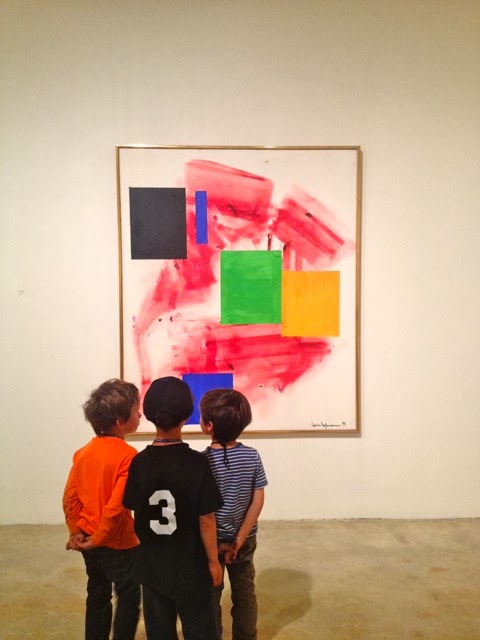
While children visit children’s museums now, they also visit “big museums.” I was at a café in St Paul last year and overheard a mother and her 3 boys ranging from 3-8 years talking about going to the museum. Since we were several blocks from Minnesota Children’s Museum, I asked if they were headed there. The middle child said they were going to the Minneapolis Institute of Arts to see the Terracotta Warriors. His brother added with emphasis that it was their third visit. A friend says his sister takes her 4 grand children to the local art museum. Each of the children has a favorite painting and insists on visiting it on every visit. Ranging from 5-10 years, they have lively discussions about the merits of their paintings.

In late 2013, 12- year old Jake caught the attention of many museum professionals as he posted, “21 ways how I would create an amazing museum” on his blog, Jake’s Bones. His list about making museums awesome for everyone, especially for children, not only demonstrates extensive museum going, but also reveals an engaged and incisive observer and thinker about the museum experience. His astute, visitor-centered ideas take children, their interests, and capabilities seriously with recommendations such as, “Don’t hide the experts,” “Link exhibits to things in the real world,” and  “Have information for all levels of knowledge.”

Recently I watched as 2 sisters and their parents explore the extensive Degas collection at the Norton Simon
In second position before Degas
Museum
in Pasadena. Moving through several galleries, the girls took turns, pausing at every painting or statue. Each one spent time looking the dancer and then carefully assumed the same ballet pose as her sister and parents looked on. The girls moved to the next painting. 

These are only my examples and no doubt many others could add theirs. Some may stand out as exceptions; clearly a 12-year old blogger with a book contract is unusual. Even as a small sample, however, they show children as enthusiastic museum goers, engaged with art, collections, and people in museums. Their visits are sources of durable experiences with life-long significance. This challenges several notions about children in museums: museums can’t reach children; children aren’t ready for “real” museums until they are older; and children only like some museums–natural history and not art.

Children Ready for Museums
Children are constantly making connections between what they see and hear and the experiences they have accumulated in even the first few years of life. Evidence of children’s interest in museums and varied expressions of their interest is apparent in the examples above. In museums children interact with people; they ask information-seeking questions about novel objects and their functions; they borrow language from others; they make meaning they carry forward to new experiences. With rich environments, great volumes of space, interesting finishes and surfaces, and real objects at actual size (very big, very small and in between), museums invite children to notice, explore, ask questions, think, and follow their interests.

Museums are simply great places for children to learn how to learn and enjoy learning. Programs, anecdotes, and studies illustrate how children–from babies to school-aged children, in museums of every type–are open to and benefit from museum experiences.

Young children’s capacity to enjoy and learn from museums is foundational for the Smithsonian Early Enrichment Center (SEEC). For 24 years, SEEC has offered museum-based learning in an early childhood program for children 2 months to 6 years at three sites in Washington, DC. While it draws on The Smithsonian’s extensive collections, SEEC’s object-based approach also builds on children’s curiosity, eagerness to make connections, and willingness to go beyond what they see. Children explore objects and exhibits in art, history, and science museums. They interact with curators, scientists, artists, and cultural historians, along with museum educators to learn about the world, get ideas, and build a positive perspective of museums.

Museum fellow, Susan Erdman, writes about taking her toddler to museums now.  She recognizes the value of her son seeing real things and making meaningful connections between objects–vehicles and animals–that he has seen in books and sees at the museum or zoo. Size, color, sound, and smells contribute information and deepen his understanding about what he’s noticing, what’s going on, how things work, and what people are talking about. She knows his brain is already absorbing concepts and museums help build those concepts. The Toledo Museum of Art offers docent-lead monthly baby tours. Based on research by Dr. Kathy Danko-McGee, the Museum’s director of education, the tours for 2-to-18 month-olds focus on interesting shapes, lines and colors. Caregivers are encouraged to name and describe different characteristics in a work of art supporting connections about shape, colors, symbols, and language.

Large objects, with strong, accessible, contextual links
In one of the few studies to look at children in museums, Piscitelli and Anderson explored children’s perspectives and past experiences of museums. The study of 77 children 4-6 years old in Brisbane (AU) indicates that children have extensive experience and positive perspectives about museum settings they visited. They regard museums as places full of exciting opportunities to learn and get new ideas. Exhibits with large objects and strong, accessible, contextual links to previous experiences and knowledge stand out in children’s recollections. Their visual recall and verbal descriptions of exhibits and architectural features are remarkably accurate. 

Children bring to museums a disposition to notice, get ideas, and make connections between what they see and hear and their experiences and interests.

Museums Ready for Children
While children seem ready for museums, museums–other than children’s museums–do not necessarily seem to be ready for children. It’s not that art, history, natural history, or science museums don’t admit children. Many, if not most, do­­. Rather, many museums don’t really value children as children and museum goers. Consequently, they aren’t prepared to serve them in ways they serve adults, experts, tourists, etc.

A typical explanation for a museum deciding to serve children relates to audience development: reach more young families and grow membership. Confusing a museum's need to grow with what an audience group needs is unfortunate. Serving children means serving them well: valuing them, recognizing the significance of early experiences, and welcoming young children as additions to public spaces. Rather than adding an admission category and hosting toddler Tuesdays, a museum must be prepared to welcome children and delight them.

MOHAI (Seattle)
Museums intending to serve children well have staff interested in and prepared to interact with and engage children. From security, to guest services, to educators, developers and designers, and housekeepers, staff should be as pleased to see children, as children are to see them. Serving children well means granting them the greatest reasonable access to galleries, rooms, and exhibits while considering the needs of the objects and building, something that can require creative thinking. One historic house on a very large property didn’t allow children under 10, until it recognized that the gardens and out buildings were great places for children to explore.

Museums committed to serving children well adopt a set of practices suited to children in every museum, regardless of type: multi-sensory, hands-on learning strategies; facilitated and mediated experiences; and child-centered environments. (In fact, the UK has a manifesto for kid-friendly museums.) Supporting these practices is a child-centered pedagogy that recognizes children as competent and full of potential, as active agents in their own learning.

While museum professionals and researchers may be convinced that young children's benefit from visiting museums include learning, they actually know very little about these experiences and museums’ impact on children and their learning. Mary Ellen Munley’s 2012 literature review of research conducted in museum settings focusing on young children’s learning concludes that this research is lacking. Prepared for the Smithsonian Institution’s Early Learning Collaborative Network and SEEC, Munley’s review notes that museums do provide distinct and positive environments to foster young children’s learning; and young children are interested in artifacts and exhibitions in traditional museums where they learn disciplinary-specific information (history or biology) before being exposed to those disciplines in school settings.

Ezra and friends at the Berkeley Art Museum
For museums interested in serving children well, the limited research on children in museums, and children’s learning in museums in particular, is challenging. It is not, however, surprising. The increase in serving children in programs and initiatives in traditional museums, also highlighted in Munley’s review, is relatively recent. Equally significant, however, is how young children’s learning is viewed. Children’s learning often looks different from older children’s and adults’ learning and may miss being studied. 

Children as receptive viewers of contemporary art may not look like adults being viewers of contemporary art. Children intrigued by dinosaurs may role-play in front of the Triceratops while adults are unlikely to do so. Ideas for stories, investigating, or building come from what children see in a painting, a sculpture, a diorama, skeleton, or people in the museum. As long as learning is viewed as content, concepts, and data calibrated to the school curriculum, what children actually are learning in museums will be overlooked. In Stay Behind the Yellow Line in Curator (56/4), Clarkin-Phillips, Carr, Thomas, Waitai, and Lowe describe a study of 3 and 4-year olds’ constructing knowledge about being a museum visitor and exhibitor. The children’s activities demonstrated their ability to develop an appreciation of art and an understanding of the purposes of museums and art galleries.

Children– Knowing– Museums – Knowing – Children
There are children’s museums and then there are traditional museums that children visit . A good number of museums are somewhere in between. These are museums with a family learning focus, museums that understand that a mission of supporting life-long learning begins with babies, and museums that more-or-less ignore the distinction completely. In this group might be the:
Increasingly more museums of all types welcome children to their galleries, exhibits, programs, and events. We know, or at least believe and hope to show, that a full range of museum experiences for children are valuable: children visit museums in their communities and as they travel; they actively pursue interests; they become museum goers and engage in learning at every stage of life. Museums make children want to explore and to learn. Hopefully children are making museums want to learn about them as well.

Related Museum Notes Posts

Tuesday, January 28, 2014

Places of Laughter and Understanding


What goes “ha-ha-thud?” A man laughing his head off. Get it? Ha-ha-thud. When I was about 7 years old, I used to laugh my head off every time my sister told that joke. It still makes me laugh. Ha-ha-thud.

You, however, may find it perplexing that this joke is funny to me. And you may find it a bit worrisome that, with a sense of humor like that, I am writing about humor.

But that’s humor. Some things are funny. Sometimes. To some people. But we all love a good laugh. We love to tell jokes, repeat riddles, sneak in a pun or two, read the comics section before the rest of the newspaper, play practical jokes and just try to make others laugh. Even people who can’t tell a joke to save their lives appreciate humor.

As important as humor is, however, we tend to think of it in a narrow category, distant from learning. School is for learning. Humor is for after hours. Who does not remember a teacher’s challenge, “Is that a joke you would like to share with the rest of us?” “Serious” books are referred to in hushed, respectful tones, while comic books are dismissed, concealed, forbidden and enjoyed.

Informal learning settings such as museums, and perhaps children’s museums especially, are wonderful exceptions to this dubious dichotomy. People construct their own meanings and museums are places where learning experiences are driven by the learner. Along with the cognitive, intellectual, part of experience, museums also try to tap into the affective, feeling, dimension of experiences. Affective goals increasingly guide exhibit and program projects. Exhibits and programs sometimes tap into the humor visitors bring with them to museums.

Children’s museum settings are well-suited for humor. Because they invite learning at its broadest, they are natural places for the full range of children’s emotional lives, their senses of humor, laughter, and the learning that accompanies them.

Too Funny for Words
Humor and laughter are zesty tonics for living. They release built-up tensions, allow expression of ideas and thoughts otherwise difficult to express, facilitate coping with trying circumstances and bond people with a shared experience.

Like many of the rich, complex, interesting phenomenon such as creativity or play, humor is hard to define. It includes puns, humorous comments, comic verse, riddles and physical comedy. While we are certain we recognize humor when we see it, humor is hard to define or even categorize. In fact, we frequently confuse it with or mistake it for other familiar, humorous situations such as play, a baby’s laughter or an animal’s antics.

For instance, humor is often part of the fun and the pleasure of play. In play, however, humor and laughter are secondary to the pursuit of the activity itself. A baby’s face first blossoming into a smile around 4 to 8 weeks is more than gas. But it’s not humor. It’s a milestone towards ensuring she will have the love and attention of her parent, but it’s not about entertaining them.

Finally, though we find other animals’ lolling, scratching, climbing and tailchasing to be funny, we do not share a good laugh with them. Humor and jokes are pretty much the exclusive domain of humans, although it seems that language-using apes demonstrate a sense of humor remarkably similar to that of a preschooler. The laughing hyena notwithstanding, the purely physiological act of laughing is unique to humans.

Humor is human. It begins at home and it begins early in life. It is, in fact, a kind of “nervous laughter.” The capacity for humor is built into the nervous systems of humans and is one of those mental activities that serves to maintain an optimal level of stimulation that keeps humans alert and active in the world. Too little stimulation and the world is bo-ring; too much and it’s a mental meltdown.

A  study conducted in the UK determined that a shared environment rather than shared genes accounts for a similar sense of humor among family members. Not every family is funny, but family members are funny – or not funny – in similar ways. You’ve seen it before: a gaggle of look-alike-siblings giggling together at the oddest things. And most likely they think the same about you and your siblings.

At the risk of defining the undefinable, reducing the rich variety of humor to one type and taking all the fun out of it, we can simplify humor a bit. In a theory proposed by Paul E. McGhee (1979), much of humor – and, in particular, humor for children – relies on a few critical conditions. First, humor comes from incongruity and from what is perceived as wrong or oddly juxtaposed. Something unexpected, inappropriate, unreasonable, illogical or exaggerated must be present for laughter to roll.

Second, an understanding of how things should be is a prerequisite for humor. There must be a clear enough expectation of how a situation should be or how things should work in order to recognize when an incongruous event has been substituted for the expected one. We know that from birth on, infants try to master the basics of what does and does not belong together in their world. This constant sorting out prepares them from the get-go for enjoying humor. Drawn to investigating the world and parsing the new until it becomes familiar, children are building knowledge. Repetition, whether looking at a mother’s face, dropping handfuls of oatmeal on the floor or bouncing on the dog, helps children grasp basic understandings about events, objects and ideas.

A third condition for humor is a state of playfulness, a readiness for fun. The same joke told after a tire blows out rather than during happy hour at the bowling alley probably won’t get any laughs. Finally, for children, at least, there must be an ability to engage in fantasy. In make-believe play the child explores what happens when inappropriate objects or events are inserted into different situations. The endless possibilities of creating odd combinations such as “putting your mother on the ceiling” produce a fascination with fantasy activity.

Kidding Around
Just like the story of The Three Bears, the effort required to “get” the joke has to be “just right.” Too much mental effort takes the fun out of funny. But, jokes that are too easy to figure out also aren’t funny because we get the point immediately. While puns are not always funny to older adolescents and adults because they are too simple, they are a hoot to 5 and 6 year olds who have recently mastered language. Laughter and smiles are the rewards for the effort required to reconcile the double meaning of “hoppy birthday” on a birthday card.

The onset of humor in babies appears to be surprisingly young. A child’s earliest experiences with humor may be as early as 10 months. These are typically private moments with humor because the child hasn’t yet developed the language facilities for sharing the experience. But like a silent movie, the film’s rolling. The baby conjures up a memory of an image of an object, as a baby about 12 months is able to do, and creates a discrepancy between what is usual. Simply bringing the “wrong” image to bear on a given object, like holding a shoe to the ear as if it were a phone, a child suspends the usual rules. Escaping laughter and giggles attest to the fact that the child “gets” it.

In a baby’s first year, experiences with certain games such as peek-a-boo and chasing have many of the conditions of humor. Resolution of there/not there and running away provide the unexpectedness or incongruity that tickle little funny bones. The accompanying smiles and laughter indicate a likely appreciation for the humor of the situation. 

Hardly has the child grasped with certainty which objects belong together and which don’t when he starts to mix them up, enjoying nonsense words, mismatched objects and events. Maybe you’ve noticed. Did you ever put your shoes on your hands or mittens on your feet to entertain a toddler? Even as young as two years old, children recognize – and laugh over – the inappropriateness of an action directed toward an object.

Young children not only have their own sense of humor, but they also actually produce humor at an astonishingly early age and rate. In a study by Lori Moglia (1981), children 15 to 45 months old produced a joke about every eight minutes. Looks, facial expressions and giggles accompanied all jokes making it clear to others that humor, not misunderstanding, was involved. For instance, a child might say, “The dog is saying ‘meow’” and laugh or might say, “This is a poison cookie” and giggle.

While there are widespread individual differences among children on the humor front, patterns through stages are pronounced. During the earliest stage, a toddler will treat a toy or object as if it were something else. For instance, at about 2 years old, one of Piaget’s children picked up a leaf and held it up to her ear and talked as if the leaf were a telephone. As a child’s language develops, incongruous labeling of objects and events becomes the source of humor. Word mastery allows the child to playfully change the names of objects, substitute the word cat for dog, repeat rhyming words or use nonsense words for the correct word.

When the child realizes that words actually refer to a class of objects and certain characteristics, they find humor in mixing-and-matching characteristics, often based on the incongruous appearance of things. A cat with elephant ears, barking and wearing a skirt is funny to a 4-year old. The first step towards adult humor occurs as a child becomes aware that something has 2 meanings, one based in normal circumstances and one based in a set of incongruous circumstances. Riddles such as “When is it time to go to the dentist?” (Two-thirty) appeal to 7-year olds who proudly choose the joking answer.

A Climate of Gentle Humor, A Climate for Learning
Children’s museums almost effortlessly offer a climate for both humor and learning. They are places where children feel safe, take risks and combine the familiar and the novel. Sensory and object-rich settings invite exploration, imitation and fantasy play. And experiences within a wide developmental range allow children to practice and master emerging skills and concepts. While we readily know these as conditions that encourage learning, they also invite humor. The surprise and delight that humor brings keeps us awake for other possibilities, like learning something.

Humor requires a friendly setting, especially for the very young. Putting a flower-pot hat on your head in the costume area, quacking like a duck or playing Twister® with 50 other people isn’t as easy as it looks for all children. If a setting is too unfamiliar, a child may feel anxious rather than excited about transforming objects, being confident of her ability to discern incongruity, or possibly being the source of someone else’s humor. Allowing a child to watch, join when ready or participate from the sidelines can squeeze giggles out of caution.

Because children’s exploration is directed by their senses, their humor is often inspired by appearances or sounds. This is a fine match with the multi-sensory and multi-dimensional settings of children’s museums rich in sights, sounds and textures. More than silliness is at play as a child replays his voice as though he were singing opera in a canyon or a shower; looks at himself in a concave or convex mirror; or plays with a pig puppet that has wings.

Puppets, props and costumes, tools and giant toys fuel a child’s imagination and humor. A child pretends a toy car is something absurd, like a bug-mobile. A child delights at the great visual humor of a mix-and-match animal with the tail of a fish, the torso of a zebra and the head of a bird. Children of all ages enjoy the situational humor of playing “air” guitar in front of the green screen showing an underwater or hospital scene.

The Funny Things that Make Me Think
Pittsburgh Children's Museum (Wired)
As well suited as children’s museums are for humor, actually transforming humor into a tool for learning is as hard as telling a joke really well. Museums must carefully hit the mark with humor, knowing when, how, and how much humor to present, using it purposefully––but not too purposefully. Humor commanded is humor killed.

Children’s museums can’t make everything funny and they can’t tell all the jokes. They can make room for humor in the building, exhibits, programs, performances, and greetings. But they must then step aside and allow visitors to construct their own meanings from experiences and engage in the give-and-take with families and other visitors to generate laughter and understanding.

Just as important as matching the intellectual effort for “getting” a joke, is finding the right tone for humor. Humor’s value is cancelled when it is over child’s heads, in poor taste or mean. Too raw and parents may be put off; too sanitized and it’s babyish. Finally, humor can’t be a substitute for being honest and straightforward with children about what’s happening. It must hew the line between being a motivator for learning and a sugar-coated disguise for learning.

The trick in using humor as a tool for learning is for the riddle or cartoon to be purposeful. Humor must serve a larger goal and directly connect to the concept being presented. There is no lack of good jokes, cartoons, riddles or visual puns. But as with any activity in an exhibit, matching a joke to a concept is both is essential and challenging.

Riddles in exhibit text can help make connections in funny ways. What has a mouth but can not talk? could be a riddle in an exhibit on geography. What has a tongue but can’t speak? might be in an exhibit on shoes. Not only can the content of jokes reinforce learning, but so can their forms. Jokes help preschoolers practice the question-answer format that is part of emerging literacy. Even if a three-year old’s attempt at a riddle isn’t funny to his audience now, he’s practicing the structure for a joke that some day will win a laugh.

Especially for older children, jokes and cartoons invite problem solving. Jokes require attention to all of the available information, depend on logic, and require seeing things in more than one way, but make their point through humor. What ‘s the difference between a dog and a marine biologist? might teach a thing or two about a marine biologist as well as teach about attributes, differences and homonyms. (*Answer at the end.)

With so much humor based in incongruity and understanding things in more than one way, jokes and riddles provide children with tremendous opportunities to see something from different perspectives. Sometimes the shift is between real and make-believe; between probability and possibility; and between two meanings of the same word. “Humor, fundamentally, is a game of double perspective, and helping children take new perspectives is an important part of their intellectual development,” George Forman, Professor of Education at the University of Massachusetts, Amherst has observed.

The laughter that accompanies humor is also a tool for learning. When incongruity results from phenomenon behaving unpredictably, a gleeful tee-hee might be the “ah-ha” indicating that the child understands something is awry. Watching a ball roll up an incline might produce a guffaw that suggests the child “gets” the problem––but not the solution. Listening to laughter can be a tool for staff, offering insights in how to extend an activity into an understanding.

Humor walks in the door everyday with visitors and will continue to as long as the conditions are ripe. Rich settings with lots of objects inspire a child to play and transform things from how they should be to how they could be. They inspire a new knock-knock joke; someone to toss a hat on the Bernoulli Blower; or build the “apple tower,”––that’s a seven-year old’s New York version of the Eiffel Tower with an apple on top.

What’s So Funny?
When we see humor in action in exhibits and programs, in text, and on the faces of visitors and staff, we see the power and potential of humor to invite delight and spark learning.

Years ago the Bay Area Discovery Museum (CA) had an exhibit on insects. At one station visitors could pick up a small set of bug boxes, hold them to their ears and listen to the sounds of different insects. One box invited visitors to hear the sound of beetles and played a Beatles tune.

“The Far Side of Science,” an exhibit by the California Academy of Sciences took on the popular cartoonist, Gary Larson. Visitors could be examined under a giant microscope. When they did, they saw a big hairy eyeball over head, peering down at them.

At The Boston Children’s Museum (BCM), fake poop in the toilet got a smile and a laugh. Independently of the popular theme of bodily fluids as a source of humor, discovering the unexpected in a public setting – and a museum, no less – jiggles a giggle from even the most adult visitors.

Also at BCM, the giant fish in the bathtub and a bird photographing a married couple in the dollhouse raise giggles. Even for the very young child, this unlikely scene playfully disrupts a few operating instructions even young children have mastered. Do you have a fish in your bathtub?

The Children’s Museum of Maine (Portland) explored humor in their exhibit, HA! HA! HA! – Laughter Around the World. Visitors could deposit or withdraw jokes at the Laughter Bank, measure the frequency and range of a laugh at the Laugh-O-Meter, or create their own comedy at “Le Petit Comedy Club”, complete with a microphone, studio audience, canned laughter and a real comedian’s script.

In the ZoomRoom at the Creative Discovery Museum (Chattanooga) and in other ZoomRooms, the ZoomVid offers kid-tested riddles that knock kids’ funny-bones. What does a pig put on his sunburn? Oinkment.

What’s so funny at your museum? Think of the giggles emanating from your visitors, the humor that walks in the door with everyone of them. Pick up a few new funny ideas to add to the mix. Visitors will love, laugh and learn from it.

Answer: (A dog wags its tail. A marine biologist tags a whale.)


Related Posts


Book Notes

  • McGhee, Paul E. Humor: its origin and development. 1979. WH Freeman and Co. San Francisco, CA 1979.
  • Moglia, L.A. Stage Development of incongruity humor and the use of play cues in the play of preschool children. (Unpublished Honors Thesis) Bucknell University. .PA. 1981.

This post first appeared in Hand to Hand (Fall 2000, Volume 14, Number 3), a quarterly publication of the Association of Children’s Museums. Reprinted by permission of the publisher. To learn how to obtain the full publication, visit www.ChildrensMuseums.org.

Sunday, January 19, 2014

The Kidspace Physics Forest


On a recent Saturday afternoon in January, the Galvin Physics Forest at Kidspace Children’s Museum (Pasadena, CA) was full of families with children of all ages, from babies in backpacks and strollers to “big” kids 9 or 10 years; in adult-child pairs; with grandmas and grandpas; and in families of families.

I’ve made several observations in the Physics Forest on two visits to Kidspace, on both a weekday and a weekend, in fall and in winter. Every time I have observed and listened, I have heard laughter, lots of laughter. Even belly laughs float across the site. Shouts of delight, like, ”I did it!” and “This is so cool!” also come through loud and clear over the chatter.

Physics experiments are not unusual in children's museums where children explore the forces and motion that shape our world. Active learners and enthusiastic players, children are interested in making things fly, bounce, spin, and roll. They are intrigued by what they can do to pop a ball, get more lift to a rocket, or blast the bottle. Physics experiments make children’s ideas and efforts visible to both them and to adults.  
In fact, many of the experiments in the Physics Forest are just like ones in many children’s museums. Several features, however, distinguish the Kidspace Physics Forest from physics exhibits in children’s museums as well as many science centers. It’s big, it’s outdoors, and it calls attention to how bottle rockets and tennis ball launchers, pulleys and air cannons are physics. Having a physics exhibit makes sense for Kidspace with the California Institute of Technology as a neighbor and Caltech astrophysicist Dr. Mike Brown as a KCM board member. (Check out an interview with him in Hand To Hand.

The Cool Fan as a merry-go-round
Designed by Hands On! Inc., the Physics Forest opened in summer 2012 with 13 physics experiments on a 26,600 square foot site. The 12 stations are: Bottle Rocket, Tennis Ball Launcher, Ball Bounce, Pulley’s, Wheel Roll, Magic Mirror, Roller Coaster, Ball Range, Pendulum, Air Cannon, Giant Lever, and Cool Fan. Sun Splitter, a 13th experiment, was recently removed because it required multiple adjustments by staff daily. Generally, two staff were present in the Physics Forest. One moved around the site. The other was stationed at the Cool Fan, the experiment that seemed to invite the most creative use from children.   

The arroyo-inspired landscape is a natural site for exploring. Experiments are planted among native plants
Bridge across the dry creek
and substantial trees. Winding paths both define and connect the experiments sometimes crossing dry steam beds with immense slabs of wood. These same slabs provide generous seating around the site. Smaller play spaces with related activities, like building and sound makers, are scattered among the experiments and sunshade covered. Pasadena’s 70º sunshine completes the splendid outdoor conditions for exploring physics.

Multiple entrances to the Physics Forest allow children to start anywhere and easy visual access across the site makes it easy to navigate and be visually oriented. Pathways invite children and families to wander and follow their interests. Some children find and stick with one activity; others try a couple of experiments before discovering one that really engages their attention. Children call out to one another, “Abby, this is fun. Come to the Tennis Ball Launcher.”

While some experiments seem more popular than others and some seem easier to use, I was impressed overall by how engaged children and adults were in exploring, trying, talking, observing, and helping. Three qualities associated with engaging museum experience and learning come through in what I heard and observed.
• Everyone gets into the act
• Extended explorations
• More than physics in play

Everyone Gets into the Act
Children work together sometimes calling out suggestions to others, as a boy at the Giant Fan did, “Get some friends to help.” Getting into the act is made easier with multiple positions that most of the experiments offer: 3 inclines on the Wheel Roll and 3 seats at Pulleys; 2 stations at the Ball Bounce and 2 Giant Levers. An experiment like the Cool Fan requires extra pairs of hands and the combined efforts of several children. The generous space around each experiment accommodates several people to gather

When the ball escaped the Tennis Ball Launcher, one whole family worked together to get it back in the basket. The 2-year old cried, “Oh no!” The 4-year old asked her dad to lift her up and throw the ball in; “Too low” she observed. The 6-year old chased the ball and tossed it into the basket several times but missed. In the end the grandmother made the basket, and the experiment resumed.

A father's Air Cannon tips to his daughter
Adults who often hang back and watch children explore definitely were part of the action. One child called out, “Mom, help me,” when she wanted to be hoisted up at Pulleys. But parents also drew their child’s attention to an experiment with, for instance, “Look at the wheels you can roll over there.” Adults served as physics coaches for their children. At the Giant Lever, a father advised his 4 year-old daughter, “Use all your weight. Look where you are putting your feet.” At the Air Cannon, a father pointed out to his daughter not only how it worked, but some variations she might try. 

While there’s a high level of engagement, not everyone is focusing on the experiments. One small girl delightedly plowed through the bark mulch on her belly near the Tennis Ball Launcher. At the Roller Coaster a 4-year old boy was far more interested in accumulating balls than constructing or testing a coaster. Oblivious to the physics focus, an older girl used the wooden planks across the dry creek bed as a balance beam.

Extended Explorations
Designed as platforms for open-ended science learning through play, the experiments encourage self- guided exploration. Children and adults talk, ask questions, investigate with levers and ropes; they watch balls pop up and roll down. Noticing the effects of what they do, they share tips, refer to the text, talk some more, building intuitive understandings about how things work.

In the Physics Forest, related physics content is near, clear and accessible. These bold, can’t-miss, two-sided graphic panels stand at every experiment. Their 4-part message–Try It!, Play With It!, It’s Physics, More at Home–follows a typical exploratory process.
Persistence and ingenuity at the Roller Coaster

Clear accessible text, however, has a hard time competing with active exploration as a source of information about what’s happening. Having other players to watch and talk with, loose parts to combine in multiple ways, and satisfying visual effects extend even casual explorations. This was most apparent at the Roller Coaster. Always filled with activity, 15-20 adults and children working in 3-4 family groups while more watched from the benches was not uncommon. Children shouted out ideas like, “Let’s try this curvy one,” upon discovery of a rounded piece of track. A 4-year old’s joyful, “I know, I know, I know” was followed by a flurry of extending track and testing the run. Children were impressed with longer runs after following performance tips about the height of the entrance. One girl’s persistence paid off with new strategies for starting the ball at higher and higher points. Another rolled a ball, watched it, fetched it, and asked, “What happened?” only to try again. Steady and extended activity was punctuated by, “That was amazing!”

More Than Physics in Play
Play and science learning assume many forms and reflect developmental differences among children, whether it is impatience waiting for a turn, making and revising predictions, or taking a systematic approach. 

Predictions and revisions at the Bottle Rocket
Three children at the Bottle Rocket filled the bottle with water to different levels, launched it, and watched it fly. The 4-year old boy suddenly waved his arms and announced that he knew that the full bottle would fly the highest. His 9-year old sister set about systematically testing 3 conditions. She hit the button to fill the bottle to a low level; the bottle flew up part way. The boy was very pleased with that. As the older sister prepared to fill the bottle halfway, their 2-year old sister dashed in and hit the full button. The full bottle flew up, rising only part way. The third bottle, filled halfway, shot to an impressive height compared to the other bottles, thrilling the boy. Pumping his fist, he shouted, "I knew the half-filled bottle would go the highest. I knew it!" Like a typical 4-year old, he was happy to revise his original prediction in order to be right.

The large-scale, highly interactive experiments are platforms for exploring how the world works, but they support many kinds of learning as well. Along with children making predictions, and engaging in trial and error, they are taking turns and asserting increasing independence as a 4-year old did with, “I don’t want any help” to dismiss his parent’s offer of assistance. Children engage in friendly competition announcing, “We won!” and express their sense of accomplishment with, “I did it!”

The Physics Forest also supports possibilities that designers and physicists are unlikely to have imagined. As a 3-year old peered into the Mirror Maze, his father asked, “What do you see? Does it look weird?” After a pause, the child replied, “Maybe I can see the sunset.”