Sunday, November 25, 2012

Playing the Building


In his interactive sound installation in Minneapolis, David Byrne has brought together three ideas that fascinate me and have, I believe, significant potential for museums exhibits and environments.
  • The building as an object for active exploration and engagement
  • Playing with place–an interpretive twist on aspects of a building or site, views, materials, or associations
  • Rewarding people for being alert and responsive to their surroundings
Playing the Building takes advantage of the raw space in an 1895 produce exchange building in the Minneapolis warehouse district used more recently by the innovative Theatre de la Jeune Lune (1992-2008). Byrne has converted the building space into an immense musical instrument by attaching devices to exposed pipes and structural elements of the building that activate materials and their sound-producing qualities. When visitors play a keyboard, they activate switches that cause metal beams, plumbing, electrical conduit, heating pipes, and water pipes to vibrate, oscillate, and resonate. The machines produce sound in 3 ways: through wind, vibrations, and striking.
  •  Wind: A blower forces air through pipes or electrical conduits producing a whistling sound depending on the length of the pipe.
  • Vibrations: Machines attached to metal crossbeams cause them to vibrate, producing a low thrum.
  • Striking: A small mallet operated by solenoids strikes metal plates on the wall or the hollow columns making a clack or clang  sound.
Wire and mechanics are plainly visible. Players sit at the keyboard of an old-fashioned organ in a great pool of light in the dark cavernous space within viewing distance of all the machines, pipes, and beams. Wires neatly exit the back of the organ, sweep up into the great volume of space, and then split off to the devices mounted on pipes, beams, conduit, and columns. Distributed around the space, the mounted devices are spotlit and easy to locate. The experience with sound is also direct. No amplification is used, no computer synthesis of sound, and no speakers.


Please Play
Children’s object play is characterized by a dynamic between two implicit questions. What can this object do? What can I do with this object? Knowing the qualities of the object and what it is able to do is necessary for a child to play with it: to manipulate it in specific ways, to transform it by giving it symbolic meaning, or to construct a set of rules around it in a game. Byrne seems to be exploring this pair of questions so his keyboard players can as well: What sounds can this building make? What can I do with these sounds? 

The installation allows eager toddlers, curious adults, and hesitant elders to explore their own answers to those questions. They sit at the keyboard and, within minutes, play the building. Guided by trial-and-error, trying a quick tap or a sustained depression, a player can find the keys that play the strikers, produce flute-like tones, or cause a humming sound. Perhaps this key produces no sound. A what if? question might prompt a search for a new strategy. Pressing another key or holding it down longer reveals more about how to play the building.

Inspiration for sound exploration comes from the keys, the illuminated devices, possible sounds, players’ imaginations and their experiments. While the installation’s workings are straightforward and as they appear, they are not disclosed all at once. Sound explorers reveal the workings, sounds, and possibilities through their play. What sound does that clapper make? What does this key do? How can I change it? Vary it? Can I make it sound like a bird? A plane? Like a song I know?

Playing solo, duet, and in family groups, players shift easily between being the keyboard player and joining the audience. In each role, they are curious and alert about the effects the keys produce. Finding new sound combinations keep players at the keyboard, trying to make a specific illuminated striker clap or a pipe hum; making them sound off in succession. But movement and sharing is also part of the play. Fingers pointing, eyes following the illuminated sound-making devices, and sometimes running across the floor, children and adults move freely around the large open space. They climb up and down the stairs at one end of the space, stop on the landing for a closer view at a striker, and meet up again with friends and family to share observations and discoveries about how they play this building.


Tuesday, November 13, 2012

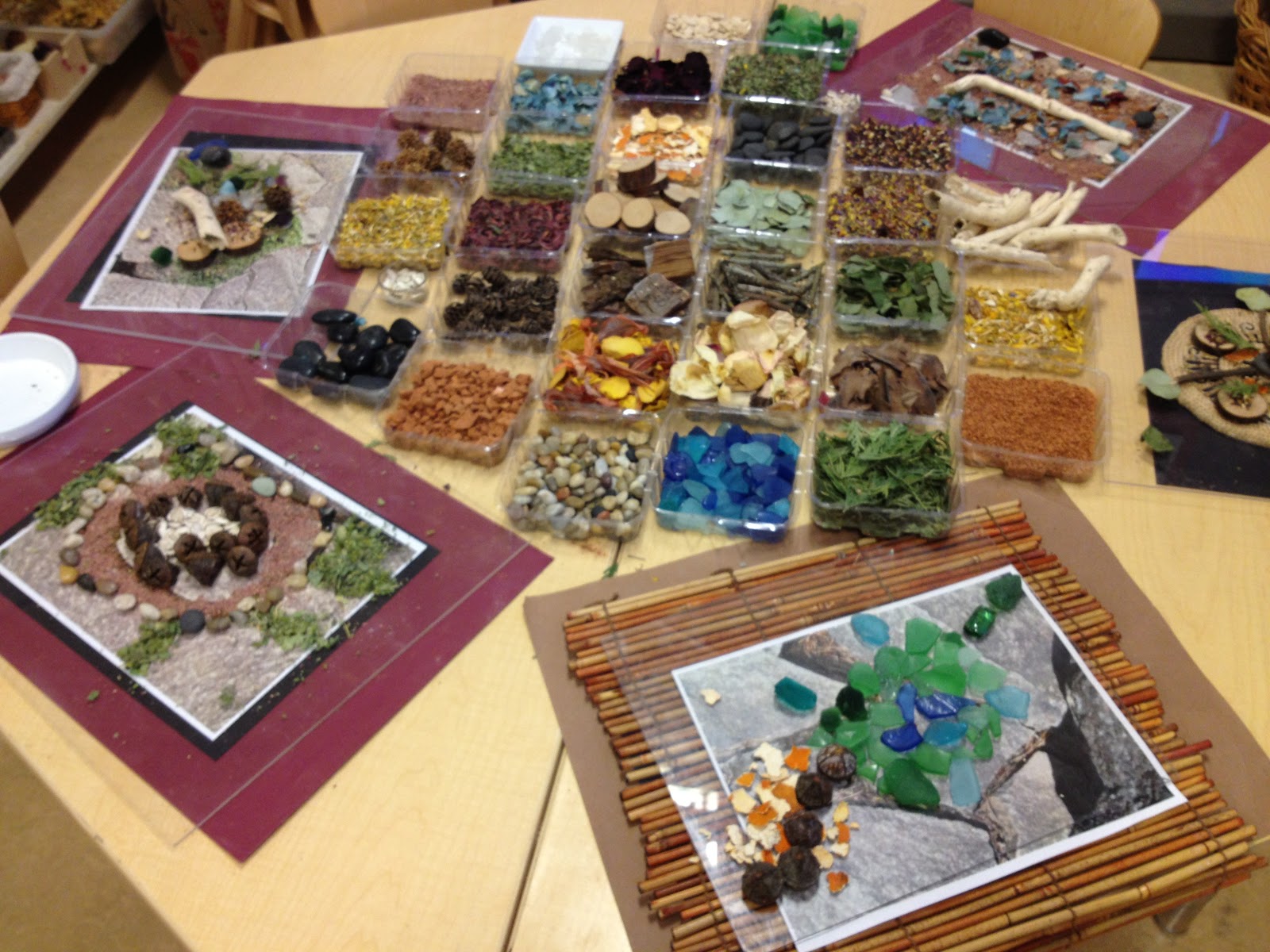
Managing Materials for Making and Tinkering


Although museums are no longer cabinets of curiosity, filled with rocks, relics, artifacts, and instruments, they continue to be characterized by authentic objects and materials at all scales and classifications and across museum types. Art, science, history, natural history, and children’s museums are object and material-rich environments that are also distinguished by the opportunities for object-based learning that they offer. 

Everyday in large museums and small, educators, exhibit techs, explainers, docents, playworkers, and facilitators are at work checking, distributing, and replenishing materials in galleries, exhibits, classrooms, and studios. They stock activity carts with sketchbooks, pencils, viewfinders, and magnifiers and pack bins for outreach programs. They refill exhibit components with metal washers, eyedroppers, and paper cups; reunite puppets that have migrated; and restock the grocery bins. Someone checks for missing pieces, small objects, and choke-hazards; another staffer checks the wire cutters. A group of staff assemble to offload flattened cardboard boxes that have just arrived. Perhaps a disbelieving colleague second-guesses the written directions as to whether 10,000 sticker dots to ‘dot the space’ are really intended.

Enthusiasm for found, reclaimed, and re-purposed materials has been building in museums, assuming many forms. Tinkering, maker spaces, and DIY initiatives are inspiring activities, creating exhibit-program hybrids, and putting authentic materials and tools in the hands of children and adults. My delight with the recent rise in material-rich experiences and settings is probably no surprise considering my expressed enthusiasm here for loose parts, good messes, and exploring materials. Yet, as promising as these trends are for visitor engagement, creativity, thinking, and learning, importing massive amounts of materials into museums also exerts new pressures such as encroaching on limited space, adding new tasks to full workloads, and affecting operations. Quantities of materials can also dilute the quality of projects or just produce such a jumble to make materials hard to find, use, or unappealing.

Judging from the opportunities and challenges I see more of in museums and hear about at conferences and also reflecting on my own experiences in this area, it’s clear that managing– perhaps curating–materials sits at the heart of successful tinkering, DIY and maker efforts in museums. Managing materials is a complex, multi-part, and collective process, more like a set of systems. Tapping the possibilities of materials requires extensive organization, system support, and appreciation for the beauty of materials.


Layers of Material Management
In the early 80’s, I worked at The Teachers’ Workshop, a teacher center for professional development in Madison (WI) that included, along with other resources, a recycled materials center. Housed in a double-classroom, it was filled with bins, barrels, and shelves of discards and by-products from area businesses and industry as well as teacher contributions. Displays by teachers and students using these materials from math manipulatives, to games, to art projects, added to the material richness, intensity, and sometimes, scrappy mess of the space. The push of gathering, sorting, storing, displaying, and restocking materials was relentless, inspiring, and rewarding. Looking back, I see that too often we were simply thrilled to get stuff, less driven to be resourceful with storage, and only occasionally attuned to presentation.

At that time Boston Children’s Museum had a recycle center store. On visits to Boston, we carefully noted the museum’s inventive and practical solutions for storage, display, and access to wooden game pieces, foam shapes, plastic caps, and many objects that eluded labels. The museum’s ingenuity and design expertise helped broker the competing demands of a recycle center. Storage solutions not only accommodated bulky and unusual shapes of objects, but also allowed children and adults to experience and explore materials, accentuated the delight of discovery, and contained the chaos of abundant stuff.

Managing materials is also part art. Along with quantity, variety, and smart storage, order and beauty are necessary to convey the materiality and possibilities of materials. Nowhere is this more apparent than in the material rich ateliers, or studio spaces of the Municipal Infant-Toddler Centers and Preschools in Reggio Emilia (IT). A tightly connected, coherent pedagogy rests solidly on a set of principles including the environment as the third teacher, creativity and aesthetics, and an appreciation of materials to engage children’s investigations of the sense and meaning of things and explore their own creativity. Attention to detail, arrangement of objects on shelves and tables, light from windows, mirrors that reflect children, small surprises, and displays of children’s thinking in their work contribute to the beauty of the spaces. Remida, the creative recycling center in Reggio, is a joint project of the Centers and Schools and Iren Emilia, a multi-utility working in neighboring provinces. When I visited in 2000, I shouldn’t have been surprised to find that Remida also had an artist-in-residence as one strategies for fostering new opportunities for communication and creativity with materials. Had we only imagined that at The Teachers’ Workshop!


Curating Materials
Enthusiasm for massive amounts of materials is not evenly distributed across a museum or even within a department. Last year I overheard two people from science museums talk about integrating loose parts into an exhibit on which their museums were collaborating. Their conversation went: “Loose parts are not going to happen at our museum; maintenance will see to that.” The other person replied, “They’ll just have to get over it at our museum; loose parts are what we need.”

Amping up material use or introducing loose parts requires building ownership, collegial consultation, developing systems, anticipating others' concerns, and good manners.

There was much buzz and enthusiasm from self-identified “material nerds” at the recent ASTC 2012 about managing materials for maker spaces, tinkering studios, and take-apart labs. Some suggestions were more obvious than others, but ingenuity and trial and error with materials, storage, presentation, and collegiality had clearly gone into clarifying relevant steps, managing stuff, and figuring out solutions in the material stream. Steps, like sorting, happen repeatedly: in gathering, as part of storing, preparing activities, and putting materials out though the focus shifts.  At every point, order, beauty, visibility, and findability guide decision making. In the  practices below that I found helpful, naming the steps is somewhat arbitrary.

Gather materials, re-used and upcycled, physical resources and digital media resources, from multiple sources. Post signs at work asking co-workers and repeat visitors to bring in materials. Place a bin for drop-off, specifying requirements such as clean recyclables. Work with pre-school teachers. Take things apart such as timepieces and toys. Check out on-line sources, find the local recycling center, and locate scrap exchanges in the area.

Store materials based on clear, shared criteria. Frequency of use is a basic one with two broad categories. Back-up storage holds large quantities of materials that are drawn down to replenish at-hand storage for easy access during activities. The next challenge is finding the right containers within these two categories to hold objects and make them visible. Smart solutions use a systems approach: containers fit within and next to containers efficiently and can be prepped ahead of time. For instance, hotel steamer trays hold materials on tables and carts, are easy for visitors to use at worktables, and can be filled in the morning for quick resets. Milk crates hold smaller containers like tennis ball tubes hold stacked portion cups–and are easy to carry.

Tracking materials, or monitoring the constantly fluctuating quantities of materials that a museum has/doesn’t have/needs/the available quantities is the trickiest part of the process. A binder can include things that are needed and ordered. A dry erase board, used at ¡Explora!, can show when an item is “out”, but it doesn’t show what’s available now. Development of a searchable database is underway at the Exploratorium.

Preparing or gathering materials for a project is often based on a list of materials required for the project that have been tried ahead of time. The material nerds recommend that projects are framed and prototyped so that the materials and tools are scoped, materials are collected, bagged, and organized to support and deepen the tinkerer's investigation. Estimating quantities and planning for easy at-hand storage happens here. Set-up involves putting out materials in ways that are visually inviting and recognizable, accessible, and suggest possible starting points. A partially set up project can suggest where one tinkerer went with the materials or encourage a newcomer to capitalize on it, repeat, or jump off in a new direction.   

Projects on display require plenty of forethought and preparation. Encouraging tinkerers to leave something behind that has value to them (and perhaps to the museum) can be difficult. Prompts may be required to suggest that visitors label their project and leave it behind with, “This is my gizmo.” Visitors might scan their creations and publish them on the museum website. Staff may also move around and photograph what’s happening and ask visitors to comment on photos, and display images and comments. Notably, questions persist about how to encourage tinkerers to document their own projects.

Return to the material stream. The recycle life cycle of yogurt containers, hanks of wire, paper, corks, and cardboard tubes is evolving. While initially extended by recycling for tinkering, it can be further extended by dismantling reused materials and sending them back to storage. Other materials will meet their end in the museum’s trash until someone finds better uses for them at the tinkerers' table. 


More for Tinkering and Making
The enthusiasm of these tinkerers reflects a love of materials, an appreciation for solutions that accomplish multiple objectives, an interest in persistent challenges, and a generosity–including these tips.
• Think through every step and what visitors need, how to keep a tinkerer focused on the project and not distracted by string rolling away.
• Both variety and abundance of materials are needed to get the right “dooda”to deliver the best solution in an activity.
• Look for inspiration in managing quantities of materials in settings that do it well: Ikea, container stores, Remida, Reggio studios, and hardware stores.
• To find out more about the data base that Lianna Kali at the Exploratorium is developing, contact her at: lkali@exploratorium.edu

 Also, check out Paul Orselli's recent blog, Good Bye Columbus, Hello Makers, on ExhibiTricks

Thursday, November 1, 2012

Science in Play

“I think that’s as high as you can build,” 4 year-old Leo politely cautioned Rachel, the Visitor Experience Educator building a tower with small blocks next to his own construction. A moment later, Leo’s tower fell. Soon after, Rachel’s tower fell. Looking from one pile of blocks to the other, Leo said, “My tower crashed and made the table wiggle. Like a earthquake.” Leo continued building and said, “I just built something new, but I took it down because I knew it wasn’t stable.” 
 

Sitting on the building platform surrounded by blocks, Leo was just one of many children in Science in Play that I listened to and observed on a recent visit at the Kentucky Science Center (KSC) in Louisville. Two-and-a-half year old Eli was intent on connecting the energy coaster tracks. With repeated tries, he fit the pegs into the holes and connected 4 or 5 sections of track. Throughout the morning he returned to the tracks now focusing on the loop-the-loop. Picking up the orange ball, he pushed it against the inside of the loop, first at the top, then the side, and near the bottom. Each time he let it go, it dropped; he watched it roll away and stop. On one attempt, the ball landed in the track below and began to roll along the track he had constructed. After this, Eli picked up the ball and released it at the same place and watched it roll. He rolled the ball again and again (and again). Eli jumped up and shouted, “I did it!” 

 In the Shapes & Stuff Store, three-year old Sonya created an elaborate sequence of selecting shapes–cylinders, spheres, stars, and ovals from the bins. She placed them in her shopping cart, sorted them into fabric boxes, and removed them from the boxes to the shopping cart. Every gesture of selecting and stocking shapes and each footstep was accompanied by and in sync with Sonya’s softly singing, “Shopping, shopping, shopping, shopping; shopping, shopping, shopping.”  

These episodes illustrate the kind of motivation, inquiry, problem solving, theory and persistence we want to see in science learners. In Science in Play they are present and alive in the hands of young children. Levi has a theory that wiggles–vibrations–contribute to the tumbling blocks and that stability matters in a structure. Eli shows persistence in connecting the track sections. He tests his assumptions about the conditions for getting the ball to roll through the loop. Sonya is putting herself through the paces with one-to-one correspondence.

Parents and grandparents are as engaged as the children in Science in Play. One mom asks questions, “Do you have more butterflies than moons?” A father points out a feature his child hadn’t noticed: “Both pegs need to fit in here.” Parents and grandparents watch with interest and sometimes give a hand just before frustration sets in. A mother holds the baby and reads aloud while a big sister shops for shapes.

At Play With Science
Science in Play is a spot-on title for KSC’s new early childhood space. It engages children 8 years and under–particularly children 3 - 7 years–at play with science across two spaces totaling 5,800 square feet on the Science Center’s first floor. Rich in loose parts, sensory experiences, and open-ended materials that invite further exploration, the exhibit engages children in building, testing, imagining, problem solving and engineering as they play. The exhibit is a test bed for a comprehensive upgrade of the science center’s first floor as an expanded early childhood center. Activities are clustered into six zones. 
• The Sensory Course: A walk-through Noodle Forest; colored shadows and OptiMusic
• Testing Area: Build-your-own Coaster and A-Mazing Airways
• Big Build: Imagination Playground blocks
• Small Build: Table top building with Kapla blocks/Kiva Planks and Magnet Sculpture Wall
• Shapes & Stuff Store: Bins and shelves full of shapes
• Science Depot: A science workshop with changing projects and investigations

Science in Play takes a straightforward approach to presenting experiences where science and play easily lean into and merge with one another. The exhibit planners, Hands On! (St. Petersburg, FL) stuck to their brief and got out of the way as did KSC to give children an opportunity to do what they do well and naturally when they have the space, time, and materials to explore. They play, using their senses to figure out the universe around them.

The Science in Play brief, which I was fortunate enough to contribute to as member of the Hands On! team, kept its sights on a set of core ideas:
• The child as capable, competent, and enthusiastic science learner
• The potential of play to release the science
• Science connected to everyday experiences
• Adults interested the activities and engaged with children

Design of the space tackles converting a roomy traveling exhibit gallery into an early childhood zone. Following the brief and respecting a modest budget, a simple design solution unifies the spaces and confers a freedom to explore. Washed with colored light, the large white walls of the space glow. The Noodle Forest, A-Mazing Airways, Colored-Shadows, and Magnet Sculpture Wall become visual anchors. The full list of components didn’t make it into the exhibit so one corner of the space, in particular, feels empty during slow times. Combining custom-designed and off-the-shelf experiences is a smart strategy for a temporary installation. OptiMusic is novel while products such as KAPLA blocks in great abundance are attractive, and full of possibilities. Seating is varied, distributed, and used throughout both spaces.

Interpretive signage is geared to alerting adults to where a child’s play and science meet. A single message, Add a spirit of inquiry and children’s play becomes science play, is explored using familiar activities and highlighting the science of sound, energy, building, and shadows. Text is minimal. From the entry banner to the text panels, graphic design picks up the glow of the light-washed walls and colored shadows. Apparently, the graphics are effective. The free-standing text panels caught the attention of one mother who photographed it.

An Experiment
Installed in May 2012 for seven months, Science in Play is a bridge between KSC’s past work with young children and an anticipated expansion into a regional role in early childhood. In the mid-80’s, the Science Center opened KidZone, an early childhood space. Since then, it has offered special programs and classes for preschoolers, early childhood friendly traveling exhibitions, teacher training, and parent programs. With support from PNC for early childhood work and consideration of an aging KidZone, KSC decided to explore a greater commitment to early childhood. Science in Play has become a key piece in a strategic experiment to test that opportunity: explore the feasibility of a comprehensive upgrade of the first floor, connect with and serve new audiences, and prototype aspects of an early childhood center.

KSC has framed a set of questions it hopes to answer during the run of Science in Play. Some questions focus on market, others explore mission-based interests in early science learning such as: how to encourage parents to see their child as scientists; how to serve the full age range well; and how to make the experience engaging for parents. Still other questions will be answered through a research partnership with the University of Louisville College of Education.

Play On
The Science Center’s approach to Science in Play shows its confidence and courage in trusting children and their curiosity; understanding the potential of play; and believing in the pull of the science-filled world. Play on!

Wednesday, October 24, 2012

Updating Learning Frameworks

 
Completing a learning framework is a heady, almost triumphant, feeling of accomplishment and relief. At this point, a museum has explored the convergence of its strategic and learning interests, consolidated its most important ideas about learning, and clarified its potential to create learning value for its visitors and community. A museum team has brought together, organized, and made explicit a set of powerful, attractive, and tacitly-held ideas and assumptions about children and adults learning in informal settings, and specifically in their setting.

A framework externalizes and makes plain what a museum values. Exchanges among thinkers, learners, and practitioners create shared meaning around significant ideas to put everyone on the same page. Through lively discussion and diligence, the team resolves areas of persistent ambiguity or tension. For instance, is the museum’s focus the history of science or science and history? This considerable work shapes a tool that supports planning and evaluation efforts across all of a museum’s learning services: exhibits, programs, collections, film and multi-media, research, a school or nature center, and its on-site, off-site, and web presence.

Yet, as much as finishing a learning framework (or an educational or interpretive framework which all consolidate and organize learning interests and approaches) feels like an ending, it is truly a beginning. Applying the framework to do good and useful work that advances a museum as a recognized and valued community resource is the true purpose and what justifies the hard work of developing it.


Updating a Learning Framework is Inevitable
In 3, 5, or 8 years, a framework should be more useful in some ways and less useful in others than when it was freshly minted. Museum accomplishments, economic challenges, audience composition, emergent community trends, changes in staff, and new research all spotlight shifting information and perspectives relevant to the framework and its tasks. They point to new questions, practices, and opportunities and to inevitable changes to the framework.

Museums exist in environments that are dynamic both externally and internally. Shifts in a region’s population, community priorities, and funder focus bring new perspectives to a museum’s learning interests. Recent findings in neuroscience and executive brain function, landmark studies in youth development, applications of new technologies, and changes in the discourse across the museum field prompt changes to the framework to maintain its relevance. Organizational priorities realign perhaps to serve new audience groups, build on better information about their interests and expectations, and target ways to engage them more deliberately. 

No less important are the changes that come from regular, and hopefully vigorous, use of the framework itself. Application of the framework by multiple users doing the museum’s everyday work over time tests, changes, and ultimately grows its capacity to be tough enough for day-to-day realities. As staff read, discuss, refer to, and apply the framework, they give it meaning, find new meaning, and discover where to hone meaning. A great insight or connection while developing a framework initially serves as a shared touchstone; it then generates new insights and subsequently points to the value of finer distinctions which were not initially apparent. Staff might agree that learning rather than educating better characterizes people as active agents in constructing knowledge rather than as passive recipients receiving information. With time and use, this distinction may lead staff to new insights about learners and to other ways of shaping experiences and considering impacts.
  
Framework limitations as well as strengths are revealed through use by varied groups, across a range of contexts–exhibits, programs, collections, audience initiatives–and from pre-planning through evaluation. Experience criteria that work for programs may not work equally well for exhibits. Framing criteria to work for both, however, can yoke these two complementary and valued experience modes together rather than separate and silo them. Situating outcomes to work for public programs as well as school programs and for both programs and exhibits may take repeated efforts. It’s worth it. Getting to a shared set of outcomes increases the possibility of the museum having greater impact. Registering both the alignment and the disparities across functional areas are important; both provide useful clues for future updates.


Revise, Add, Delete
Like a building’s framework that may be modernized or expanded at some future time, a learning framework can be updated with revisions, additions, and deletions. With time and active use, all three are likely to occur, through informal and formal updates, by individuals or a team.

Revisions, or minor changes to an existing framework, are common and helpful. They capture and incorporate results of regular use of the framework to keep it current and precise. Definitions matter because differing terms undermine efforts. Moreover, the meaning of words changes with use; new words and terms surface. During complex projects, grant and report writing, and decision-making, the benefit of distinguishing between terms like thinking and learning or defining roles of parents and caregivers become apparent and perhaps a regular practice. A glossary of terms (an “initiative is…”, “learning at our museum is understood as…”) makes the most of these accomplishments.

Updates assure that the most current and relevant information is assembled in a single guiding document. The names of current programs and initiatives, results of the museum’s projects and studies, references to curriculum standards, white papers in the appendix, and articles in the references are in one place.

No two frameworks have the same parts, but four components are basic and have worked with many museums: community context, learners, learning focus, and museum and learning experience. Sometimes an addition or two to one of more of these parts is a better solution than smaller revisions.
A museum might bring a deeper, more systematic approach to identifying and distinguishing among stakeholders in the community context as part of understanding a city’s or region’s priorities related to learning.
• Additions might strengthen the framework’s focus on the learner and play out the implications of a learner-centered framework by: adding information about learner groups and identifying more targeted strategies for engaging specific audience groups–such as families, youth, experts, or teachers.
• In the framework’s learning focus that describes the learning territory a museum is interested in occupying, add conceptual frameworks for situating a museum’s learning interests. Other additions might include clarifying the museum’s valued and complementary learning assets.

Ultimately, a learning framework can’t anticipate every eventuality. It should, however, be flexible and adaptable enough to respond to small tweaks and large modifications that arise from the learning life of a dynamic institution. Along with absorbing changes within components, a framework can have portals to new components. Like the other components, new components are aligned with the framework’s foundational ideas and build on its focus. Every component does so in ways that stretch with and support a museum’s growing interests and the field’s changing practices.

A portal to a new component links firmly with and is anticipated in the museum’s mission or learning purpose such as being a multi-dimensional learning resource, or a center for creativity. As a museum conducts exhibit and program evaluations, fields visitor research, follows research in specific areas, and responds to a results-oriented approach to funding, research and evaluation may justify being a separate framework component. Some reshuffling is involved in creating a research and evaluation agenda. Bringing together relevant conceptual frameworks and outcomes and developing a logic model shape a focus on what success looks like and how visitors will benefit from various museum and learning experiences, as Marianna Adams suggests in “Where do We Need to Go Next?” in a recent issue of the Journal of Museum Education.

Eventually some parts of a learning framework need to be deleted whether due to the life cycle of projects, new priorities, or a clearer vision of the museum's learning value. 


Evolving Frameworks
A strong vital framework is not only aligned with museum priorities and informed by evidence, it also reflects current practice and keeps pace with staff growth and reorganization. Often master planning, a major expansion, or a move is an opportunity to tune up a learning framework. Examples from three museums illustrate typical circumstances and the nature of framework updates.
The Bakken Museum, a one-of-a-kind science museum in Minneapolis, has a humanistic focus that integrates science, history, and the arts. In 2009, parallel planning processes involved both strategic planning and development of a learning framework that subsequently guided development of an exhibit master plan. The learning framework clarified the museum’s learning focus and involved unpacking and hammering hard on the meaning of key phrases like, for social good and people of science. Eventually, the learning focus expressed the richness of the museum’s learning interests as four layers: content, perspective, process, and approach. The framework served as a tool 3 years later when the Bakken developed a proposal to a major agency to produce one of the exhibits in its master plan. The evaluation plan for the grant grew from a logic model that used the framework and the audience groups and outcome areas identified. That process also revealed how much the museum had continued to update, refine and make its learning focus richer and more precise.

• In response to its first decade of growth, Stepping Stones Museum for Children in Norwalk, CT began preparing for a significant capital expansion in 2009. To guide planning of new galleries and programs and strengthen the connection between learning intentions and impact, the museum chose to update and further develop its 2003 learning framework. Over 5 years, the framework had enjoyed regular use with occasional additions such as background information on learning theory. Five years also offered significant practical experience with the framework to yield lessons and point to areas for development. In updating the framework, the museum shaped a more learner-centered tool informed by research and theory. A set of four learning principles grounded the framework in current research and theory. The audience profile became a learner profile that framed a view of the learner and identified learner groups with related experience goals and supporting adult roles. The original learning approach shifted from being primarily content focused to a package of learning strategies, an interdisciplinary approach, and a set of discovery tools. Finally, learner outcomes and related indicators were identified to help channel the museum’s work towards specific impacts.

• For 12 years, the Creative Discovery Museum (CDM) in Chattanooga, TN has been guided by a learning framework developed in 2000 as part of its first exhibit master planning process just 5 years after opening. The museum has been engaged over the last two years in a round of organizational planning. Updating its learning framework is integrated into that extended process. CDM fielded a strategic plan in 2011 and conducted a facilities master plan in 2012. In preparation for the exhibit master plan scheduled for early 2013, CDM is reviewing and updating its 2000 learning framework. A museum team of core and specialist staff is reviewing the framework to identify how framework components have been used; how they have been helpful; which parts should be carried forward; and what changes to the framework will make it more relevant and robust. Some modifications to the framework will be accomplished by the framework team such as developing essential experiences and articulation of a museum experience. A museum-wide workshop will revisit the learning focus and explore a new area like impacts and indicators.

A growing number of museums seem to be developing and updating learning frameworks and museum-wide interpretive plans. An extensive and well-documented process is that of the Dallas Museum of Art's Framework for Engaging With Art. Please share examples at your museum or others that you know of.

Wednesday, October 17, 2012

Wrapping Up ASTC 2012

 
First, great thanks to the many and well-trained ASTC volunteers who stood at reassuring intervals in the long and winding passage between the conference hotel and the registration desk in the Columbus Convention Center. Each one greeted me as if I were an expected and valued guest and said good by on the last day.


Wrapped in Conversation
… everywhere and anywhere. Engaging in face-to-face conversations with colleagues from across the country, meeting friends of friends, and bumping into neighbors from the next city over helped shrink the grand scale of meeting rooms and exhibits hall to the friendly and familiar. Conversations popped up in summaries between sessions, project updates at the COSI Center for Research and Evaluation, tinkering in the Gadgets Cafe, and sitting between 3 conversations in the COSI atrium at the end of the day. To bring back a phrase much on my mind last year, it was a convivial gathering.


Unwrapping Colleagues’ Experience
… in sessions on topics of high interest to me these days: CEO’s and boards, connecting evaluation and practice, young learners, and interacting with materials. Those sessions and the discussions they stimulated pushed and pulled at assumptions, answered some questions, and posed others. Several sparkling and poetically compressed insights from presenters stand out.

“The future is always in motion. It is built everyday by what works.”
- Brian David Johnson, Futurist –Principal Engineer and Director, Future Casting Interactions and Experience Research, Intel Speaker and ASTC 2012 keynote speaker

 “Never stop trying to make your questions better.”
- Bette Schmit, Senior Exhibit Developer, Science Museum of Minnesota, summarizing a take away from Object Lessons: Curating Visitor Creations

 “Education happens best when it moves outside the walls of the classroom and into the surrounding community.”
- Kimberlee Kiehl, CEO, Smithsonian Early Enrichment Center, in Creating Spaces for Young Visitors

 “Boards add value in the gray areas.”
- David S. Messina, CEO, Museum of Science and Industry (Chicago) in Strengthening CEO/Board Relations on how boards bring fresh, varied perspectives on challenging issues

 “The meaning is in the use.”
-        Elena Baca, Educator at ¡Explora! (Albuquerque, NM) noted in describing how 4 rulers became a frame in Finding, using, and Organizing Rich Materials for Museum Programs

“Make relationships that last rather than products we sell.”
-        Paul Tatter, former Executive Director at ¡Explora¡ in Lead and Listen: Local Values in Science Engagement


Rewrapping the Possibilities
Session topics, conversations, presenter insights, and participant questions from these three-and-a-half days have the potential to be rewrapped in multiple ways to generate engaging ideas, possibilities, and new questions. For starters are four questions I am curious about and think I will be noodling on over the next months.

• How will maker spaces change the way we think about exhibits?
• To what extent are we inhabiting the museums we created during the past 20 years of the great building boom?

• What are ways a museum can listen to the outside world in order to hear what its community values?
• How does a museum polish its assets?

Thursday, October 4, 2012

A Not-so-Secret Strategy for Success


Consider the skills and developmental accomplishments listed below. As you read through them, keep in mind the expectations and hopes we have for children to grow, develop, enter school, and be successful in life. Think about the skills deemed essential for citizens in the 21st century. Check out what the Common Core Standards expect of students in kindergarten. Then, look at how the accomplishments, abilities, and dispositions below map onto those sets of skills and standards.
            Try new and challenging tasks; solve problems; make predictions; draw conclusions; make comparisons; determine cause-and-effect; understand time; focus attention; develop symbolic capabilities; and practice new skills.
            Interact cooperatively with other children; befriend and trust others; express and control emotions; try on new roles; negotiate and solve problems.
           Develop large and fine motor skills.
            Think flexibly; examine new options; extend ideas; improvise; make up rules; test materials.
            Manipulate the rhythm and rhyme, form and volume of sound.

What if you knew that children could develop the skills, dispositions, and competencies listed above through a time-tested strategy? What if that strategy were highly engaging, intrinsically rewarding, did not require specialized equipment, and didn’t rely on special training for adults to implement? What would you do? 

This list summarizes many, but not all, of the skills and accomplishments children enjoy, practice, and benefit from through play. A large body of research* across several academic disciplines suggests that play promotes children’s cognitive, physical, and social-emotional development, cultivating internal resources, supporting positive developmental processes, and contributing to life outcomes

Play is an efficient and pleasurable medium for building the life-long, life-deep, and life-wide foundation  children need and will draw on again and again throughout school and life. Knowing that all children, regardless of background, are able to benefit from this strategy, what would you do differently? What would you start doing? What would you stop doing?


Below are just some of the resources and references with evidence of how play offers an ideal context for young children’s well-being; for development of their early literacy and oral language skills; of logical reasoning, and creative problem solving; and of social-emotional competence. Play as a strategy for success is no secret.


* Johnson, James E., James F. Christie and Francis Wardle (2005). Play, Development and Early Education. New York: Allyn & Bacon.
* Kieff, Judith E. and Casbergue, Renee M. (2000) Playful Learning and Teaching. Integrating Play into Preschool and Primary Programs. Pearson.
* Youngquist, Joan and Jann Pataray-Ching. (2004). “Revisiting Play: Analyzing and Articulating Acts of Inquiry.” Early Childhood Education Journal. 31:171-8.
* Drew, Walter; Johnson, J., Ersay, E., Christie, J., Cohen, L., Sharapan, H., Plaster, L., Quan Ong, N., Blandford, S. (2006). Block Play and Performance Standards: Using Unstructured Materials to Teach Academic Content.” Presentation at the National Association for the Education of Young Children.